Are You Set Up To Pet Sit for a Puppy?
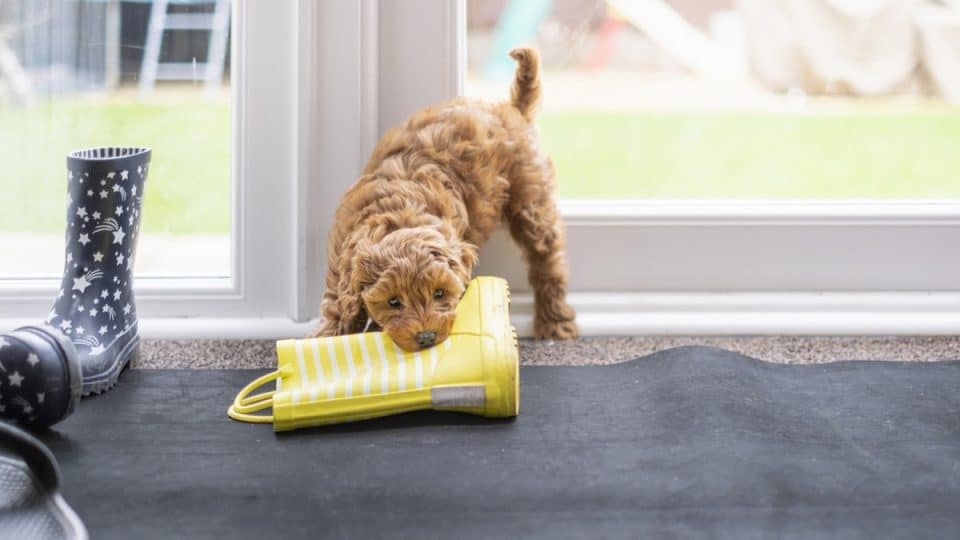
Nobody knows better than a pet sitter that puppies require an impressive level of care. Puppies chew stuff, pee on things, pull on the leash, and bark. They need frequent potty breaks, lots of attention, and plenty of playtime.
For puppy-friendly pet sitters, one way to offset the extra effort is to make sure you’re setting a puppy rate that accurately reflects your workload.
In this guide, we’ll take a realistic look at what to expect with a puppy client. We have advice for preparing your home and schedule, plus ways to troubleshoot challenging puppy behaviors. We’ll also cover signs it might be time to turn down a puppy client you’re not prepared for.
1. Ask Puppy Screening Questions
Before accepting a new puppy client, first determine whether or not the puppy is the right fit for you—and vice versa. Different puppies require different levels of care, and each has their own habits and level of training.
When you get a puppy request, here are some essential questions to ask clients:
- How old is the puppy?
- What is their vaccination status?
- Are they house-trained? How often do they usually need to go out?
- Are they crate-trained?
- How do they do on leash?
- Can they be left alone? If so, for how long?
- Do they know any verbal cues? Which do you use?
- Are there any boundaries or rules I should reinforce (not going on the couch, waiting for food, etc.)?
- Are there any particular problem behaviors I should know about (separation anxiety, barking, escape attempts)?
- How does the puppy like to play? Any favorite toys (e.g., fetch, tug-of-war, puzzle toys)?
- What does their typical routine look like (meals, potty breaks, playtime, training, sleep)?
- What is the expected sleeping arrangement for the puppy (in their crate or puppy bed? In bed with you?)?
- Do they usually sleep through the night?
- How do they respond to social interactions with humans and other dogs?
- Are there any triggers that cause the puppy anxiety or reactivity (loud noises, small children, certain objects, etc.)?
- Are there any dietary restrictions or medical issues that need attention?
2. Estimate Time Requirements
Puppies need more attention and structured care than adult dogs, which can put a major strain on your time. Before you take on a new client, take an honest look at your schedule and see how a puppy fits in.
Plan for limited time away or ask for a constant care rate
Puppies can’t hold their bladder for very long, and they require near-constant supervision.
How long a puppy can be left alone often depends on their age.
- Under 10 weeks: less than 30 minutes
- 10 to 12 weeks: up to one hour
- 3+ months: one hour per month of age
This varies, however, depending on the puppy’s potty training progress and experience with separation. Consider, too, that a puppy may behave differently in an unfamiliar setting, especially if they’re going through a fear period—so you may not want to leave them alone at all.
If you’ll need to keep a puppy with you around the clock, consider setting a constant care rate. This adjusted rate offsets your inability to leave your house, take drop-in visits, or go for walks during this time.

Evgeniya Pavlova via iStock
Match your puppy’s routine
Puppies thrive on structure—so matching your puppy’s typical routine as closely as you can may go a long way toward reducing stress. Before accepting a puppy client, ask owners about their pet’s daily routine in detail, covering meal times, potty breaks, walks, exercise, and training sessions.
A day of puppy care might look something like this:
- 6 am: potty time
- 6:15 am: breakfast, second potty break shortly after
- 7 am: playtime, short walk
- 8-10 am: nap/downtime
- 10 am: potty break
- 11 am: lunch, followed by potty break
- 11:30 am: play, training
- 12-2 pm: 2nd nap
- 2 pm: potty break
- 2:30 pm: play, training
- 4-5 pm: nap, downtime
- 5 pm: potty break
- 5:15 pm: play, training
- 6 pm: dinner
- 6:30 pm: evening walk
- 7 pm: downtime with a chew or puzzle toy
- 8:30 pm: final potty
- 9 pm: bedtime
3. Prep for Extra Care
If you want to add puppies to your roster, consider getting a leg up with prep work ahead of time.
Puppy proof
If you dog-sit in your own home, you’ve probably already pet-proofed for adult dogs—but puppies require additional considerations for your indoor and outdoor space. These chew-happy furballs will put everything in their mouths, and their tiny size means they can squeeze into areas they shouldn’t.
You may also need to install pet gates to keep your own pets or other Rover clients separate. In some cases, it might mean clearing your pet sitting schedule of all clients except the puppy.
Make cleaning simple
Tiny puppies have tiny bladders. Accidents are part of the package. Even the most vigilant sitter will have the occasional mess to deal with.
Set your puppy up in an area you won’t have trouble cleaning, and don’t forget to factor in cleanup time and the cost of supplies, such as enzymatic cleaners and paper towels. You might want to invest in puppy pads, too.
Schedule frequent play & exercise
Puppies are little balls of energy, but since their bodies are still developing, they can’t go on super long walks just yet. Plan for several shorter jaunts throughout the day.
Keep in mind that a puppy’s vaccine status may limit where they can go outside. Before they’re fully vaccinated (usually around 16-18 weeks), you’ll need to practice walking in the backyard or in areas with minimal dog traffic.
Playtime will follow a similar pattern as exercise, occurring in short, frequent bursts. Be ready to engage your Rover puppy with interactive activities like tug-of-war, fetch, or puzzle toys.
Brush up on training practices
Some owners may ask you to maintain their puppy’s basic training routines while they’re away, especially for extended stays. Be sure to factor this into your final puppy rate.
Ask pet parents where their pup is in their training journey. How do they approach potty training? What about leash training? It also helps to ask about any specific verbal cues the puppy knows or is learning.
Make a sleep plan
If getting uninterrupted sleep is non-negotiable for you, then you may want to carefully consider before pet-sitting a puppy. Young puppies often struggle to sleep through the night and may need middle-of-the-night potty breaks. Crate training may also be a work in progress, and the pup may whine or scratch in their crate, especially at night.

TatyanaGl via iStock
4. Gather Helpful Supplies
If you’ll be watching puppies regularly, it helps to have a few key items on hand.
- Puppy playpen or pet gates. If a puppy destroys your belongings, this will usually fall under your responsibility and cannot be expensed onto the puppy’s owner. A little prevention goes a long way toward protecting your furniture.
- Puppy wipes. Perfect for quick cleanups after walks or playtime. Designate some old towels just for puppies, in case of rain or mud.
- Puppy pee pads. Protect your floors from accidents, or use pee pads in a puppy pen.
- Cleaning supplies. Cleaning potty accidents right away helps discourage repeat offenses in the same spot. Stock up on paper towels and an all-purpose enzymatic cleaner.
- Extra toys. While your client will likely bring their puppy’s favorites, having a mix of chew toys, puzzle toys, and plush toys can add novelty and help keep pups engaged.
- Training treats. Use tasty treats to reward preferred behavior and reinforce puppy training. Just clear any treats with clients first.
- Backup leash. Puppies are notorious for chewing through leashes. Having an extra one on hand saves you from making an extra trip to the store.
- Comfort items. Pheromone diffusers or calming sprays can help ease a puppy’s anxiety in a new environment.
- Dog first aid kit. A well-stocked first-aid kit is important, especially when watching rambunctious puppies. Include items like gauze, gloves, and a digital pet thermometer for minor scrapes and illnesses.
- Easy-to-put-on shoes & jacket. Keep a pair of slip-on shoes and a jacket near the door for quick potty outings. You’ll thank yourself when nature calls in the middle of the night!
Pro tip: Consider saving all of your receipts and track your expenses, as these purchases may qualify as business expenses come tax time.
5. Troubleshoot Behavior Problems
Puppies sure are cute, but they’re not always easy. Here are some pet sitter tips for common puppy problems.
Destructive behavior
Usually, destructive behavior comes from teething, boredom, or pent-up energy. Scent games, snuffle mats, decompression walks, and home training sessions can also keep a puppy’s body and mind busy.
A destructive puppy may also be overtired, so try implementing scheduled naps to prevent undesirable behavior.
Frequent accidents in the house
Puppies pee—whenever, wherever. To minimize accidents, keep a consistent schedule for potty breaks, taking puppies out after meals, playtime, and naps. Close supervision is also important to spot signs they need to go out.
For times you can’t watch them like a hawk, confine pups to a puppy-proofed area lined with puppy pads.
Barking and whining
Stopping puppy barking is often a matter of identifying the cause. If a puppy is barking out of boredom, increase play and movement. A puppy responding to noises or visuals outside might need closed blinds or white noise. At nighttime, you can discourage barking by helping pups settle with a lick mat or long-lasting chew.
Biting and nipping
When puppies bite and nip, they’re usually being playful, not aggressive. One way to manage puppy biting is to redirect with a chew toy or snack. Avoid letting puppies play with your hands; instead, get in the habit of carrying a toy and offering it when a puppy gets mouthy.
Chaotic walks
Many young puppies will pull, chew on the leash, or bounce around like a yo-yo. Keep your expectations realistic and be prepared for some initial chaos on walks. If your Rover puppy bites the leash, bring along a toy to redirect them. Use plenty of praise and treats to reinforce walking nicely by your side.
6. Say No When You Need To
Remember, it’s always okay to say no to a potential client if you’re not equipped to take on a puppy. Some perfectly acceptable reasons to decline a puppy include:
- You don’t have enough time to dedicate to a puppy’s needs.
- Your current space isn’t suitable for a puppy.
- You lack experience with training or managing puppy behavior.
- You’re currently caring for other pets that may not be compatible.
Being honest upfront helps ensure you and your clients are better matched—which is good for you, the puppy, and the owner.