- Not a substitute for professional veterinary help.
If your puppy is having accidents, don’t worry—this is completely normal!
It takes time for puppies to develop the bladder muscles that allow them to hold their urine and feces the way adult dogs can. Most puppies show real progress within a few weeks, though the house training process can take up to six months. The exact timeline can vary depending on your dog’s age, size, and living situation.

Successful potty training for puppies requires routine and management. The more consistent you are with both, the faster your puppy will learn.
Read on for tips to build a potty routine that works and handle accidents, plus signs it may be time for some professional support.
Did you know? A professional trainer can help take the stress out of potty training. Reach out to a local dog trainer for ongoing support and guidance.
How To Get Your Dog on a Potty Routine in 9 Steps
Successful potty training comes down to setting up the right conditions and repeating them consistently. The more predictable your routine, the faster your puppy learns.
Alexandra Bassett, dog trainer and owner at Dog Savvy, shares these steps for building a potty routine that works:
- Set up your space before your puppy comes home: Before your puppy arrives, have a crate, drag leash, food, and high-value treats on hand. A playpen, dog gates, and potty pads may be useful, too. You can also designate a confinement area for times when you can’t directly supervise them to help prevent accidents.
- Establish a schedule for meals, sleep, and potty breaks: Puppies digest quickly, so structured feeding times make it easier to anticipate when they need to go. For each potty trip, the 10-10-10 rule is a helpful guide: 10 minutes outside at a consistent spot, on a 10-foot leash, followed by 10 minutes of direct supervision inside.
- Assign one person at a time to potty duty: In a multi-person household, designate one person at a time to supervise and take your puppy out. It’s fine to rotate, just avoid sending the puppy out with a crowd, which can be confusing.
- Learn your puppy’s pre-potty signals and track their patterns: Most puppies need to go right after waking up, eating, drinking, playing, or getting excited. Watch for signals like darting away, nose to the floor, circling, or a subtle hunch in the back, and get them outside immediately. Keep a few days of simple notes on when they eat, potty, and have accidents to help you plan.
- Use a leash and a consistent potty spot: Taking your puppy to the same spot each time builds a scent association that can speed up learning. Keep them on a leash so they stay focused. Outside time shouldn’t feel like playtime until after they’ve gone.
- Reward within 1–2 seconds of them finishing: The reward needs to happen the moment your puppy finishes, so they clearly connect going potty in the right spot with something good. Keep treats handy in your pocket or right by the door.
- Use a high-value treat reserved just for potty time: Something extra exciting, like string cheese, chicken, or small pieces of jerky, helps keep your puppy motivated. Saving this treat exclusively for potty time keeps it special.
- Pick up their water about two hours before bed: This is especially important for young puppies between 8 and 12 weeks old, when bladder control is still developing. Limiting water before bedtime reduces the chance of overnight accidents—just make sure you put it back down first thing in the morning!
- If they don’t go within 5 minutes, try again soon: Bring your puppy back inside, but keep them tethered, supervised, or confined. Letting them roam freely before they’ve gone is how many accidents happen. Try again in 5–10 minutes. Young puppies may also need to “double pee,” so linger a bit after the first success before heading in.
What supplies help with potty training?
You can make the potty training process a lot smoother with the right tools:
- Crate: A crate gives your puppy a safe, den-like space and discourages accidents because dogs naturally avoid soiling where they sleep. The crate should be just big enough for your puppy to stand, turn around, and lie down.
- Leash: A standard leash or drag leash keeps your puppy focused during potty trips and helps you guide them to their designated spot without detours.
- Dog pen: A dog pen creates a contained area where your puppy can move around safely when you can’t supervise directly, reducing the chances of accidents.
- Enzymatic cleaner: Regular cleaners don’t fully break down the scent of accidents, which can draw puppies back to the same spot. Enzymatic cleaners eliminate the odor at the source.
- Attractant and deterrent sprays: Attractant sprays can help signal to your puppy where you want them to go. Deterrent sprays discourage them from returning to indoor areas where accidents have occurred.
- Poop bags: Have poop bags ready by the door or connected to their leash so you’ve got them readily available when needed.
How to Handle Accidents
Accidents will happen naturally during the potty training phase. How you respond is what matters most.
If you catch your puppy mid-accident, calmly interrupt them with a neutral sound and take them outside right away to finish. If you find a spot after the fact, thoroughly clean it up and note whether the timing and location suggest a gap in your routine.
According to Bassett, here are the best steps for handling accidents:
- Clean it up thoroughly: Lingering scents can invite repeat accidents, so thorough cleaning is crucial. Apply an enzymatic cleaner to the area, let it sit for 10–15 minutes, then wipe clean. For rugs, follow up with baking soda to absorb the odor, then vacuum.
- Treat the accident as information, not a setback: Accidents are usually circumstantial, not a stubborn puppy problem. Instead of getting frustrated, try to identify the cause: a late potty break, your puppy failing to fully empty their bladder, or a shift in your routine.
- Know when something else might be going on: If accidents happen frequently or all of a sudden after a period of no accidents, it may not be a training issue at all. Consult with your vet if anything seems unusual.

How Effective Are Crates for Potty Training?
Crates can be a helpful tool during potty training, says Kirsten Matthews, dog trainer and owner of The Canine Detective.
Most puppies don’t want to soil where they sleep. However, some will still go in their crate if it’s too large, they were previously pad trained, or they’ve stayed inside longer than their bladder can handle.
To use a crate effectively, follow these guidelines:
- Choose the right size: A crate should be just big enough for your puppy to stand, turn around, and lie down comfortably. If there’s too much extra space, they may use some of it when they need to go.
- Take them outside immediately: As soon as your puppy comes out of the crate, take them out. Matthews says this is similar to how people usually need to relieve themselves shortly after waking up.
- Limit crate time to a few hours: Most puppies need a potty break every 3–4 hours, though younger puppies may need to go more frequently. If you need to be away longer, consider hiring a dog walker or drop-in sitter who can offer a potty break.
Choosing Between Indoor vs. Outdoor Potty Training
Not every home has easy outdoor access, so the right setup depends on your living situation.
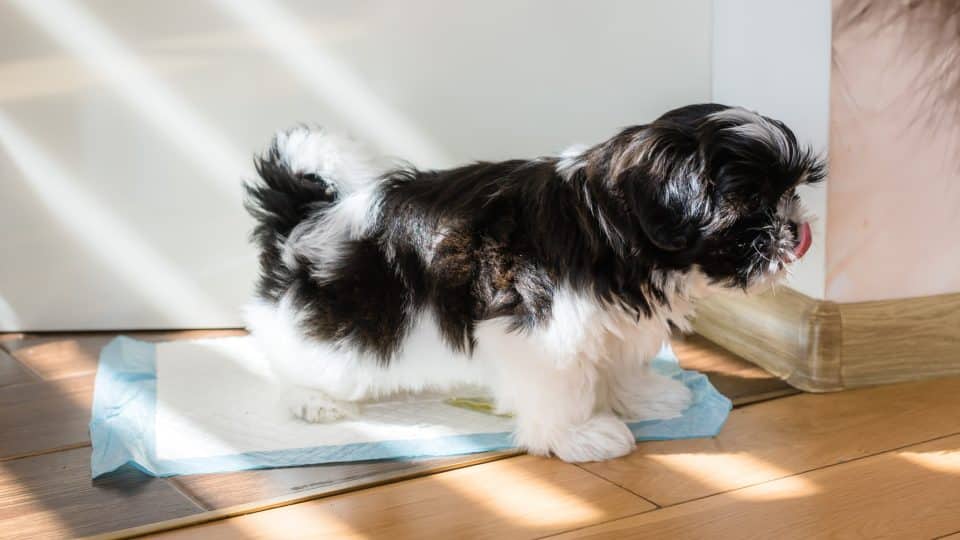
If you live in an apartment or don’t have quick outdoor access, you can create an indoor potty station on a balcony or in a bathroom. Rather than defaulting to pee pads, which can be a tough habit to break, Matthews recommends purpose-built dog toilets or grass turf.
When you transition from indoor to outdoor training, watch your puppy closely to make sure they don’t sneak off to use the rug or doormat instead. You can help keep your puppy on track during the transition with crates, baby gates, and a tether that keeps them near you.
Once the outdoor habit is established, Matthews says many dogs will develop their own way of communicating when they need to go out. They may scratch at the door, stand in front of it, whine, or bark.
Advanced Potty Training Tricks for Your Dog
Young puppies have little control over their bladder and bowels and aren’t ready for advanced potty training. A puppy as young as 7–8 weeks old isn’t developmentally ready to signal when they need to go out.
But once they have the basics down, these tools can help take potty training to the next level:
- Bell training: Bell training teaches your dog to ring a bell hanging by the door when they need to go outside. This gives dogs a clear, consistent way to communicate and can reduce accidents caused by missed signals.
- Button training: Similar to bell training, button training uses a recordable talking button that your dog learns to press when they need to go out. It’s a more involved method, but it works well for dogs who respond to sound cues.
- Doggy door: If you have a backyard set up safely, a dog door gives your dog independent outdoor access so they can head out whenever they need to go.
FAQs About Potty Training a Puppy or Dog
How long can puppies hold their pee?
A rough rule of thumb is one hour per month of age while awake, give or take. For example, a 2-month-old puppy may need to go every two to three hours. Excitement, rough play, and running around can also trigger urination, so it’s important to build in pee breaks during active time. Most puppies under 5 to 6 months old may also need to go after waking up, even from a short nap.
Can I potty train my puppy within a week?
Potty training a puppy in a week is possible, but not likely for most dogs. How quickly a puppy learns depends largely on the strategies you use and how consistently they have access to go outside. Potty training typically takes at least a few weeks.
A puppy is considered fully trained when they’re no longer having accidents indoors. If a previously trained dog suddenly starts having accidents, a vet visit can help rule out any medical causes.
Is the crate the best tool for potty training?
Crates are one of the most effective potty training tools because dogs tend to avoid urinating or defecating in the spots they sleep in. This is the same instinct that leads wolves and coyotes to keep their dens clean. That said, a crate works best as part of a broader routine rather than as a standalone solution.
When can I trust that my puppy won’t have any accidents?
Trust builds as your puppy goes longer stretches without accidents and starts reliably signaling when they need to go out. Matthews says if your dog suddenly has an accident after being reliably trained, consider possible causes like a change in routine, too much freedom too soon, or a medical issue.
How can a professional trainer help me potty train my dog?
A professional trainer can check your specific setup, identify gaps in your routine, and provide a personalized plan tailored to your dog’s age, breed, and living situation. They can also help troubleshoot persistent issues, like a dog who won’t signal, consistently has accidents in the crate, or struggles with the transition from indoor to outdoor training.