- Not a substitute for professional veterinary help.
Potty training a puppy can be a daunting task with lots of questions about timing. Is there an age you should start? How long does it take? How long is too long?
Luckily, many have walked this path before, and they’re here to help. We spoke with Brooke Greenberg, a professional dog trainer (CPDT-KA) and owner of Mind Body Paws, to learn more about what to expect and how long it takes.

Pro-tip: Potty training isn’t always as straightforward as it seems. For professional guidance, Rover makes it easy to filter for puppy training near you.
How Long Does Potty Training Take?
Full potty training means reaching the point where your dog is no longer having accidents in the house. In general, it can take about six months to fully potty train a puppy.
Breed plays a role—after all, since small breeds have smaller bladders, they need to be taken out more than larger dogs and can take longer to potty train. But personality is also a key component.
Greenberg says not to worry if it takes your pup longer than six months. “Sometimes, their little brains and bladders need some extra time to sync up,” she reassures.
If you’re potty training an adult rescue dog, full potty training is likely to take anywhere from a few weeks to a few months. And while their bladders may be bigger, it’s a good idea to follow the same guidelines as puppies and take adult dogs out every few hours to get them used to a routine.
How long is too long?
In general, a puppy’s potty training timeline is variable. But if you’re approaching the one-year mark and your puppy is still having accidents in the house, it’s a good idea to talk to your vet to rule out any medical issues.
If your puppy has a clean bill of health but you’re still feeling frustrated or lost about potty training your pup yourself, a professional dog trainer is a great resource. Learn how a local dog trainer can help you get puppy potty training back on track.
Julia Ilina via iStock
A Potty Training Timeline
Here’s what a typical puppy potty training timeline might look like. Remember, some pups will blaze through some stages and get stuck on others, while others will stumble at the beginning and get better over time. That’s the joy of puppies—every one is different.
Months 1 to 2: Lots of accidents
Greenberg says it’s safe to start potty training puppies at 8 weeks old, or once they’ve left their mom.
For the first month or two, don’t expect your puppy to have mastered holding their bladder. Interrupt accidents, but don’t punish your puppy. Just take them outside right away (even if their business is done).
“By introducing them to the designated potty area and rewarding them for going outside, you’ll see progress towards your potty training goal,” Greenberg promises.
Months 3 to 4: Some accidents
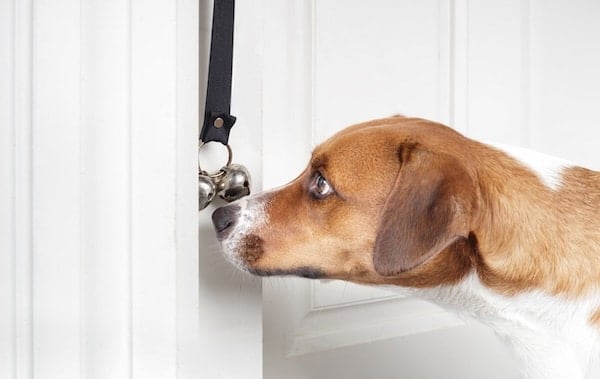
During this period, you’ll likely still see some accidents. But you’ll also see signs of progress. Your puppy may start consciously signaling to you when they need to go out by going to the door, whining, or pawing. They may also be able to go through the night without needing a potty break.
As your puppy grows, remember to adjust your potty schedule accordingly. A puppy can hold its pee for about one hour longer than its age in months. “But keep in mind that if your pup has been active outside and then guzzles down the entire contents of their water bowl, they will not be able to wait the full 3 hours,” Greenberg cautions.
If you have trouble keeping track of time, Greenberg suggests setting alarms so you’re alerted when it’s time for a potty break.
Months 5 to 6: Very few accidents
When you’re in the home stretch, you’ll likely see few accidents around the house—but don’t let your guard down. Keep taking your puppy out for their scheduled breaks.
If your puppy is struggling to graduate from this phase, consider keeping track of all their eliminations (poop and pee), including any accidents. “The data will provide insight to understanding how close your puppy is to fully being house trained,” Greenberg explains.
It can also show you if you need to revise your schedule—for example, if your puppy can’t hold their bladder quite as long as you’ve been expecting.
Petra Richli via iStock
Potty Training Timeline Myths
There’s a lot of misinformation out there about how long it takes to potty train a puppy. These are some of the most common myths we see—and their corresponding truths.
Myth: You can potty train a puppy in a week
Is it possible to potty train a dog in 5 days or a week, as some courses advertise? “No, it takes more than 5 days to have a fully house trained puppy,” says Greenberg. A few super pups might be able to accommodate this timeline, but that’s too ambitious for the majority of dogs.
Myth: Scolding a puppy helps them learn faster
Negative reinforcement isn’t a good idea and won’t accelerate potty training. “Never rub your puppy’s nose in their urine or feces to teach them a lesson,” cautions Greenberg. “They will not understand why they are being punished.” It can even lead to a counterproductive fear of potty training.
Myth: Pee pads speed up the process
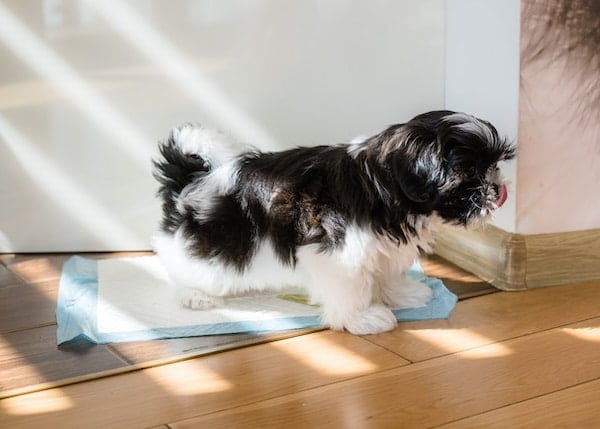
While lots of new pet parents successfully use puppy pee pads, Greenberg finds they can slow things down. “Pee-pads are a popular tool that makes potty training extra confusing for your puppy,” she argues. “If you want a puppy that pees outside, then stop encouraging them to pee inside. Plus, as the puppy grows, the pee pad often becomes a toy.”
Myth: Limiting water accelerates learning
“While potty training can be a long and sometimes frustrating journey, restricting water may create more problems like resource guarding,” advises Greenberg. It’s okay to put away the water dish at bedtime—but during the day, a puppy should always have free access to water.