How To Check a Dog’s Vital Signs
Not a substitute for professional veterinary help.
Knowing how to check a dog’s vital signs is a great skill for pet sitters. It can help you establish a baseline for pets in your care, which is particularly important for senior dogs and pups with chronic health conditions. And if you ever need to determine whether an emergency vet visit is warranted, being able to make an effective assessment can give you greater confidence in your decision.
The main dog vital signs to measure are body temperature, heart rate, and respiration rate. It can also be helpful to identify signs of abnormal blood pressure or pain, though these vitals are harder to measure. The more information you can relay to a veterinarian in an emergency situation, the better.
How To Take a Dog’s Temperature
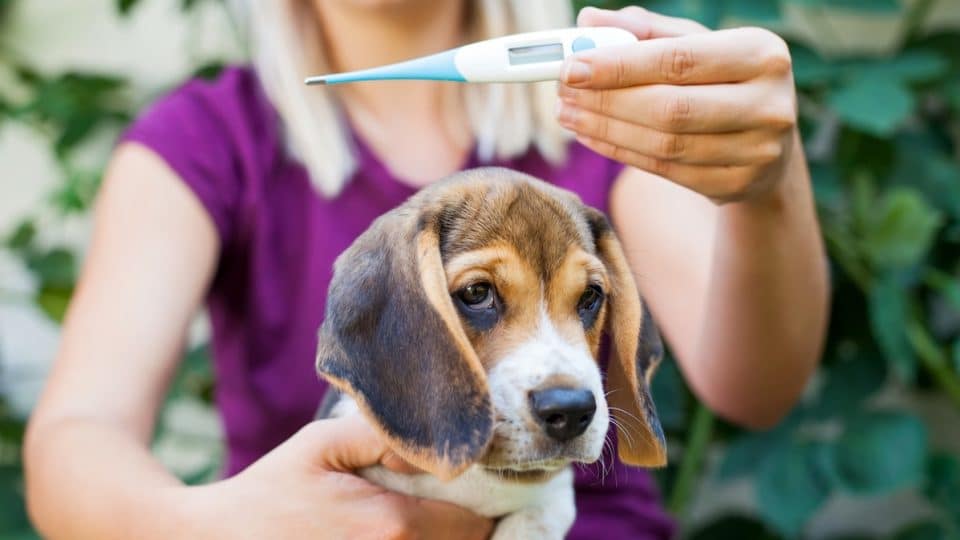
The safest and most accurate way to take a dog’s temperature is using a digital rectal thermometer. A glass thermometer could break, putting a pup at risk for injury. Forehead and ear thermometers might seem safer, but it’s difficult to get an accurate reading with these tools.
Here’s how to take a dog’s temperature using a rectal thermometer:
- Clean the thermometer with a disinfectant wipe.
- Apply a little water-based lubricant or petroleum jelly to the tip.
- Have a second person hold the dog still, ensuring they can’t turn around.
- Lift the dog’s tail and insert the thermometer about 1 inch into their rectum.
- Press the start button on the thermometer and wait for it to beep.
- Carefully remove the thermometer to take the reading.
- Write down the temperature reading and the time you took it.
- Clean and disinfect the thermometer before putting it away.
For dogs, healthy body temperature ranges from 101–102.5 degrees Fahrenheit. If a dog’s temperature is outside the normal range, reach out to a vet for advice. Seek immediate emergency care if your pup’s temperature is over 105℉, as it could be an indication of serious or life-threatening illness.
Here are some indications it might be helpful to take a dog’s temperature:
- Lethargy: Sluggish behavior or depressed mood
- Decreased appetite: Sudden lack of interest in food or water, or vomiting
- Warm to the touch: Skin feels unusually warm
- Shivering: Could indicate dangerously low body temperature
- Labored breathing: Excessive panting or coughing
How To Check a Dog’s Pulse
Unless you have a stethoscope handy, the best way to check this vital sign is by feeling for a dog’s heartbeat by hand.
Here’s how to do it:
- Grab a stopwatch or open the timer feature on your phone.
- Have the dog lie down on their right side.
- Place your hand on the left side of the dog’s chest, just below the elbow.
- Shift your hand until you can feel the dog’s heartbeat.
- Start the timer and count the number of heartbeats for 15 seconds.
- Multiply the number by four to calculate the beats per minute.
Like body temperature, the normal resting heart rate for dogs varies. For adult dogs, a normal pulse is between 70 and 120 beats per minute (bpm). Puppies generally have faster heart rates than adult dogs, as do small breeds versus large breeds.
| Normal Heart Rate | |
| Puppies | 120–160 bpm |
| Toy and Small Breeds | 100–160 bpm |
| Medium and Large Breeds | 60–100 bpm |
In dogs, an elevated heart rate can signal pain, stress, fever, or an underlying heart condition. A slow heart rate might be related to heart problems, or it could be a sign of shock. Certain medications can slow a dog’s heart rate as well.
It can be helpful to take a dog’s pulse when:
- They’re acting sluggish or sleeping more than usual
- They tire quickly during normal activity
- They’re having trouble breathing
- They stumble, collapse, or lose consciousness
- Their gums are pale or blue (instead of pink)
- Their appetite suddenly decreases
- They develop a new or persistent cough

whitebalance.space via iStock
How To Check a Dog’s Respiration or Breathing Rate
It’s normal for a dog to breathe more heavily during exercise and when it’s hot out. But if you’re not sure why a dog is breathing faster or slower than usual, it can be helpful to measure their respiration rate.
Here’s how to do it:
- Have the dog lie down and wait for them to settle.
- Set a timer for 30 seconds and hit start.
- Count the number of times the dog’s chest expands in 30 seconds.
- Multiply the number by two to find the number of breaths per minute.
The normal breathing rate for dogs ranges from 15 to 30 breaths per minute. Rapid breathing over 30 breaths per minute can indicate a problem like heart disease, respiratory infections, pain, anxiety, heat stress, or metabolic disorders like diabetes. Abnormally low respiration rates (under 10 breaths per minute) can be a sign of severe illness or sedation due to poisoning or medication side effects.
It might be helpful to measure a dog’s breathing rate if:
- Respiration remains elevated well after exercise has ended
- You see signs of labored breathing (heaving chest, stretched-out neck, open-mouth breathing)
- It coincides with sluggish or lethargic behavior
- You see increasing snorting or snoring during sleep
- A dog is sick or recovering from injury
Blood Pressure
Normal blood pressure for dogs is around 120/70 mmHg. Unfortunately, you can’t reliably measure this vital sign in dogs using a standard human blood pressure monitor. Vets have blood pressure cuffs specifically designed for dogs and cats—but they’re not something most pet owners and pet sitters have.
There are, however, certain signs to look for that can indicate abnormally high or low blood pressure in dogs. High blood pressure or hypertension, for example, can manifest as:
- sudden blindness
- nosebleeds
- seizures
- disorientation
- head tilting
Low blood pressure or hypotension, on the other hand, might cause symptoms like:
- weakness
- lethargy
- pale gums
- sudden collapse
When a dog’s blood pressure is outside normal parameters, their other vital signs might be as well. If you notice any of the above symptoms in your dog, seek veterinary attention immediately.
PK-Photos via iStock
Pain
While it might not be a traditional vital sign, pain can be a useful clue for diagnosing health problems in dogs. Knowing when the pain started, for example, or whether it changed over time can help a vet identify the problem more effectively.
Here are some of the signs that might indicate a dog is in pain:
- Behavioral changes—restlessness, clinginess, aggression, or irritability
- Reduced mobility—limping, favoring one side, slowed pace, stiffness
- Changes in activity level—refusing walks, less interested in play, sleeping more
- Lifestyle changes—difficulty sleeping, overgrooming, altered eating habits
- Changes in posture—hunching, reluctance to lie down, standing with legs splayed
It can be helpful to take a closer look for subtle signs of pain if you notice:
- Hesitation to jump on furniture or use the stairs
- Sleeping longer or more deeply than usual
- Reduced interest in exercise or play
- Unexplained aggression or reactivity
- Avoiding people or other dogs
- Growling or snapping when touched
- Excessive licking or chewing a specific area
- Dropping food or leaving meals unfinished
If you’re not sure if a behavior is normal or indicates pain, consider reaching out to the owner to get a better picture of their dog’s typical behavior.
Preparation and Supplies
Being prepared for an emergency can offer peace of mind for pet sitters and pet parents like. Consider adding the following to your dog first aid kit:
- Disposable gloves
- Alcohol wipes
- Digital pet thermometer
- Water-based lubricant (or petroleum jelly)
- Stopwatch or timer
- Soft muzzle
- Spare leash and collar
- Towel or blanket for safe restraint
It’s also important to have at the ready contact information for:
- Your Rover dog’s veterinarian
- Your local emergency clinics
- A virtual vet
- ASPCA Poison Control—(888) 426-4435
If you find yourself seeking emergency veterinary attention, don’t forget to reach out to Rover Support. Rover Support can connect you with an emergency vet and help you learn next steps, whether that’s monitoring at home or heading to the emergency clinic. Rover Support is available 24/7 at 888-727-1140.
Thanks to to Dr. Bethany Hsia, a veterinarian and the co-founder of CodaPet, for suggestions and advice.