A Pet Sitter’s Guide to Cat Aggression
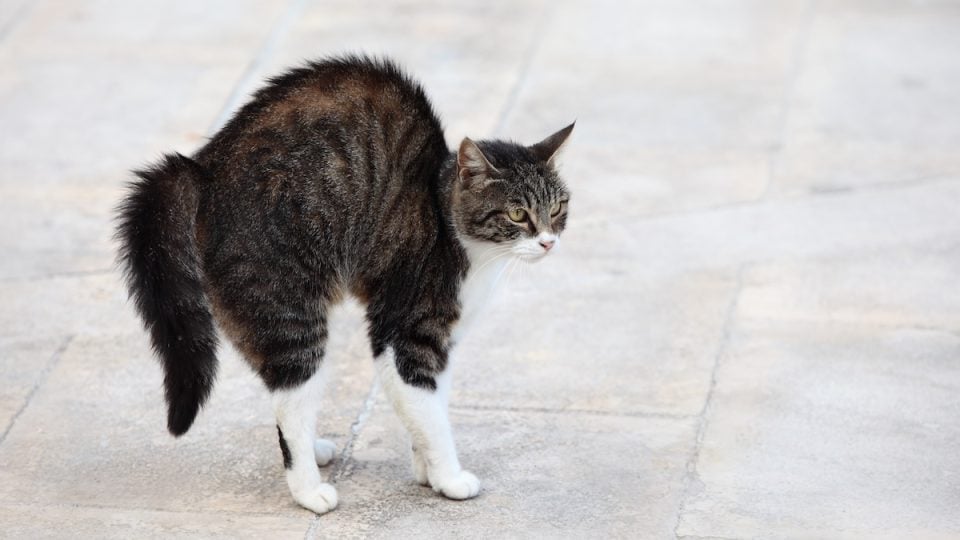
If you care for cats, you’ve probably encountered some version of cat aggression. It’s never fun to be on the receiving end—just ask anyone who’s taken a scratch, swat, or nip.
As a pet sitter, learning to recognize the different types of cat aggression can help you understand and predict a spicy cat’s behavior. That’s key to keeping both you and the pets in your care safe.
In this article, we’ll cover why cat aggression happens, signs to watch for, tips for handling it, and when to consider declining a booking.
Signs of Cat Aggression
Aggressive behavior in cats is typically the result of fear, stress, pain, or overstimulation.
Most of the time, a cat will give warning signals before lashing out, usually through body language and vocalizations. The best way to prevent an aggressive confrontation is to be aware of these signs and give the cat space when you notice them. Some signals, like staring or squinting, are subtle and easy to miss.
Here are common signs that a cat may be about to exhibit aggressive behavior:
- Ears flattened against the head (a.k.a. “airplane ears”)
- Puffed-up tail
- Arched back
- Wide eyes with dilated pupils or squinting eyes
- Staring
- Growling or hissing
- Avoiding contact or pulling away from petting
- Stiff body posture
- Twitching skin along the spine
- Tail thrashing or swishing back and forth
- Whiskers pulled forward or back, rather than relaxed at the sides
- Freezing in place
- Hunched shoulders
How To Care for an Aggressive Cat
The good news is that there are ways to help an aggressive cat feel more at ease and minimize the potential harm they might cause. Essentially, it boils down to respecting the cat’s space and cultivating a calm environment.
If you have a spicy cat on your Rover roster, here are some general tips for safer interactions:
- Time arrivals. Find out when the cat is calmest for drop-ins or arrival times. Cats are crepuscular creatures, meaning they are most active at dawn and dusk. Arriving in the mid-afternoon might be your best shot, if you can manage it.
- Stay calm and move slowly. Maintain a relaxed demeanor and move slowly and predictably.
- Speak quietly. Loud noises can startle a cat. Keep your voice soft and volume low.
- Respect the cat’s space. Follow the cat’s lead, and don’t force interactions. If the cat wants to hang out, they’ll come to you when they’re ready.
- Use treats wisely. If approved by the owner, offer high-value treats to build a positive association. If the cat won’t let you near them, toss treats towards them from a distance.
- Consider pheromone diffusers. Ask the owner if they use calming diffusers or sprays, which may lower their cat’s stress.
- Wear protective clothing. Consider wearing a long-sleeved top and pants to protect your skin from scratches. You might even want to wear glasses to shield your eyes.
- Avoid direct stares. Cats may view direct eye contact as a threat, so use slow blinking to show them you’re safe.
- Limit interaction. Consider asking the owner to set up an automatic feeder near the entrance, so you don’t have to walk very far into the house.
- Be patient. Remember, cats don’t act this way out of spite; it’s more likely they’re afraid or feel threatened. Never punish an aggressive cat. Instead, be gentle, kind, and respect their need for alone time.
Kseniia Soloveva via iStock
Types of Cat Aggression
For many cats, it’s specific situations that trigger aggressive behaviors. Understanding the type of aggression a cat experiences can help you avoid or mitigate it.
Play aggression
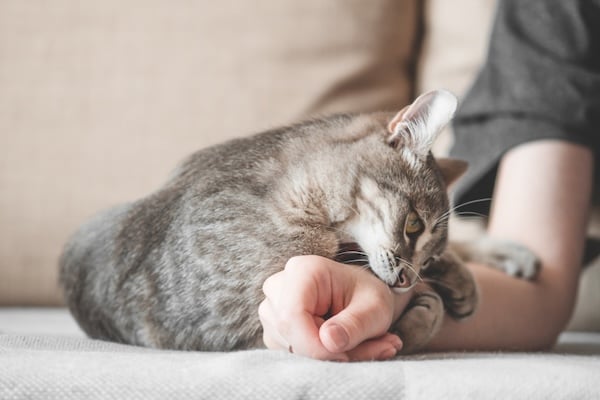
Play aggression is common in young cats and kittens, especially those who were not raised with littermates or didn’t learn appropriate play through socialization. It can also occur if a cat is bored or doesn’t have adequate opportunities for play.
If a cat is about to engage in aggressive play, you may notice tail whipping, wide eyes and dilated pupils, or pinned-back ears.
While this behavior may be playful in intent, it can lead to painful scratches or bites. If you suspect a cat may become feisty during play, consider toys that keep your hands at a safe distance, like feather wands and laser pointers.
Fear aggression
Often, aggressive behavior in cats is a fear response. Fear aggression can be triggered by unfamiliar people (like you!), loud noises, or scary experiences, like a car ride.
Usually, it presents with defensive body language, like ears pinned against the head, tail tucked under the body, and a crouched posture to appear smaller.
In most cases, the best way to handle a cat who acts aggressively when they’re afraid is to simply avoid them. Make sure the cat always has an escape route and access to hiding spots. Let them retreat to whatever space makes them feel safe, whether that’s under a bed or behind the couch.
Petting-induced aggression
This type of aggression can take you by surprise. It happens when a cat becomes overstimulated with too much petting.
Even if a cat seems to be enjoying pets, be on the lookout for warning signs that they’ve had enough, including a twitching tail, restlessness, and avoiding your touch.
If you notice these signs of irritation, stop petting the cat and offer space.
Redirected aggression
Sometimes, cats are agitated by a trigger that they can’t confront, like another animal outside, or a loud noise in the distance. When they can’t release their frustration at this trigger, they may redirect their feelings towards an innocent bystander. This type of aggression may seem sudden or out of the blue, as the initial trigger might not be obvious or may have occurred before your arrival.
To avoid redirected aggression, block the cat’s view of outside triggers by closing blinds or playing white noise to block outdoor sounds. You can also use deterrents like sprinklers to discourage wildlife or strays from passing through the yard.
Pain-induced aggression
When a cat is uncomfortable or feels unwell, they might hiss, bite, or scratch when approached or touched in sensitive areas. This instinctive behavior is the cat’s way of avoiding pain.
If you know a cat has arthritis or any other medical condition, avoid touching body parts that might cause them pain. If the behavior is new, it’s a good idea to communicate your observations to the owner.
Status-induced aggression
Occasionally, cats may act aggressively to establish dominance within a household. You might notice the cat blocking doorways, preventing access to the litter box, or swatting at you or other pets.
The best way to deal with this type of aggression is to ignore it. Only engage with the cat when they are relaxed and not exhibiting dominant behavior.
Territorial aggression
Like many animals, cats can be territorial and may defend their turf from perceived threats. Usually, this type of aggression is directed at new cats, but it can also be directed at new humans. The cat might patrol a certain area of the home or stalk and ambush anyone they consider an intruder.
Take introductions slowly and don’t overwhelm the cat with loud arrivals. Offer treats and try to avoid direct physical contact if possible. Barriers may help. Use a large cardboard panel for protection, or keep the cat separate with a pet gate.
Inter-cat aggression
Sometimes tensions flare between cats in the same household. You might notice cats hissing, growling, or swatting at each other. Signs can also be more subtle, like one cat blocking the litter box or feeding stations.
To manage inter-cat aggression, make sure there are always ample resources so cats don’t feel the need to compete. Set out multiple food and water bowls and ask the owner to set up multiple litter boxes if they have not already. If aggression persists, keep the cats in separate rooms.
When To Decline a Booking
Though they might be small, cats can inflict some serious damage with their sharp teeth and claws, and they can even transmit infections. If you feel ill-prepared to care for an aggressive cat, don’t hesitate to turn down a booking. Safety should always take precedence for both you and the cat.
To help you weigh the risks, here are some specific scenarios where it might be best to turn down a client with an aggressive cat.
- The cat gives no warning signs. If the cat is known to lash out with few or no warning signs, you’ll have a hard time managing their behavior.
- The owner minimizes the aggression. Sometimes owners downplay the severity of their pet’s aggressive behavior. If you observe troubling behavior and the owner responds defensively, consider it a red flag.
- The home’s setup makes it difficult to manage aggressive behavior. Consider whether the client’s home (or your own home for boarding situations) is set up to care for an aggressive cat. For example, an open layout or studio could make it impossible to separate cats, and some layouts may force you to walk past a cat’s typical ambush site.
- Challenges with medication. Does that cat need medication? If they’re highly sensitive and fear-aggressive, you might be unable to avoid an attack.
- The cat is prone to resource guarding. If the cat is known to guard essentials like food and litter boxes, it can make basic tasks, like feeding and scooping, impossible without provoking an attack.