- Not a substitute for professional veterinary help.
Playing with your cat provides the exercise and mental stimulation they need to stay happy and healthy. Beyond that, it’s an opportunity to bond with your furry friend! Regular playtime can also help prevent boredom and mitigate stress-related behavioral issues.
Daily playtime is crucial for all cats, says Kristiina Wilson, a certified cat behavior consultant and founder of Cattitude Adjustment. How much play a cat needs, however, will vary based on your cat’s age, personality, and health status. In this guide, we’ll discuss the factors that determine your cat’s playtime needs and how to meet them.

How Often To Play With Your Cat
While there’s no one-size-fits-all rule for how often or how long to play with a cat, as a general guideline, experts recommend at least 30 minutes of play per day.
If you can, Wilson suggests scheduling play to suit your cat’s natural daily rhythm. Cats are most active at dusk and dawn, so play sessions in the morning and evening tend to work well.
Wilson also recommends dividing daily playtime into short sessions. Playing for too long can lead to overstimulation or exhaustion, while cutting playtime short can cause frustration. Pet parents should aim for two to three daily play sessions that last 10–20 minutes each.
Factors To Consider
Factors such as age, breed, and health impact how long your cat will want to play on their own and with you. Here are some things to consider when determining your cat’s play schedule.
Age
Young cats and kittens need lots of playtime, both with you and by themselves. Interactive toys, such as food puzzles and electronic toys, are particularly beneficial for supervised solo play.
Older cats, especially those with mobility limitations, may need gentler forms of exercise, like slow-paced games with soft toys. Their need for daily playtime is usually lower than that of younger, more active cats, and they may need more encouragement to get moving.
Breed
Some cat breeds are naturally more active than others and may require more play. Bengal cats, for example, are known for their athleticism and high energy levels. More docile breeds like Ragdolls and Persians may have lower play demands.
oatawa via iStock
Energy levels
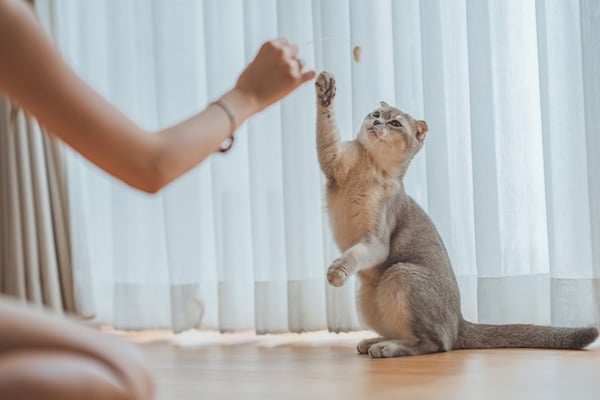
Breed doesn’t always determine a cat’s energy level or personality, and mixed breeds are a toss-up. If your cat is naturally very active, they may benefit from shorter, more frequent play sessions. Chasing after a wand toy or string is a great way to wear out a high-energy cat.
For a low-energy cat, two play sessions a day may be sufficient. Cats with lower energy levels may prefer chew toys or kicker toys over toys they have to chase.
Behavior
While your cat’s activity level influences how much playtime they need, their behavioral tendencies can help you determine how to structure your play sessions. A cat who is timid or anxious, for example, may prefer slow-paced activity with plenty of time to rest between sessions. Cats prone to bursts of energy, however, may enjoy short, high-intensity play sessions.
Health
Physical limitations due to illness or injury may affect your cat’s ability to play (or their desire to). Daily play is still important for providing mental stimulation and reducing stress. You just might have to make some accommodations.
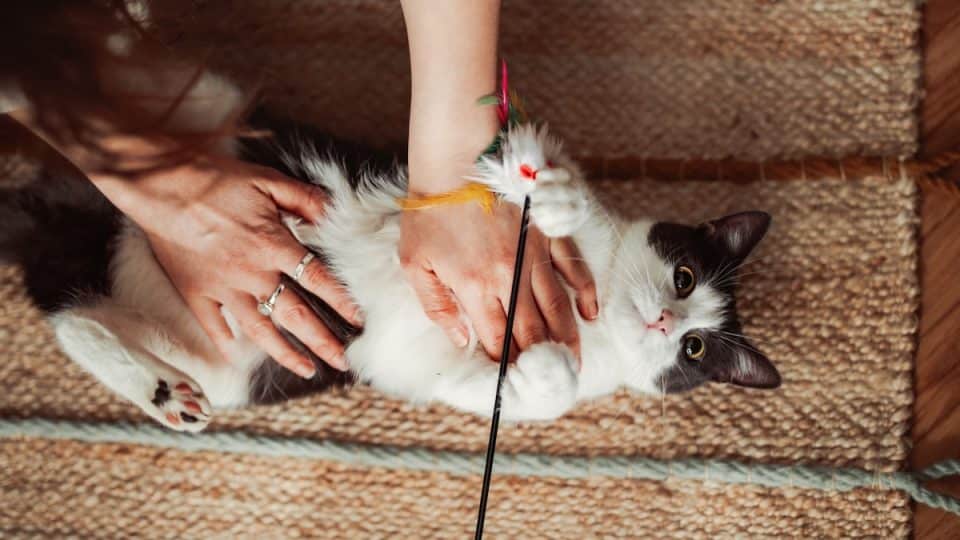
According to Wilson, older cats with arthritis or other mobility issues may prefer to play on their backs or stomachs rather than with chase toys. She recommends consulting your vet to determine how to safely meet your cat’s exercise and enrichment needs.
Preferences
As you get to know your cat’s personality, their preferences will start to become clearer. You might find your cat prefers solo play with a ball track. Or maybe they like it when you toss mouse toys for them to chase down. Try out different play styles to see what your cat likes best.
How To Play With a Cat
Different cats have different preferences, but most are game for play that mimics a cat’s natural predatory sequence. This instinctual hunting behavior generally involves identifying and staring at their prey, stalking or chasing it, pouncing and catching it, and finally biting or eating it.
Follow your cat’s lead in each session, especially when it comes to ending play. If you take away their toy too soon or don’t let your cat “catch” their prey at the end, they might become bored or frustrated.
Your cat may not follow the whole prey sequence every time, but an effective play session provides opportunities for your cat to engage their natural predatory instincts. Here are some general guidelines to follow when playing with your cat:
- DO try a variety of toys to see what your cat likes and rotate their collection weekly to keep things fresh and enticing.
- DON’T encourage your cat to see your hands or feet as playthings—always use a toy instead of your fingers!
- DO pay attention to how your cat likes to play (e.g., chasing versus chewing) and choose their toys accordingly.
- DON’T tease your cat or cut a play session short. Always give your cat a chance to catch and “kill” their prey.
- DO mimic the natural movements and sounds of prey so your cat can engage in predatory behaviors like chasing and pouncing.
- DON’T just sit back and watch. Interactive play is crucial for bonding with your cat, and it makes the experience more engaging for them.
- DO follow your cat’s cues and slow down or pause the session if they show signs of overexertion (such as open-mouthed breathing or panting).
Need more ideas? Introduce new toys, come up with your own games, or integrate positive reinforcement training to keep your play sessions exciting.