- Not a substitute for professional veterinary help.
Do you wish your cat could talk? The truth is, our cats are communicating all the time—we just need to know what to look for.
Cats express happiness, excitement, and fear through a combination of body language cues, including posture, tail movements, and the position of their ears, eyes, and whiskers. Becoming fluent in cat body language will help you understand what your cat is feeling—and how to respond and care for them.

But deciphering cat body language can be hard. For one, it’s often subtle and easy to miss. You also have to consider multiple signals together, along with the context. In this guide, we’ll review common feline cues and what they mean, plus commonly misinterpreted signals.
Happy or Content Body Language
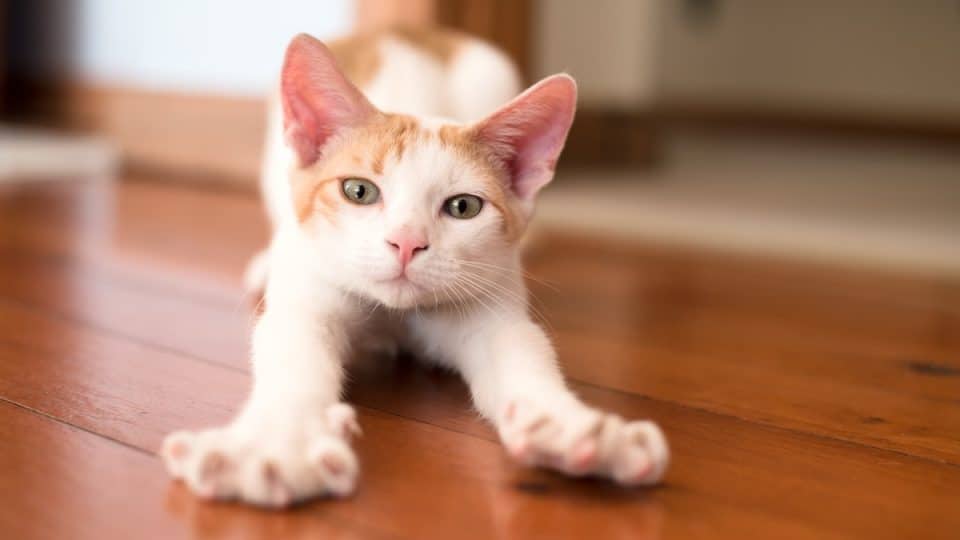
A happy cat will have soft, relaxed body language. If your cat is sprawled out in a puddle of sunshine or approaches you with loose, easy movements, they are likely calm and content.
Here’s the body language you can expect to see.
- Body & posture: Appears soft and loose, muscles are relaxed, limbs and tail often stretched out when lying down.
- Tail: Upright with a gentle curl at the tip.
- Ears: Upright, forward-facing.
- Eyes: Soft, rather than wide and fixed. Often shut or half-closed with small pupils. Slow blinking signals trust.
- Whiskers: Neutral, relaxed, held out to the sides of the face.
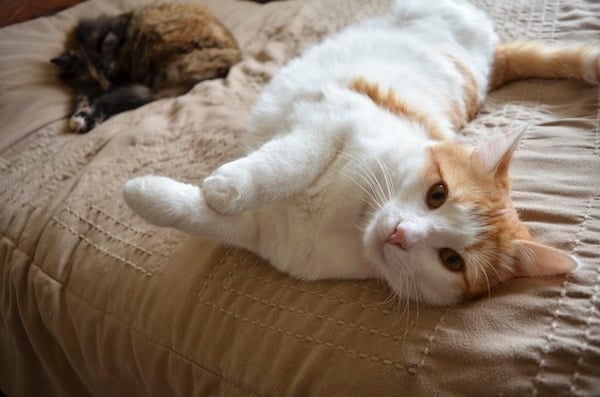
- Exposed belly: Cats may roll onto their backs, exposing their bellies as a sign of trust.
- Kneading: Pressing the paws rhythmically against a soft surface (or you!).
- Context: Cats may lounge happily in the sun with limbs outstretched, greet you with an upright tail after the workday, or knead blissfully in your lap when happy or content.
While these signs typically suggest a happy cat, sometimes they tell a different story. For instance, squinty eyes can indicate sickness or pain. In these cases, a cat’s eyes may also appear “dazed or glassy.”
Purring can throw people off, too. While a cat’s rhythmic rumblings are usually associated with contentment, they can also be used as a self-soothing technique in frightened or injured cats, says Dr. Sarah Jenkins, Austin-based clinician and veterinary consultant for Pet Civic.
ecbphotos via iStock
Playful or Excited Body Language
Play keeps our cats physically and mentally fit, so it helps to know when they’re interested. “Play behavior often mimics hunting,” says Jenkins. When your cat is feeling frisky, their body language will become lively and buzz with energy.
Here are signs your cat is in a playful or excited mood.
- Body & posture: Resembles hunting behavior—low crouch, focused eyes, twitching tail tip, wriggling rear end, and fast bursts of movement.
- Tail: Swishing from side to side. Cats may also curve their tail over their back.
- Ears: Upright and forward-facing.
- Eyes: Wide with dilated pupils.
- Whiskers: Fanned out and pointed forward.
- Exposed belly: Cats may also roll over, exposing their bellies, with limbs ready for action.
- Pouncing: A playful cat might hop sideways or pounce dramatically.
- Context: A cat might crouch low before pouncing on a moving toy, twitch their tail when they spot an interesting object, or roll onto their back to swat at a dangling feather wand.
The main challenge here is that there’s a fine line between playful antics and overstimulation. Cats can go from excited to annoyed quite quickly; it’s easy to miss if you’re not paying attention.
Take tail flicking—cats do this during play, but a swiftly twitching tail can also be your cat’s way of saying “I’m annoyed with you. Please stop.”
Dr. Aimee Warner, resident veterinarian at Waggel, says to look for intense, sharper movements. Flattened ears and avoidance behavior are additional signs you should pause playtime.
Rawpixel via iStock
Stressed or Worried Body Language
Cats are sensitive creatures. They’re easily stressed by changes in routine, environment, or housemates. Jenkins notes that recognizing your cat’s stress signals gives you the chance to intervene and prevent escalation to intense fear or aggression.
A cat who is stressed or worried may display the following body language signals.
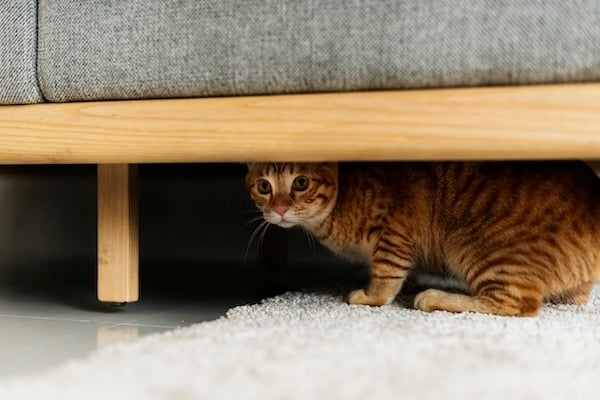
- Body & posture: Crouched low to the ground to make themselves look smaller. May turn their head or body away from a stressor. May raise one paw slightly. Tense, rigid posture.
- Tail: Stiff, held close to the body or tucked in.
- Ears: Slightly turned sideways (“airplane ears”) or angled back. Ears might be pricked forward, too.
- Eyes: Wide with dilated pupils, avoiding eye contact.
- Mouth: May be open, fast breathing.
- Displacement behaviors: These are behaviors that appear out of context and help cats cope with stress. You may notice excessive grooming, lip licking, or yawning.
- Context: Cats will often lower their bodies and tails at the vet, exhibit airplane ears in the presence of an unfamiliar dog, or groom excessively after moving to a new home.
Keep in mind that many common stress cues overlap with signs of sickness and pain. Pay attention to the overall context—if your cat displays these signals during a loud event (e.g., fireworks or construction), in the car, or when meeting a new cat, stress is likely to blame. If you can’t identify any stress triggers, loop in your vet to rule out a medical condition.
Cats with ongoing anxiety may also exhibit problem behaviors, like destructive scratching or urinating outside the litterbox.
Fearful Body Language
Genetics, traumatic experiences, and limited socialization can contribute to an overactive fear response in cats. But even confident, outgoing cats can experience fear when startled suddenly or encountering something strange and new.
“A fearful cat prioritizes self-protection,” says Jenkins. Usually, this means making themselves appear smaller and less visible. Here is what fearful body language looks like in cats.
- Body & posture: Crouched low to the ground to make themselves less noticeable. With intense fear, a cat may try to appear larger by arching their back and puffing up the fur along their neck, back, and tail.
- Tail: Tucked close to the body, bristled.
- Ears: Flattened back or angled sideways.
- Eyes: Wide with dilated pupils.
- Mouth: May be open, rapid breathing or panting.
- Whiskers: Pulled back against the face.
- Holding still: May be frozen in place.
- Trembling: Shivering or shaking uncontrollably.
- Context: Cats might strike the “Halloween Cat” pose (i.e., arched back and puffed fur) when they encounter a threatening animal, tremble after an unexpected loud noise, or freeze in place with saucer eyes during a thunderstorm.
Like stress signals, fearful body language overlaps with signs of sickness and pain. It’s also important to note that panting is often a sign of a medical issue. If your cat is panting without any additional signs of fear or outside the context of a frightening situation, contact your veterinarian right away.
phinizrl via iStock
Irritated or Upset Body Language
Cats can quickly transition from excitement to irritation during play. When your cat is irritated or upset, they’ll often give these warning signs.
- Body & posture: Stiff body, tense face.
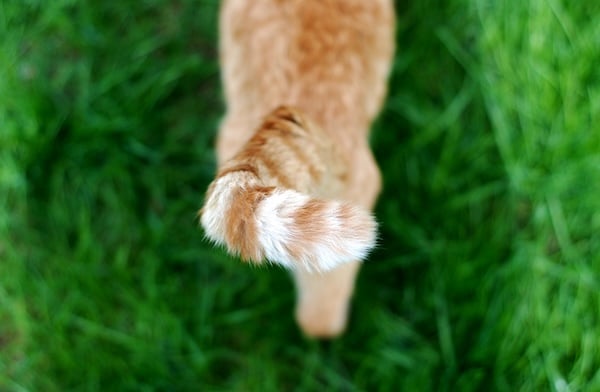
- Tail: Held low, thumping, or thrashing back and forth.
- Ears: Flattened and pinned back against the head.
- Eyes: Squinting, contracted pupils, giving a “hard stare.”
- Twitching skin: You may notice skin twitching along the spine.
- Avoiding contact: Shies away from your touch.
- Context: A cat might pull away from you when they’ve had enough petting, hiss at other pets invading their space, or twitch their tail when they’re maxed out on playtime.
“Irritation is often mistaken for play,” says Jenkins. “Many bites I treat happen because these signals were ignored for too long.”
The most commonly missed sign? A twitching tail. While this can indicate excitement, it can also point to escalating irritation that’s about to spill over. If you notice exaggerated, intense tail twitching, watch for additional signs of agitation, like avoiding touch, tense body posture, or hissing and snarling.
Challenges of Reading Cat Body Language
Understanding cat body language is a nuanced skill. While some signals, like relaxed body posture and loose movements, are fairly obvious, others require a more practiced eye to interpret. For instance, purring can indicate happiness—but it can also happen when a cat isn’t feeling well. And a swishing tail while birdwatching is different from a tail flicking in response to overzealous cuddling.
Certain feline features can add to the challenge. For example, a cat with a bobbed tail, like the Manx, can’t clue you into their mood with tail movements or positions. Similarly, cats with folded ears, like the Scottish Fold, can be harder to read. You’ll have to rely on other cues for the full picture.
Unsurprisingly, cat body language is often misinterpreted. To prevent misunderstandings, always consider the context in which signals occur. Avoid interpreting signals in isolation, and instead, pay attention to the whole picture.
Getting to know your cat helps, too. It’s easier to cultivate a peaceful home when you know how your cat typically expresses irritation, fear, or a desire to play.
It takes time and practice to accurately identify your cat’s cues. Nevertheless, it’s one of the best gifts you can give your feline friend. As Jenkins points out, most problem behaviors are really communication breakdowns. “Once owners learn to read the signals, the relationship shifts almost overnight.”
Stick with it—in time, you’ll become a better, more empathetic cat guardian, with an ever-growing bond.