- This post contains affiliate links. Read more here.
- Not a substitute for professional veterinary help.
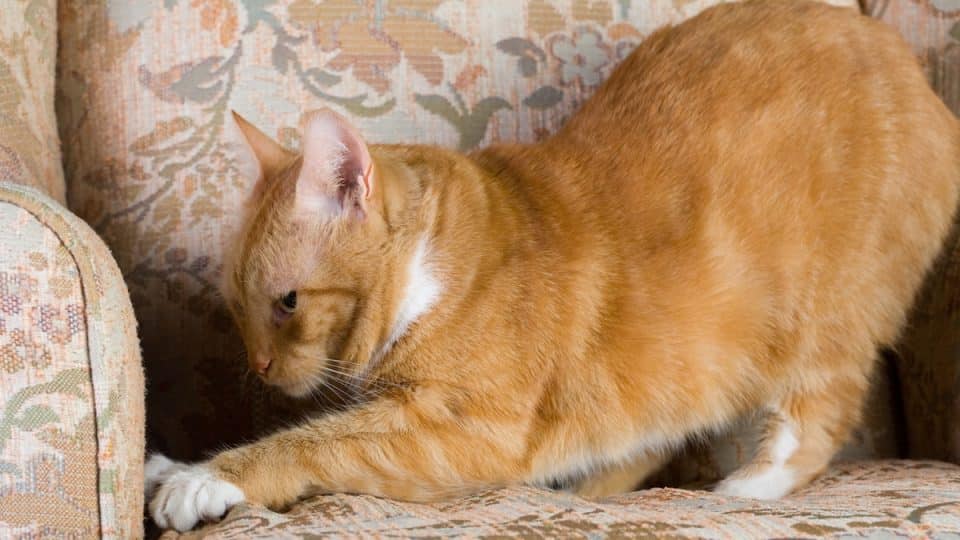
Cats have an inherent need to scratch surfaces. It’s in their DNA to mark their territory, and it’s crucial for claw maintenance. But this isn’t always good news for our furniture.
Suzi Moore, LVT, certified behavior consultant and owner of Another Approach Behavior Solutions, explains that scratching is a normal cat behavior that’s beneficial to their physical and mental health. It helps them shed layers of outer husks and calms them, knowing they’ve marked their territory.
But cat scratching can also signal that there’s an underlying issue. “If a cat is bored, under-stimulated, or anxious, that can lead to increased scratching behavior,” adds Moore. “And, of course, the items they find most satisfying to scratch (like nubby, textured furniture fabrics) are often the ones to which we object.”
So what can you do to keep your cat happy and save your belongings? Here are five ways to help cats stop scratching furniture.
1. Make Furniture Unappealing
Cats love a good nubby texture they can really sink their claws into. One option is to look for furniture made from materials that aren’t as fun to scratch. However, if you’re not in the market for new furniture, here are some other ways to protect your household items:
- Use a couch cover with a less enticing texture. Smooth or slick materials may hold less appeal for your little scratcher.
- Try furniture protectors. Moore suggests products like Miloona, which feature carpet-like panels that adhere to furniture and discourage scratching.
- Spray the furniture with scents that will deter your cat. Moore says sprays like Feliway Spray aren’t a deterrent so much as they synthetically replicate the facial pheromones of cats—signaling that the territory is already marked.
2. Redirect to a Designated Scratching Area
While you take steps to stop your cat from scratching your furniture, you’ll also want to provide plenty of positive scratching options. Moore recommends the following three components when designating a scratching area for your cat:
- Location. While you might think the designated spot should be far away from your furniture, that’s not exactly the case. “If the cat is scratching the couch,” says Moore, “the alternative you offer needs to be right next to (or on) the couch.”
- Materials. The right material for your cat’s scratching alternative will depend on your kitty’s personal preferences. Moore suggests putting out a “buffet” of side-by-side material choices and seeing what they gravitate toward. “If the cat is targeting an item you wish they would leave alone, try to duplicate the texture and experience of the item with your scratcher,” she adds.
- Design. Moore notes that most cats go for vertical scratchers, but long, flat options can work as well, so long as there are one or two additional tall options.
To entice your cat to use the scratching area, spray the items with scents your cat likes, such as catnip. Hang toys on scratching posts and use plenty of treats and praise when your cat goes for the appropriate scratching items instead of your favorite chair.
LukyToky via iStock
3. Trim Nails Regularly
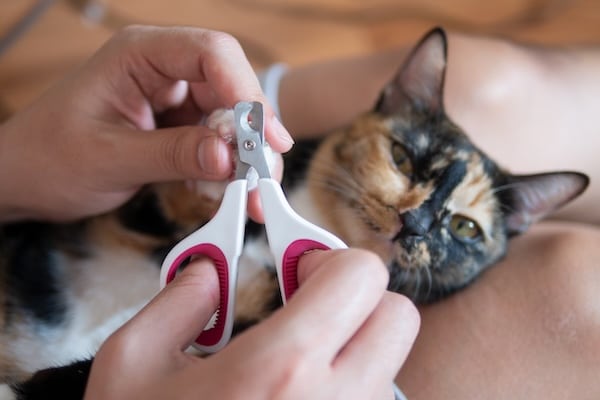
Some good old-fashioned nail care is not only beneficial for your cat, but also for your furniture! After all, shorter nails mean less damage.
The time between nail trims can vary among cats, but Moore says a quick trim every six weeks is a good general rule.
“The important thing is to learn how to make it a stress-free experience for the human and the cat and get the cat used to regular trims from a young age,” says Moore. Using methods like cooperative care gives cats more agency by teaching them to opt in to their grooming and upkeep.
Should you try nail caps?
Nail caps are just like they sound—they’re vinyl or rubber caps that are glued to the cat’s nail and last up to six or so weeks. However, Moore doesn’t recommend them unless it’s an absolute last resort. She says the caps can dig into the soft tissue around the cat’s nail, causing discomfort. It’s also quite common for cats to chew the caps off.
4. Don’t Punish or Declaw
Cat scratching is an instinctual and normal part of being a cat. While it’s upsetting to see a surface in your home being destroyed, it’s not productive nor advisable to punish a cat for being, well, a cat!
“Punishment increases anxiety and can seriously damage the relationship between the cat and human,” says Moore. “If anxiety increases, it opens the door to a whole host of physical ailments due to a decreased immune system and a stressed body.” This can include further scratching behaviors and issues such as spraying, aggression, and overgrooming.
Declawing isn’t a good idea either. It removes a portion of the bone that Moore says can leave a cat with a lifelong disability. She explains that bone fragments can remain after the procedure, affecting a cat’s gait and leading to physical issues, such as back problems.
Though declawing is legal in many areas of the United States, several cities and states, as well as many other countries worldwide, have outlawed the procedure. Moore suggests checking out The Paw Project to learn how you can support the banning of declawing and help fund surgical correction to relieve pain.
5. Get Professional Help
Working with a professional trainer or cat behaviorist greatly increases your chances of success when dealing with a behavior problem, especially one as common as unwanted scratching, says Moore. “Consult a professional and get expert guidance from the beginning, and get the best possible chance for a happy ending for everyone,” she adds.
If you’re still working on managing your cat’s scratching tendencies but can’t keep a constant eye on them while you’re at work or away, consider hiring a pet sitter to help you out!