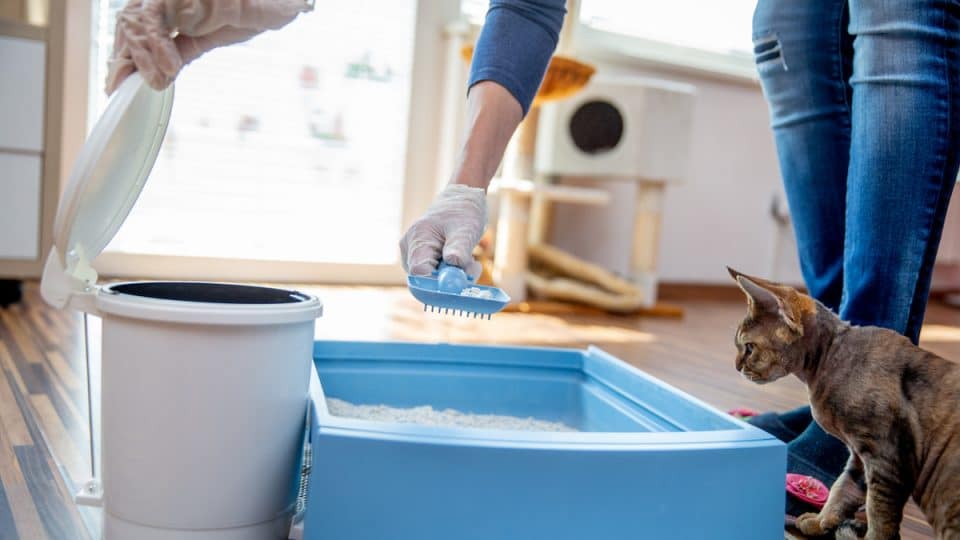
- This post contains affiliate links. Read more here.
- Not a substitute for professional veterinary help.
There are a million things to love about cats—but keeping a litter box clean isn’t one of them. While this chore might not be a favorite, it’s crucial for a clean home and a happy, healthy, and hygienic cat.
In this guide, we’ll explain how often to clean a litter box by breaking the process down into manageable daily, weekly, and monthly tasks. We’ll also share tips for deep-cleaning your litter box and explain when to replace it. This advice comes from three experts: Dr. Scott Rovner of Roscoe Village Animal Hospital, Dr. Kathleen Mottel of Glen Ellyn Animal Hospital, and certified cat behavior consultant Dr. Mikel Delgado.

Whether you’re a new cat parent or an experienced owner looking to fine-tune your routine, here’s your straightforward guide to litter box maintenance.
How Often To Clean a Cat Litter Box
-

Mila Naumova via iStock
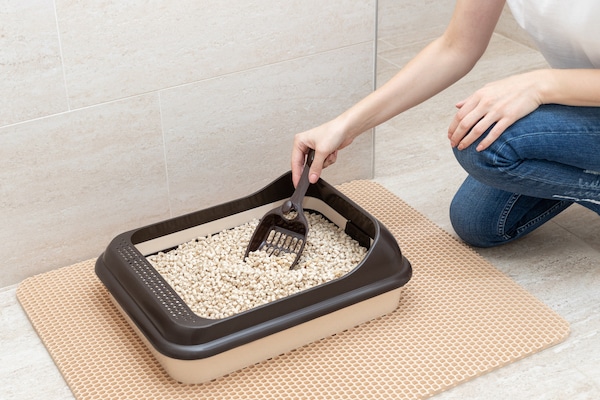
Dr. Mikel Delgado, founder of Feline Minds and Rover’s resident cat expert, emphasizes that keeping up with litter box maintenance is key to preventing litter box avoidance. But keeping the litter box area tidy doesn’t mean you need to deep clean it every day.
Below, we outline how often you should clean specific areas of your litter box.
Daily tasks
Every litter box in your house needs to be scooped once per day, no matter what kind of litter you’re using. If you’re seeing issues—such as pickiness or reluctance to use the litter box—veterinarians Dr. Rovner and Dr. Mottel suggest scooping twice per day. Dr. Delgado adds that frequent scooping prevents clumps from breaking down and mixing with the clean litter, which extends the litter’s freshness.
“Scooping litter” means removing any solid matter (i.e., clumps of urine and fecal matter) from the box and disposing of waste in a plastic trash bag or a Litter Genie. Once you’ve scooped the waste, stir the remaining litter to distribute fresh particles and extend its use.
Pro tip: To help remember this chore, try scooping at the same time each day, whether it’s in the morning or after work.
Weekly tasks
To keep the litter box fresh between deep cleans, perform these tasks weekly:
- Wipe down the walls. Use a pet-safe enzymatic cleaner to remove litter and urine from the sides of the litter box—Delgado uses unscented Anti-Icky Poo.
- Use a spray to eliminate odors. Delgado also sprays her litter boxes with a few squirts of Zero Odor Litter Spray, which you can use directly on soiled litter. It’s non-toxic and has no detectable odor.
- Sweep stray litter. You’ll also want to sweep or vacuum the litter box area to prevent bacterial spread.
Another weekly task that’s totally optional: using a litter additive. These have enticing smells intended to attract cats to their litter box. Delgado adds a weekly sprinkle for extra appeal.
Bi-weekly tasks
Every couple of weeks, it’s time to clean the litter mat. Start by shaking off excess litter. Then, check the cleaning instructions—some fabric mats can be tossed in the washing machine on a cold, gentle cycle. Rubber or silicone mats should be hand-washed. Use a hose or utility sink and scrub the mat with warm water and mild dish soap.
After washing, hang the mat to let it dry completely. This step prevents mildew from forming.
| Cleaning Task | Frequency |
| Scoop waste | Once or twice daily |
| Top off with fresh litter | Every few days |
| Wipe down sides with an enzymatic cleaner | Weekly |
| Complete litter change | Weekly to monthly (depending on litter type, number of cats, and cat preference) |
| Clean the litter mat | Bi-weekly |
| Deep clean the litter box | Bi-weekly to monthly |
| Replace the litter box | Every 12 months or so |
How To Deep Clean a Litter Box
-
CasarsaGuru via iStock
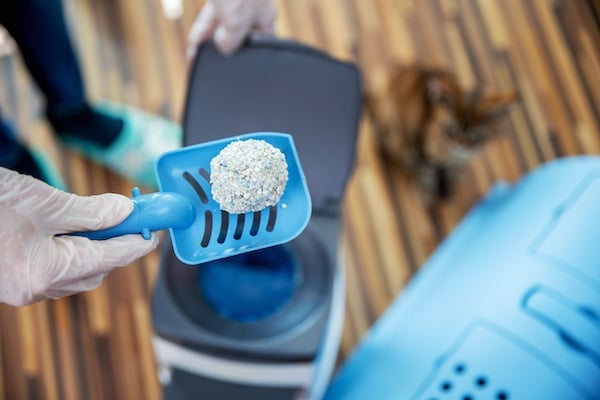
To prevent bacteria from spreading, replace the litter entirely and deep-clean the box about once a month. The same applies to automatic litter boxes, which still require a monthly deep clean, even though they do the scooping for you.
Dr. Rovner recommends deep cleaning every 21 to 30 days. If you maintain the litter box and scoop often, Dr. Delgado says you can get away with longer intervals between deep cleans. However, if your cat has a medical issue that causes them to urinate or defecate more frequently, this timeline may need to be adjusted.
Here’s how to deep clean your cat’s litter box:
- Empty the litter. Dump all the litter into a trash bag. Seal the bag and dispose of it outside.
- Remove stuck-on clumps. To tackle stubborn clumps clinging to the sides, use baking soda and vinegar. Simply sprinkle baking soda in the tray, and pour vinegar over it. Let it soak for 15 to 20 minutes. Then, rinse thoroughly.
- Clean with mild soap. Using a sponge, mild dish soap, and hot water, scrub the inside of the box, making sure to get into each corner. Avoid using bleach, rubbing alcohol, chlorine, and ammonia-based cleaners. Rinse thoroughly to remove all soap residue.
- Apply an enzymatic cleaner. For extra freshness, Delgado likes to do a final wipe with Anti-Icky Poo after cleaning to keep odors at bay.
- Dry the box. Wipe the box with a clean cloth or let it air dry.
- Refill with fresh litter. Once the box is completely dry, refill it with 2-4 inches of clean litter.
Pro Tip: If you’re worried your cat will need the box before you’ve finished, use a temporary solution, such as a travel litter box.
When To Replace the Litter Box
Litter boxes aren’t meant to last forever. If you have a plastic box, Delgado recommends throwing it away when it has deep scratches, as these can harbor bacteria and retain odors. “This may be every year or so, depending on your cats,” she says.
If you’re looking to boost your box’s longevity, consider a stainless steel litter tray. “They are more expensive but last much longer because they don’t get scratches,” notes Delgado.
Here are signs it’s time to retire your litter box and replace it with a new one:
- It has scratches, cracks, or grooves.
- It’s discolored or has stains that don’t go away with thorough cleaning.
- Odors linger, even after a deep clean.
- Your cat avoids the box.
Litterbox Maintenance Tips
To make litter cleanup easier, try some of these maintenance tips:
- Keep supplies handy. You’ll be more inclined to tidy up when cleaning tools—like a litter scoop, dustpan, and paper towels—are nearby. Keep a stocked tote beside the box, or store items on a nearby shelf or in a closet.
- Consider a litter genie. If the litter box isn’t near a trash can, Dr. Delgado says a Litter Genie can make your job easier.
- Add a litter mat. Catching stray particles as your cat exits the box, a litter mat can help keep your floors clean.
- Use the right litter. Every feline household has different needs, but you can’t beat clumping clay if convenience is your ultimate goal. It makes cleanup much easier!
- Use the right amount of litter. “It also helps to have 2-4 inches of litter in the box so that the clumps collect urine before it hits the bottom of the litter box,” says Delgado.
- Use pet-safe cleaning products. When washing the litter box, use a pet-friendly, unscented soap. Strong scents can deter your cat from using their box, and some cleaning products may contain hazardous chemicals.
- Avoid flushing litter down the toilet. Some litters are marketed as flushable, but this can cause issues for older plumbing and is usually not worth the risk.
- Don’t dump litter outside. Used cat litter may carry pathogens that can contaminate the soil. Instead, dispose of it in a sealed bag along with your regular trash.
- Deep clean more often for sick cats. If your cat has worms or another illness, stop the spread by disposing of all litter and washing the box more frequently. Be sure to wear gloves, and thoroughly wash your hands after everything is clean.
- Plan for absences. Cats are fairly self-sufficient, but if you’ll be away for more than 24 hours, consider hiring a trusted pet sitter. They can keep your cat company—and keep litter scooped!