- Not a substitute for professional veterinary help.
Maintaining the litter box is critical to cat care—and a big part of that involves knowing when to scoop and how often to change cat litter completely. Generally, you should scoop waste once or twice daily and perform a complete litter change every two to four weeks. A full litter change involves emptying the box, cleaning it, and refilling it with a fresh batch of litter.
While two to four weeks is the general rule of thumb for litter changes, several factors can alter this timeline. “There is no single ‘perfect’ schedule that works for every cat,” says Dr. Jo Myers, a veterinarian at Vetster. “The ideal routine depends on litter type, box design, number of cats, and individual preferences.”

This guide will walk you through the key considerations for planning full litter changes to help you find a schedule that works for you and your feline household.
How Often To Completely Change Cat Litter
The type of cat litter you use will affect how often you need to change it, as each type handles waste differently. Some litters absorb liquid more effectively and control odors better, meaning they can be changed less often. Others need more attention. Dr. Meyers offers the following guidelines.
| Litter type | How often to change | Factors affecting longevity |
| Clumping clay | Every 2 – 4 weeks | Traps odors effectively and creates clumps that can be removed from clean litter, keeping it fresher longer |
| Non-clumping clay | Every few days; up to a week | Soiled particles can’t be separated from clean litter |
| Silica crystal litter | Every 3 – 4 weeks | Stays fresh longer because it’s ultra-absorbent and dehydrates solid waste to control odors |
| Natural/Plant-based litter (wood, corn, wheat, pine) | Every 1 – 3 weeks | Breaks down more quickly than clay, so more frequent changes are needed |
| Paper litter | Every few days | Less effective odor control and gets soggy quickly |
Multiple cats
Surprisingly, having multiple cats doesn’t automatically require more frequent litter changes. According to Dr. Meyers, the need to replace litter depends more on the number of litter boxes available and how your cats use them.
Experts typically recommend one litter box for each cat, plus one extra. If there are fewer boxes, you may need to change out the litter more often. Additionally, if your cats prefer a particular box, Meyers says you may need to refresh it more often than the others.
“The best rule of thumb, no matter how many cats you have, is to change the litter often enough that it stays clean and appealing to your cats,” she notes. That means observing your cats’ habits, noting any favorite boxes, and adjusting your cleaning routine accordingly.
Litter box type
Don’t overlook the type of litter box you use. “The design and size of the litter box can influence odor buildup, comfort, and how appealing the box feels to a cat,” says Dr. Meyers.
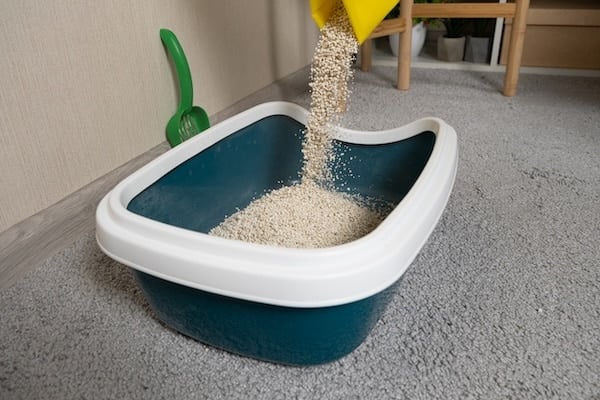
For instance, whereas open litter boxes have good ventilation, covered boxes may trap odors and moisture, requiring more frequent changes. Size plays a role, too. Larger boxes can hold more litter, slightly extending longevity. And since automatic litter boxes remove waste immediately, unused litter stays fresh longer.
Zarina Lukash via iStock
Other factors
You’ll also want to consider your cat’s individual bathroom behaviors. For instance, if you have a cat who has a medical condition that makes them urinate frequently, then you’ll need to change out the litter more often. Cats who dig aggressively in their litter box or track out a lot of litter will also affect the litter levels of the box.
Additionally, if you live in a warm or humid environment, you’ll need to switch out the litter box more often to prevent bacterial growth and odors.
Topping Off vs. Changing Out
As your cat uses the litter box, you’ll need to top off the litter to replace what you’ve removed during scooping. This top-off helps keep the box fresh and maintains an optimal litter depth. You can add as needed, typically a few cups every few days.
However, topping off isn’t a permanent solution. Over time, the litter will lose its ability to absorb moisture and control odors. When it’s time for a complete change-out, aim to put 2-4 inches of litter in the box. This amount gives your cat enough material to cover their waste and prevents clumps from sticking to the bottom of the tray.
How to dispose of cat litter
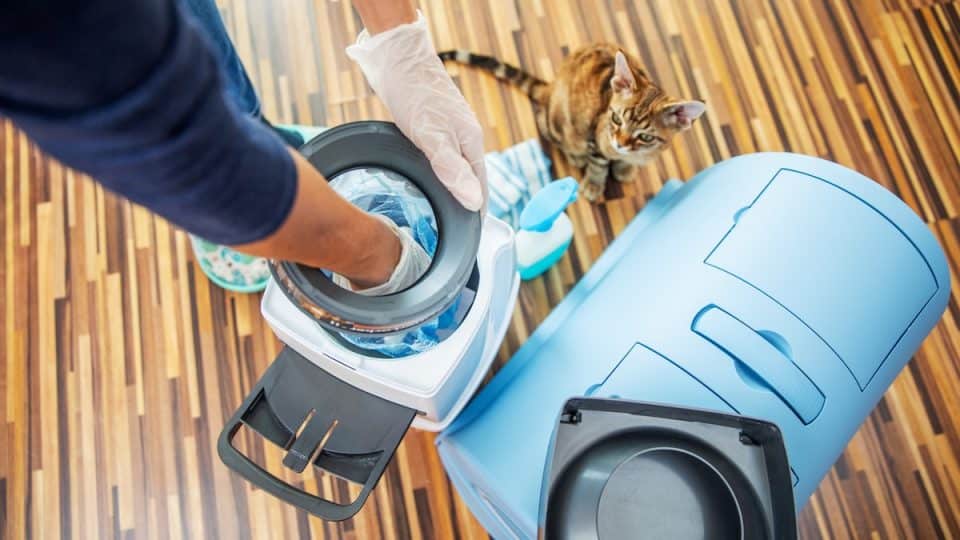
When it’s time for a full change-out, discard the used litter by placing it in a sealed bag and throwing it out with your regular household trash. Tossing out waste seems simple, but there are a couple of important dos and don’ts when it comes to disposing of cat litter.
- Don’t flush litter waste down the toilet. While some types of litter are flushable, disposing of the wrong type down the drain can cause serious clogs and plumbing problems!
- Don’t dump litter waste outside.
- Do throw out litter in sealed bags with your regular household trash.
- Do vacuum/sweep the area surrounding the litter box between changes.
- Do sanitize the litter box between changes. Scrub the box with hot water and mild dish soap, and let it dry completely before refilling with fresh litter.
Signs It’s Time To Replace Cat Litter
Instead of sticking to a rigid schedule, pay attention to these telltale signs that it’s time to change out the cat litter.
- Strong odors. If you notice a persistent ammonia smell even after scooping, it’s definitely time for a change.
- Clumping issues. If clumps crumble instead of coming out cleanly, the litter is due for replacement.
- Soggy texture. Litter that feels damp or saturated indicates it’s no longer effective.
- Excessive dust. If digging up the litter creates a dust cloud, the old litter is breaking down and needs to be replaced.
- Behavioral changes. Note if your cat is peeing outside the box, hesitating to enter it, or scratching excessively without eliminating.
Dr. Meyers notes that behavioral changes are especially important to watch. “Cats often signal dissatisfaction with the litter box long before they stop using it entirely,” she says.
Signs You’re Not Changing Litter Often Enough
In nature, cats eliminate in places that feel clean, safe, and appropriate in the moment, says Dr. Meyers. When a litter box is soiled or smells bad, it no longer mimics these conditions. This can lead to a host of issues, including:
- Litter box avoidance. If the litter box is dirty or smelly, your cat may instinctively look for a better alternative—like your bed or laundry.
- Hygiene concerns. A litter box that goes too long between changes can become a breeding ground for germs, exposing you and your cat to harmful bacteria or parasites.
- Heightened stress. Many cats find a dirty litter box stressful. Heightened stress can compromise their immune system and is linked to urinary tract issues.
- Respiratory issues. A buildup of ammonia can trigger asthma, allergies, and pneumonia in both cats and humans.
- Bad habits. If your cat becomes accustomed to not using their litter box, Meyers says they may form a negative association with it, which can be hard to reverse.
“Ultimately, litter box care is not about training cats to tolerate poor conditions,” says Meyers. “It is about creating an environment that matches their instincts.” And thus, when the right conditions are in place to create a clean, safe, predictable litter box, most cats will use it consistently. Done and done.
Tips for Maintaining a Fresh Box Between Litter Changes
To help keep your cat’s litter box fresh between litter box changes, here are a few things you can do:
- Scoop often: at least once or twice per day.
- Maintain the proper litter depth: typically two to four inches.
- Keep the box in a well-ventilated area: to prevent odors from building.
- Wipe down the sides: use a pet-safe enzymatic cleaner to clean dust and urine off the litter box walls.
If you have a busy weekly schedule or are planning a trip away, consider hiring a pet sitter to care for your cat’s litter box needs. Leave detailed instructions for daily or weekly litter box maintenance in your cat’s care instructions and enjoy the added peace of mind that your kitty is in good hands.