How To Spot the Signs of Dog Aggression When Pet Sitting
Dog aggression can be stressful—and dangerous. In most cases, aggressive dog behavior stems from fear, pain, past trauma, or a lack of socialization. It can manifest in different types and levels of behavior, including reactivity, resource guarding, and territorial behavior.
Every dog, regardless of breed or temperament, has the potential to exhibit aggressive behavior when they feel threatened. That’s why it’s so important for sitters to recognize the signs of dog aggression and have a clear strategy for addressing it—before it leads to a bite.
Here are tips for managing dog aggression and protecting yourself and the dogs in your care.
Determining Risk Factors
“Aggressive behavior” can cover a wide spectrum. Some behaviors you might be prepared to manage, while others would pose a risk.
Before taking on any dog, it’s important to ask targeted questions to make an informed decision that keeps you and the dog safe. Consider asking specifically about:
- Size of the dog. Big dogs can be harder to manage, especially if you lack the arm strength to control them on leash.
- Age of the dog. Older dogs may be experiencing pain that can make responses to handling hard to predict.
- Triggers and context. Learn which specific triggers set off a dog’s reactive or aggressive behaviors—and consider realistically whether or not you’ll be able to avoid them.
- Degree of predictability. Find out whether the dog gives warning signs before reacting, which gives you a chance to offer space.
- Severity and history. Ask the owner how aggressive behaviors manifest. If the dog has bitten someone before, it’s important to understand the context and severity.
- Management tactics. Ask the owner how they typically manage their dog’s aggression. Is it easy to stop reactive or aggressive behaviors? Will you be able to implement the strategies the owner uses?
Signs of Dog Aggression
Dog aggression encompasses a wide range of behaviors that are usually rooted in fear or discomfort. This includes reactivity, resource guarding, and protective behaviors.
Typically, aggressive behaviors begin with subtle warning signs. These signals are the dog’s way of communicating their unease, pain, or stress. They often start as defensive postures intended to create space from a perceived threat. If these initial warning signals are ignored or ineffective, the dog’s behavior and body language may become more offensive.
It’s crucial to pay attention and remove yourself and the dog from a situation that could escalate.
Here are some common warning signs of dog aggression, in ascending order of intensity:
- Lip licking
- Avoiding eye contact
- Freezing
- Body going stiff
- Staring
- Curling lips
- Blocking other dogs or people
- Raised hackles
- Growling
- Barking
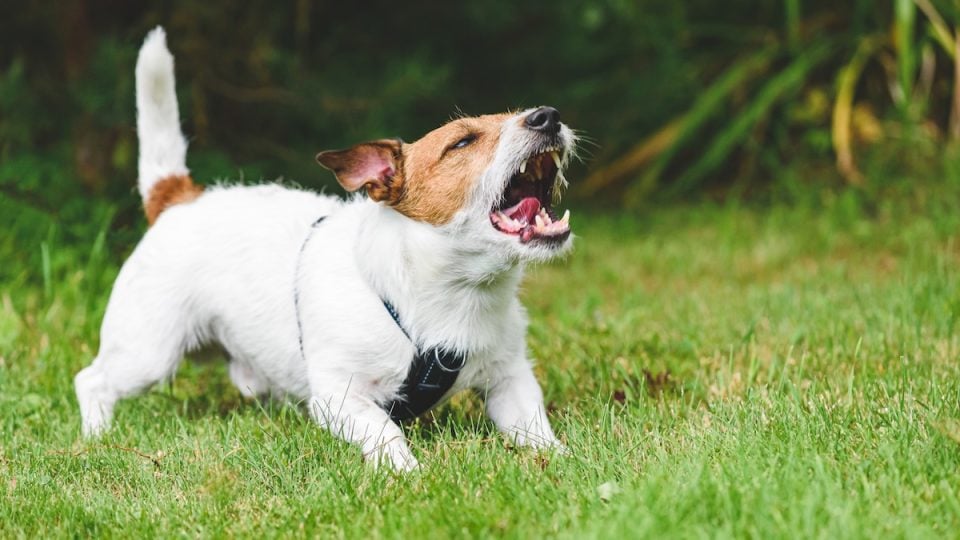
- Baring teeth
- Snarling (a combination of growling and baring teeth)
- Mouthing or warning snap (a bite that doesn’t actually touch)
- Lunging or jumping
- Quick nip that doesn’t leave a mark
- Bite that tears the skin
- Bite with enough pressure to cause a puncture would
- Repeated bites
Pet Sitting Tips
You might not always know if a dog in your care could display aggressive tendencies. Here, we explore strategies that can help keep experiences safe and positive.
Use management strategies
One of the best strategies for preventing aggressive behaviors is management: setting up your space and routine to minimize exposure to triggers and keep a dog as calm and comfortable as possible.
A few ways to accomplish this include:
- Feeding dogs separately. Even dogs who know each other and are normally docile may get into conflict over food. Always feed dogs in separate rooms or crates to prevent food-related conflicts, and avoid leaving food out.
- Restrict access to high-value resources. This can include prized chews, favorite toys, or resting spots—even your affection. Instead of putting high-value resources in the middle of a group of dogs, only give them out when dogs are separated so they can safely enjoy them apart.
- Using pet gates. If you have other pets at home, install barriers or gates to keep them apart. You can also use pet gates to create safe zones where dogs can retreat if they feel overwhelmed or threatened.
- Avoiding close proximity during sensitive times. Keep other pets and children away during stressful times, such as mealtime or during noisy activities like vacuuming.
- Boosting enrichment. Offer puzzle toys, lick mats, snuffle mats, or long-lasting chews to offer a dog healthy outlets to expend energy.
Avoid triggers
For reactive dogs, often the best thing you can do is avoid known triggers during their stay.
- Ask the owner about their dog’s triggers. Reactive dogs may struggle with other dogs, bicycles, wildlife, traffic, loud noises, being on leash, or unfamiliar people.
- Change walking routes. Avoid exposure to triggers by walking in less-busy areas, such as a parking lot or a soccer field, during low-traffic times, like early morning and evening.
- Create distance. If you see a potential trigger, turn in the opposite direction, cross the street, or step behind a parked vehicle.
Maintain the dog’s usual routines
A consistent schedule provides stability and helps lower a dog’s stress. To the best of your ability, try sticking to the dog’s regular routine, including mealtimes, exercise, playtime, and downtime.
Create space after warning signs
If you observe warning signs of aggression, give the dog space. This lets them decompress and ensures you’re not a target of their agitation.
It’s a good idea to designate a safe space in a quiet, low-traffic area of your home where the dog can go when they need a break. Provide a cozy bed, calming toys, and blankets to help the dog settle.
Reward calm behavior
Consider keeping training treats on hand to reinforce calm behavior during stressful situations.
Consider a trial run
For dogs who meet your criteria for care, consider setting up a short trial to see how they behave on their own.
You can even do this during the Meet and Greet. Ask the owner to leave the house for a brief period so you can see how the dog acts when you’re alone with them. Maintain a calm presence and offer treats to build trust, all while closely monitoring the dog’s body language.
When To Decline a Booking
If you feel ill-prepared to care for a dog for any reason, don’t hesitate to turn down a booking. Safety should always take precedence for both you and the dog.
Here are a few examples of situations where declining may be critical:
- You don’t have enough data. Even when a dog’s behaviors are mild, if the owner can’t describe triggers—or if a dog is known to respond unpredictably—you won’t be able to put good safety precautions in place, which poses a risk to everyone.
- The owner minimizes the aggression. Sometimes owners downplay the severity of their pet’s aggressive behavior. If you observe troubling behavior and the owner responds defensively, consider it a red flag.
- The setup makes it difficult to manage behavior. Even mildly reactive behaviors can be difficult to manage in an environment that’s not set up to separate or closely monitor pets.
- Handling may provoke the dog. If a dog responds aggressively to required handling, like administering medication, you may not be able to safely provide care.
Additional Support
Don’t forget—you’re never alone. Rover’s Trust & Safety team is here 24/7 and always ready to jump into action. If you experience a health or safety issue, don’t hesitate to call Rover Support at 888-727-1140, and we’ll help you through it.