Tips for Walking a Leash Reactive Dog
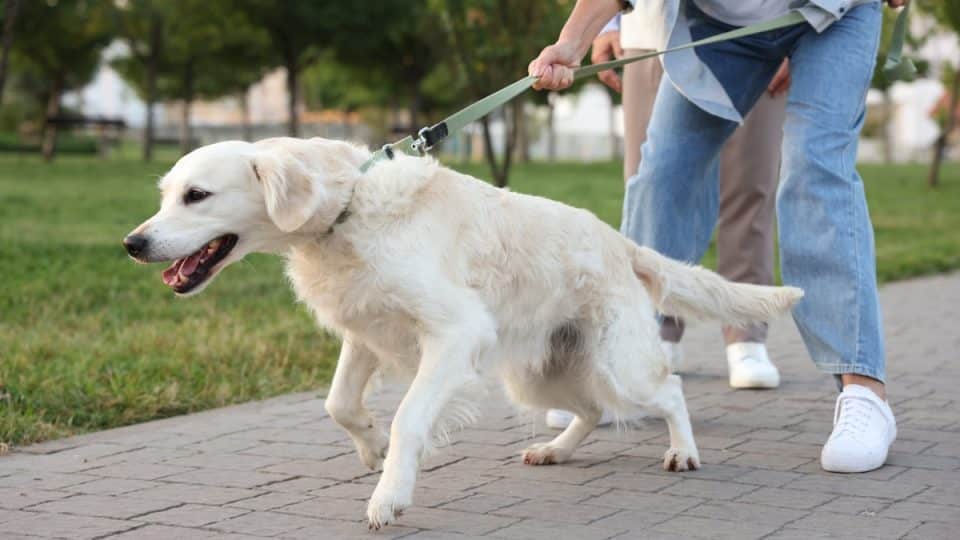
If you’ve been pet sitting or dog walking for a while, you’ve likely encountered a leash reactive dog. Leash reactive dogs have a more intense reaction to seemingly “normal” things. They might bark, lunge, whine, or try to escape when they encounter a trigger, like a person, dog, or loud noise.
Fear, frustration, past trauma, insufficient socialization, genetics, and aversive training methods can all cause leash reactivity. The good news is that management and training can help.
As a pet sitter or dog walker, your goal will likely be management, which means working to limit a dog’s exposure to triggers and keep them calm.
In this guide, we’ll take a look at ways to prepare for walks ahead of time, dos and don’ts, and tips while you’re on the road.
1. Talk to the Owner About Leash Reactivity
The first step in caring for a leash reactive dog is preparation: talk to your client about their dog’s leash reactivity.
During a Meet and Greet, consider asking:
- What are your dog’s triggers?
- How does your dog respond to triggers?
- How much space does your dog need from triggers?
- What gear do you use when walking your dog?
- Do you have any cues or management skills that you use to avoid triggers?
- How strong is your dog when they pull?
- Can we take a trial walk together so you can show me how you handle your dog’s triggers?
You might also consider setting a policy for leash-reactive dogs, such as walking just one dog at a time and adjusting your rate to accommodate the one-on-one care.
2. Plan Your Route
Look for routes with minimum noise and traffic, with lots of space for the dog to move away from triggers. Your client can be a great resource for suggested routes.
Good candidates for areas to walk:
- Empty fields
- Quiet trails
- Less populated residential sidewalks
- Sniffspots
- Empty parking lots in business centers
- College campuses after hours
Bad candidates for areas to walk:
- Dog parks
- Busy streets
- Playgrounds
- Noisy areas near construction zones
3. Stay Aware of Your Surroundings
When you’re walking with a leash reactive dog, it’s a good idea to avoid using your phone (except for the occasional picture for your client). Skip wearing headphones and scan the environment ahead of you to stay one step ahead of potential triggers.
If you spot people or dogs approaching, cross the street or turn in the opposite direction. (Exactly how much space you will depend on the dog and their threshold.)
Ask your client if their dog is familiar with any specific management skills, like an emergency U-turn. That’s when you cue or lure the dog to quickly pivot with you and walk in the opposite direction.
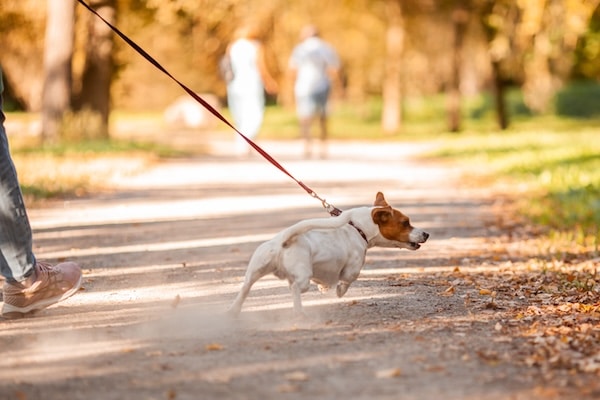
If you’re in a situation where you’re stuck and can’t make space, try to block the dog’s line of sight. Stand in front of the dog or lead them behind a tree or bush.
Natallia Dzenisenka via iStock
4. Use Redirection and Distractions
For dogs that are extremely prey-motivated, toys—especially squeakies—are a good way to grab their attention before they spot a trigger (like the unsuspecting squirrel down the street).
For food-motivated dogs, ask your client which treats their dog really loves. Use these high-value snacks to motivate a dog to follow your lead, even in high-stakes situations.
Treats or toys can be used as a lure: place them in front of the dog’s nose to move away with you. Or you can toss them in the opposite direction to divert their attention from the stimuli.
Treats scattered in the grass are another a good way to distract a dog and get their nose to the ground, which can help calm them down.
What to avoid
Here’s what not to do if your leash-reactive dog encounters a trigger.
- Don’t panic, yell, or get mad. This is more likely to increase a dog’s anxiety and may make the behavior worse. Stay calm and use a reassuring tone.
- Avoid tightening the leash preemptively. Tension can travel down the leash and cause the dog to be on edge. Keep your grip loose and your body relaxed as best you can.
- Don’t allow a leash-reactive dog to meet other dogs and people. If you can’t cross the street, be direct and say kindly but firmly that you need space.
5. Bring the Right Gear
It’s a good idea to tell a client upfront about any equipment that you’re willing or unwilling to use—or that you feel will provide a safer and more comfortable experience.
The following gear can make pet sitting and walking a leash reactive dog much easier:
- Padded harness with a front-clip leash attachment. These no-pull harnesses help prevent pulling and lunging. They redirect a leash-reactive dog while keeping their joints safe and their necks free of injury—something a traditional collar might not do.
- Six-foot leash. If walking in the neighborhood, this length will keep your dog close while giving them enough space. Use long lines when you have plenty of space away from triggers, like in an empty field, and avoid using retractable leashes altogether.
- Double leashes. For especially strong or crafty pups, consider double leashing for extra support.
- Leash sleeve or vest/cape. A special leash sleeve or vest indicates that a dog shouldn’t be approached and requires space.
6. Manage Interactions With Other Dogs
Inevitably, on your walks, you’re bound to run into other dogs, which can set off your leash-reactive pup.
Try to take space using the management methods above, like tossing treats or U-turning. If that’s not possible, tell the other person that the dog you’re walking is reactive or “not friendly” and needs space.
If the other dog approaches too quickly, try to create a barrier between the two, such as a bench or a trash can.
7. Stay Calm and Positive
You know the cliche “keep calm and carry on”? It applies to this situation, too! If you’re stressed and panicked, your dog can pick up on your emotions.
Stay calm, loose in your body, and don’t make fast movements or raise your voice. Avoid tightening up on the leash.
Instead, use a soft voice, gently change directions, and use reassuring tones and language, such as “Now we’re gonna go this way, good dog!”
8. Do What’s Right for You
For your safety and the dog’s, it’s important to tell a client if you’re uncomfortable or unable to walk their leash-reactive dog. You may feel you don’t have enough experience with reactivity, or you may not be physically capable of holding back a big dog. No matter the reason, you can always say no to a client if it’s not the right fit and you have safety concerns.
It’s also okay to ask your client for more information. If you decide it’s not a good fit, politely convey your feelings in a message, such as “I’m sorry, but I don’t feel I’m the best fit for your dog’s needs, and I want us both to be safe.”