- Not a substitute for professional veterinary help.
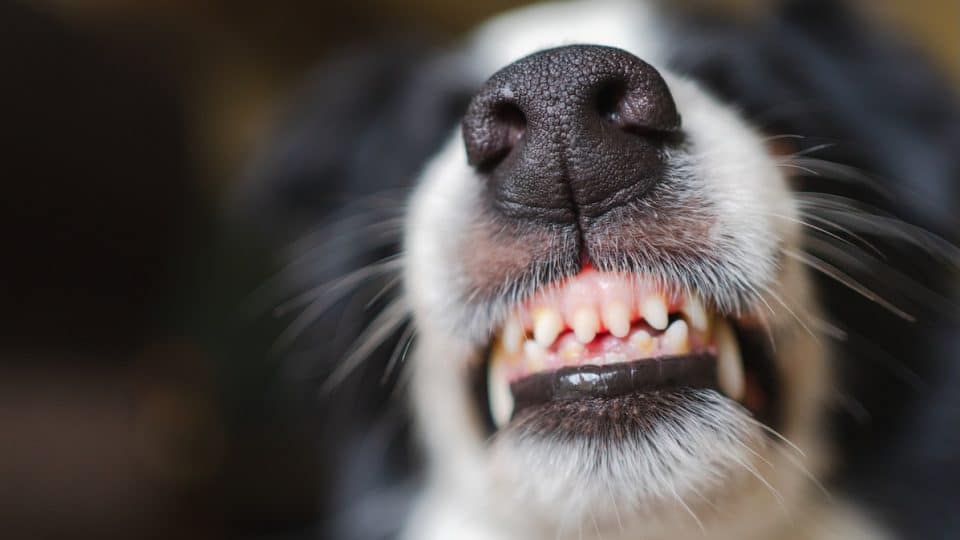
One of the tricky things about reading dog body language is that meaning is usually dependent on context. Most behaviors can mean a huge range of things, and it takes a close look at the context and the rest of your dog’s body to decide what your dog is communicating. That’s especially true for a dog showing their teeth.
A dog may bare their teeth when excited, playing, or showing submission—but it’s most often a warning sign. When your dog means business, you’ll see their mouth tightly pulled back, usually accompanied by tense body language, a hard stare, low growling, and raised hackles.
While this behavior can be unsettling, it’s crucial to never punish your dog for giving you a warning. If you discipline your dog for expressing discomfort, they might learn to escalate things to a snap or bite without warning instead.
We consulted Dr. Emma Choi, DVM, a veterinarian at VCA Animal Hospitals and an advisor for Mendocino Food Consulting, to learn more about what it means when a dog shows their teeth and the right way to respond.
Showing Submission
A dog showing their teeth while displaying relaxed body language and not growling may be indicating submission. Your dog might also be lowering their body posture, bellying up, averting their eyes, lowering their tail, or licking their lips.
“Some dogs display a submissive smile to signal friendliness,” says Dr. Choi. For instance, a dog might submissively smile to:
- Diffuse a tense encounter with another dog
- Show affection and trust with their guardian
- Calm themself down in a scary situation (like at the vet)
“Make sure to observe the full body language to help determine whether the signal is threatening or friendly,” she adds. If it’s threatening, remove your dog from the situation. If it’s friendly, encourage your dog by keeping your own body language loose and welcoming, too.
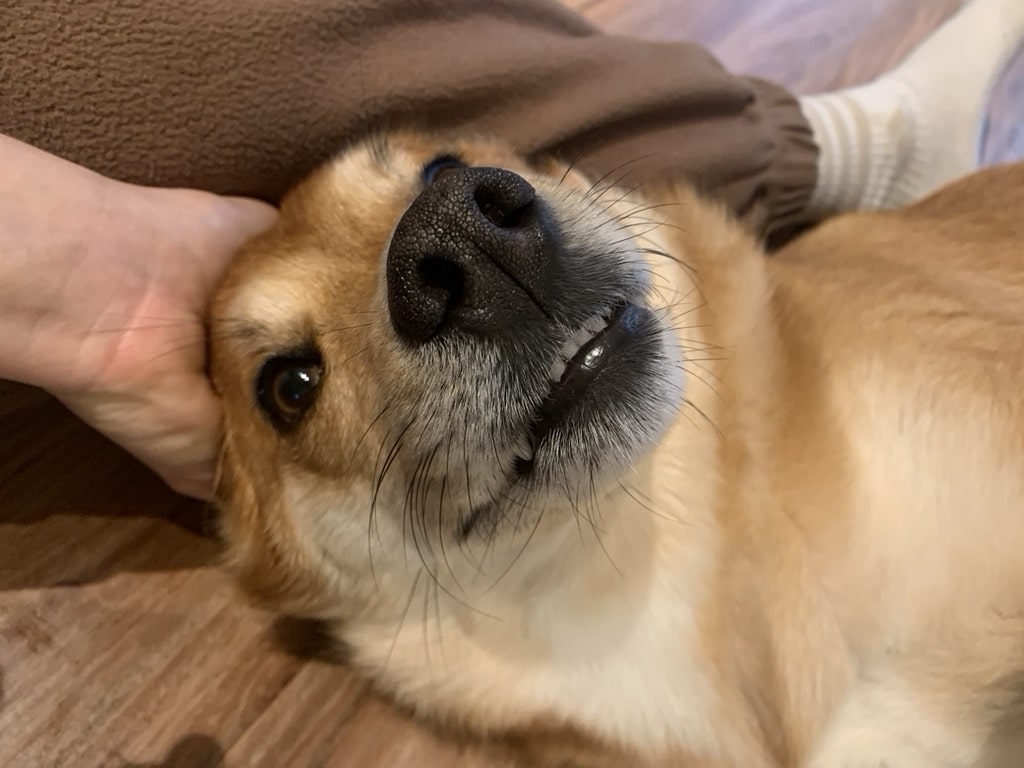
Rover pup Roo shows her teeth in exchange for head skritches.
Play
Some dogs show their teeth when they’re playing. Your dog may flash a smile with teeth when they’re eager to romp, run, or initiate a wrestling match with another dog. This behavior typically means your dog is feeling excited and eager to be social. A dog may show their teeth when they’re:
- Initiating play (usually following a play bow)
- Growling during wrestling or chasing games
- Playing a game of “bitey-face”
Look for loose lips, wagging tail, and other relaxed body language from your dog; these signs indicate that a dog is play-fighting. On the other hand, tight, wrinkled lips, stiff body language, and a tucked tail might indicate an actual fight. Closely observe your pet anytime they’re showing their teeth during playtime with another dog. If the play turns pushy or aggressive, you’ll want to step in.
Frustration
Teeth-baring can show up when a dog is feeling frustrated. Reacting because a barrier is blocking something they want to get to is a common scenario where a dog might feel agitated. These are all examples of when a dog is likely feeling excited, but in a negative and stressed-out way:
- Being restrained on a leash, unable to go where they want
- Barking or fighting with a dog that’s on the other side of the fence
- Being behind a window or door when there is a person or animal outside that they can’t reach
If your dog is showing their teeth while barking, lunging, or snarling, it could be a sign that your dog is frustrated that they can’t reach the object that’s triggering or exciting them. The best solution is to redirect their attention away from the trigger, create distance, and help them calm down.
Guarding
Dogs may display their teeth when they’re feeling protective of an object or place. They could be resource guarding food, toys, treats, or even their favorite person. Or they may be acting territorial of a particular location, such as their home or backyard.
In either case, dogs who are baring their teeth are giving a warning signal to the other dog or person that they need to back away. It’s usually accompanied by growling and a rigid posture. If this warning isn’t received, the dog may then escalate to snapping or biting.
Some situations where a dog might bare their teeth because they’re guarding something include:
- When another animal comes too close to their food bowl or bed
- When a stranger knocks on the front door
- When you try to take their favorite toy after a playtime session
If your dog is guarding something, the best approach is to avoid confronting them or trying to take the object in question away from them. Instead, try offering a trade of something of higher value or giving them space to calm down. Although guarding is a common behavior, you may want to consider seeking a qualified trainer who can help you work on modifying your dog’s guarding tendencies.
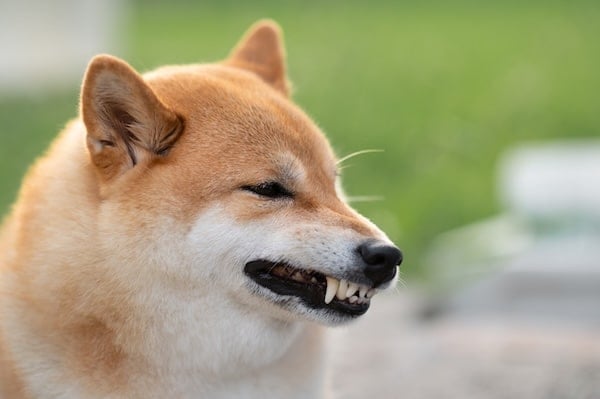
MarioGuti via iStock
Fear
Fear is also a common reason dogs show their teeth. Fearful body language includes whale eyeing, a tucked tail, trembling, or low growling. These are all part of a warning signal that a dog wants whatever is causing their fear to keep its distance. Scenarios that may cause a fearful response in dogs include:
- Being handled at the vet’s office
- Loud, sudden noises
- Strangers or unfamiliar animals getting too close
If your dog is showing fear, the best thing to do in the moment is to distance them from the trigger that’s causing the fearful response.
Pain
If a dog is in pain, they might also display their teeth and snap out of defense, especially if they’re worried the area where they’re hurting might be touched or further injured. For example, a dog in pain might show their teeth if:
- Another dog or pet bumps into them where it hurts
- A vet or groomer touches an especially tender area
- They suddenly show new behaviors like reactivity or resource guarding
To determine if a dog is baring their teeth because of pain, look for other signs of physical distress such as limping, stiffness, or an unwillingness to move. If a dog is showing signs of pain, you’ll want to avoid touching or petting the painful area, pay close attention to (and respect) their communication through body language, and take them to the vet for an exam as soon as you can.
When To See a Professional
If your dog frequently bares their teeth in stressful situations or if it turns into snapping and biting, you should reach out to an expert, such as a certified trainer with a CPDT-KA credential or a board-certified veterinary behaviorist, for help. “This is especially important when the behavior is unpredictable or directed at people and other pets,” says Dr. Choi.
By addressing the underlying issue, you can help prevent your dog’s stress from escalating into more serious behavioral problems.