- Not a substitute for professional veterinary help.
Resource guarding is a natural and fairly common dog behavior. Some dogs simply have a stronger instinct to guard things, while others may have learned this behavior from negative experiences, such as not having access to enough food.
Though resource guarding isn’t the same as aggression, it can sometimes pose a risk to your safety. If your dog finds something they shouldn’t eat, explains Steffi Trott, owner and founder of SpiritDog Training, you need to know you can take it away from them right away without worrying they may snap or bite you.
If your dog guards their food, treats, or treasured toys, don’t despair! You can address this behavior with patience and positive reinforcement. Read on to learn more about the early signs of resource guarding, what causes this behavior, and how to handle it.
Did you know? There are professional trainers who specialize in helping dogs with resource guarding tendencies. Rover make it easy to filter for resource guarding pros near you who can provide training support tailored to your needs.
Signs Your Dog Is Resource Guarding
You can often recognize signs of resource guarding in your dog’s body language and behavior. When someone approaches your dog while they have something they want, they may:
- Lean over the resource
- Tense up or freeze—their body may suddenly stiffen, while their eyes stare into the middle distance
- Eat faster if guarding their food
- Watch you from the corner of their eye, showing the white of their eye (called “whale eye“)
- Grab the item and turn away, move to a new spot, or hide behind or under something
- Snarl, growl, or show their teeth
- Bark
- Lunge
- Snap at the air
- Bite
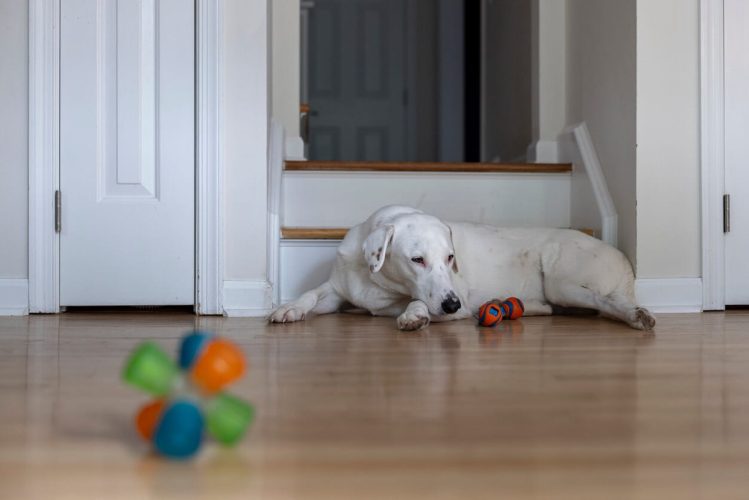
Resource guarding or playing?
If you’re not sure if your dog is resource guarding or playing a game like keep-away, Trott recommends observing their general body language for clues.
- “Games of keep-away will usually involve loose body language and our dogs acting ‘goofy,’” she says. For instance, they may get the zoomies before stopping to let you catch them, play bowing, and then running away again.
- On the other hand, a dog possessively guarding a specific resource will likely have a very stiff, tense posture. They won’t stick around to play with you. Instead, they’ll hide or find a safe space where they can settle down with their prize.
Why Do Dogs Guard Resources?
Rachel Salant, animal behavior specialist at Veterinarians.org, explains that resource guarding likely began as a way for your dog’s distant canine relatives to maintain possession of limited resources.
In the modern day, some dogs may still have the desire to engage in this instinctive behavior. Here are some reasons why.
- Past history. Some dogs may have grown up with limited access to food or were in an environment where they had to compete with many dogs for a bed.
- Reinforcement history. Some dogs might have had resource guarding behaviors reinforced in the past.
- Breed. “Some breeds have a higher tendency of showing resource guarding, such as German Shepherds, Belgian Shepherds, Retrievers, and Doodles,” Trott says.
Trott adds that adult dogs tend to display resource guarding behaviors more frequently, since the behavior often escalates over time.
What do dogs usually guard?
A dog might guard anything they consider valuable or “theirs,” such as:
- Food
- Toys
- Treats and chews
- Food and water bowls
- Other dogs
- People
- Beds or crates
- Specific locations
- Things they find (like that garbage on the ground)
How To Reduce Resource Guarding in Your Dog
Some resource guarding is normal and may not be very problematic—like a growl toward another dog approaching a favorite toy. However, if your dog shows potentially dangerous behaviors, like air snapping or biting, then it’s best to speak to a professional for tailored advice.
Desensitization and counterconditioning
A professional dog trainer or behaviorist can help you combine desensitization and counterconditioning techniques to help your dog learn that people and other pets who approach their resources don’t pose any threat.
Whether your dog guards food or shows territorial behavior toward areas like the front door or couch, your training will involve building a positive association around people or other animals approaching. A general training session might look something like this:
- Step 1: Find your dog’s threshold and work from there. This is the amount of distance your dog needs when they’re near food or another object before they start showing warning signs.
- Step 2: Approach your dog, stop at their threshold, and toss a reward. Use a high-value treat (something extra exciting like chicken, hot dog pieces, or cheese), toss it toward them, and move on.
- Step 3: Repeat the step above until your dog comes to expect good things when you approach. Look for clues that your dog is progressing. This could look like lifting their head up in anticipation, loose body language, and so on.
- Step 4: Gradually decrease your distance. Once your dog stays relaxed, slowly begin approaching a little closer before tossing treats. Move in tiny increments over several sessions. (If your dog shows any signs of stress, go back to the previous distance where they felt comfortable.)
Repetition is important in these exercises, so aim to set aside 30 minutes each day and repeat each step 25 times.
Once your dog seems pleased to see you approach, move on to the next step. There’s no set timeline for this, so don’t put pressure on yourself—or, more importantly, your dog!
How do I know my dog’s resource guarding has improved?
“When our dogs are happy to allow us to take things or trade things with us, it’s a good sign,” Trott says.
She cautions, though, that it’s important for pet parents not to slip back into the habit of taking things away abruptly. This may once again spark a need for your dog to protect their belongings and undo the time you spent training.
Instead, continue to earn your dog’s trust by trading items and rewarding them for giving up valuable resources, like that baby toy they love but definitely shouldn’t chew.
Important: Even when your dog’s guarding has approved, avoid letting strangers approach them when they’re eating, sleeping, or sitting anywhere they previously showed guarding behavior. When booking a pet sitter, ensure you have these instructions in your care notes.
How To Get Help With Resource Guarding
If your dog suddenly begins resource guarding, talk to your veterinarian to rule out any health problems. “Some underlying health conditions can increase the chance of a dog displaying food-oriented resource guarding,” says Dr. Corinne Wigfall, veterinary spokesperson for SpiritDog Training.
Diabetes, parasitic diseases, malabsorptive disease, and endocrine disease can increase hunger, and treating these conditions may resolve resource guarding around food, she adds.
Additionally, a dog in pain or discomfort may be more likely to escalate when people or animals approach or touch them, particularly if they’re on the bed, couch, or crate.
Working with a qualified dog trainer
Once you’ve ruled out health issues, look for a certified trainer who specializes in behavior modification. While many dog trainers can help with general manners and cues, behavior experts have additional knowledge and experience working with more complex cases that deal with fear, anxiety, and aggression.
When searching for certified trainers near you, look for professionals who have credentials from the Certification Council for Professional Dog Trainers (CCPDT) or the International Association of Animal Behavior Consultants (IAABC).
What the trainer will do
A qualified trainer will look at the broader picture and help you determine the root cause and triggers of your dog’s behavior. From there, they can help you develop strategies to manage your dog’s guarding and create a behavior-modification training plan tailored to your individual dog.
The best part? They’ll be with you every step of the way to support you and your dog in your training journey!