- Not a substitute for professional veterinary help.
If your dog growls over their food bowl or stiffens when someone walks by during meals, it can feel upsetting, scary, and even shameful. But food resource guarding is actually a very natural dog behavior. Dogs evolved to protect valuable resources like food, and that instinct can still often appear, especially if they worry those resources might disappear.
If your dog guards food, it’s important to address the behavior early on before it becomes a more serious problem. A dog who only seems uncomfortable around their bowl today may eventually escalate to lunging or biting to keep people away.
The good news is that food guarding doesn’t automatically mean a dog is aggressive. And, in many cases, it can improve with the right management and positive reinforcement training.
For a closer look at resource guarding food, we spoke with certified professional dog trainer and behavior consultant Kate LaSala of Rescued By Training. With her expert insight, we cover common warning signs of the behavior, how to manage and treat it, and when to get professional help.
Did you know? You don’t have to tackle behavioral challenges on your own. Rover makes it easy to filter and find a professional dog trainer near you who specializes in resource guarding.
Signs Your Dog Is Guarding Food
Dogs usually give plenty of warning signals that they want you to back away from their food. When they do, it’s crucial to listen to their communication and give them space. Otherwise, they may feel the need to escalate to a bite. However, some of the more subtle signs can be easy to miss.
Here are some ways your dog might be warning you not to come any closer to their food, starting with the mild signs and ending with the more severe ones.
- Eating faster when someone walks nearby
- Lowering their head over the bowl or treat
- Turning their body to block access to food
- Watching people closely while eating
- Taking the food bowl into another room to eat
- Freezing or becoming very still over the food bowl
- Lip lifting or showing teeth
- Low growling when approached
- Snapping the air
- Lunging when someone gets close to food
- Chasing people or pets away from the bowl
- Snapping or biting

Srinuan Hirunwat via iStock
How To Manage a Dog Who Resource Guards Food
Instead of forcing your dog to give things up, try to create situations where they don’t feel like they need to protect their food in the first place. Not only do these management strategies keep everyone safe, but they also help prevent your dog from rehearsing resource guarding behaviors.
“Practice makes permanent,” explains LaSala, “so if we let a dog continue to be forced into a situation, they’re going to get stronger and better at it, which makes it harder to undo that damage.”
A few simple changes at home can go a long way. For instance:
- Feed your dog on a consistent schedule so meals feel predictable and reliable.
- Give your dog a quiet place to eat, away from foot traffic, children, and other pets. Baby gates, crates, pens, or separate rooms can help create distance so the dog feels more comfortable.
- Always feed your dogs separately in multi-dog households. Even dogs who normally get along can become tense around food.
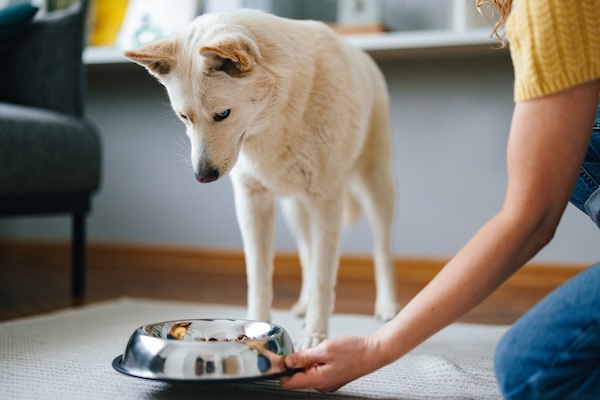
- Put the food bowl down, then walk away. Hovering nearby can make dogs who guard uncomfortable.
- Never take away your dog’s food bowl while they’re eating. If your dog guards their empty food bowl, call them away from it first or wait until they’ve left it before you pick it up.
- Never put your hands in your dog’s bowl or reach for chews while they’re enjoying them.
- Offer a trade of higher value, like their favorite treat, if your dog grabs a food item they shouldn’t have.
- Pick up bowls after meals so food isn’t constantly available to guard.
- Teach children never to approach, hug, pet, or bother a dog during mealtime.
How To Train a Dog Who Resource Guards Food
Training a dog who guards food is all about helping them feel safe. Instead of worrying that someone might take their food away, your dog gradually learns that when a person approaches their bowl, it means good things are to come.
Most trainers will use a combination of desensitization and counter-conditioning when working with a dog who guards food. These methods gradually expose your dog to a trigger at a level they can comfortably handle while pairing it with something positive.
Step by step
Here’s what training might look, particularly during mealtime (though you can follow the same steps if your dog guards their chews, bones, or other food items).
- Step 1: Start from a safe distance. During mealtime, walk by your dog from far enough away that they stay relaxed. Toss a high-value treat (something extra exciting like chicken, hot dog pieces, or cheese) toward their bowl, then keep moving.
- Step 2: Repeat until your dog comes to expect good things when you approach. Practice this consistently over multiple meals. Over time, your dog should start looking up happily when you approach because your presence predicts bonus treats instead of food loss.
- Step 3: Gradually decrease your distance. Once your dog stays relaxed, slowly begin approaching a little closer before tossing treats. Move in tiny increments over several sessions. (If your dog shows any signs of stress, go back to the previous distance where they felt safe. Slow progress is still progress!)
- Step 4: When you’re able to approach the feeding area without a negative response, gradually work toward touching or moving the bowl once your dog is done eating. To help your dog out, toss or scatter treats away from the bowl and say “all done” before picking it up.
- Step 5: Work on incorporating helpful training cues. Using “find it,” or “go sniff” (followed by treat tosses and scatters) can help move your dog away from things. Building a strong “trade” can also help you exchange things with your dog while you work on building a solid “leave it” or “drop it.”
What to avoid
While you’re working on the steps above, here are a few things to avoid for a smoother training journey.
- Don’t punish your dog. As frustrating as food guarding can be, try not to yell, scold, or punish your dog for protecting their food. It doesn’t change the underlying fear or discomfort causing the guarding. LaSala compares it to taking the batteries out of a smoke alarm. The annoying noise disappears, but you haven’t fixed the issue.
- Don’t ignore your dog’s body language. You want your dog to stay comfortable the entire time you’re training. If they freeze, stiffen, growl, or eat faster, that means they’re likely getting nervous or overwhelmed, and it’s time to take a break.
- Don’t move too fast. LaSala says progress should happen slowly and in small stages. “You want to incrementally make it more difficult,” she explains. “We don’t move to the next step in the plan until we know that the dog is really successful in the current step. Take baby steps to set the dog up for success and measure their progress.”
miniseries via iStock
When To Get Help
Navigating life with a dog who resource guards food can be emotional and stressful, but you don’t have to do it alone. If your dog’s guarding escalates quickly, causes injuries, seems tied to fear or anxiety, or simply is not improving with at-home training, it’s time to bring in a professional.
How to find a qualified dog trainer
LaSala recommends looking for someone who specializes in behavior modification—not just basic obedience training. While many dog trainers can help with general manners and cues, behavior consultants have additional education and hands-on experience working with fear, anxiety, aggression, and complex cases.
When searching for certified trainers near you, opt for those who use humane, evidence-based methods. Looking for professionals who have credentials from the Certification Council for Professional Dog Trainers (CCPDT) or the International Association of Animal Behavior Consultants (IAABC) is a great place to start.
What the trainer will do
LaSala says a qualified behavior professional will first make sure resource guarding is actually the correct diagnosis. They may also recommend a veterinary checkup, especially if the guarding appeared suddenly, since pain is often a source of behavior issues.
From there, they’ll help you with both management strategies and a structured behavior modification plan tailored to your dog’s history, triggers, and bite risk. Most importantly, they’ll help you move at the right pace, problem solve, and support you every step of the way!