- Not a substitute for professional veterinary help.
If you’ve ever noticed your dog’s hair standing on end, you’ve seen them raise their hackles! Hackles on a dog are the strip of fur that runs from the neck to the base of the tail.
Raised hackles are a clear sign of heightened arousal, but they don’t always mean aggression, explains Dr. Wayne M. Johnson, a veterinarian at Birdneck Animal Hospital, and Dr. Emma Choi, a veterinarian at Banfield Pet Hospitals and advisor for Mendocino Food Consulting. Since raised hackles are an involuntary reflex, known as piloerection, they can happen both as part of the fight or flight response and during play.

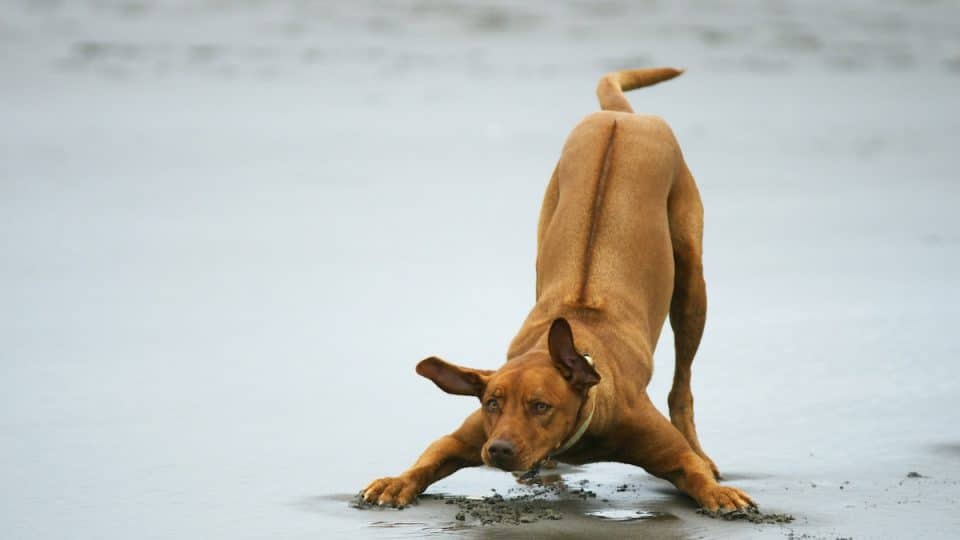
While some hackles are less noticeable in breeds with curly or fluffy coats, all dogs have them. Some dogs, like Rhodesian Ridgebacks, appear to have permanently raised hackles, due to a “ridge” of backward-growing hair along the spine. Recognizing when your dog’s hackles are raised can help you determine whether you need to defuse a situation or remove your dog from it.
Read on to learn why your dog’s hackles are raised and what experts say about supporting your dog through each situation.
Pro-tip: Raised hackles are just one way dogs communicate. Find a professional dog trainer near you to learn more about canine body language.
Dog Hackles: Things To Know
Evolutionarily speaking, a dog’s hair likely stood up as a way to make them appear larger and more intimidating to deter potential conflicts. Raised hackles have always been a way to communicate as well. Now, as pet parents, it’s up to us to decipher what state of arousal our dogs are in when their hackles go up. We can do this by examining other aspects of their body language, which help paint a complete picture.
| Emotion | Tail | Ears | Mouth | Action |
| Excitement | High and wagging | Forward | Wide, smiling, panting | Loose, wiggly body, whining |
| Frustration | High or stiff | Forward and tense | Lips pulled back, barking, snapping | Lunging on leash, pulling, barking, pacing |
| Uncertainty | Low or tucked tail | Can change between forward/back | Mouth closed or tight, lip-licking | Leaning away, looking back at the trigger, vocalizing |
| Overstimulation | High, fast wag | Forward | Open mouth, panting, showing teeth | Zoomies, jumping, mouthing, difficulty settling |
| Stress | Low or tucked | Back | Lip licking, yawning, closed mouth | Pacing, whining, avoiding eye contact, restless movement |
| Fear | Tucked tightly | Back | Lips pulled back showing teeth, whale eye | Cowering, freezing, trembling, trying to hide or escape |
| Aggression | High and stiff | Forward and tense | Lips curled, growling, teeth exposed | Stiff body, hard stare, lunging, snapping, possible bite |
Excitement
When dogs feel playful or excited, their hackles may go up. This can happen in moments when they’re anticipating something highly stimulating or that will bring them joy, such as when they’re thrilled to see a friend or they’re about to explore a new space like a trail or a park.
Along with raised hackles, you might notice:
- Pulling on the leash
- A playful demeanor
- Loose body language and movements
- Relaxed mouth and facial expression
- Wagging tail
- Bright eyes
What to do next
If your dog raises their hackles in excitement, you generally don’t need to worry. Just pay attention to their behavior to make sure they don’t tip into a state of overarousal.
Even too much positive arousal, like excitement, can sometimes turn into negative emotions like frustration or aggression, according to Qiai Chong, chief behaviorist at Pet Coach SG.
A dog who’s overstimulated may begin pacing, hold their tail high and stiff, or have intense focus while pulling on the leash. If you notice these signs, it’s best to help your dog calm down. You can refocus their energy by scattering treats in the grass or in a snuffle mat and getting their nose to the ground.
Frustration
When a dog can’t reach something they want, like another dog, while they’re on a leash or indoors, Chong says they may display raised hackles as a sign of frustration and eagerness.
Along with raised hackles, you might observe:
What to do next
Redirect your dog’s attention with a favorite toy or treat, and gently lead them away from the triggering stimulus to create more space.
It’s crucial to avoid punishing your dog in these situations, as this will only make their frustration worse. If your dog continues to have trouble on the leash, a professional trainer or behaviorist can provide more tailored advice on how to address leash reactivity.
Uncertainty
Sometimes, dogs raise their hackles in response to sudden or unexpected stimuli. This reaction happens when your dog is curious but cautious and feels conflicted about how they should react—like seeing a plastic bag blowing by or a person carrying an umbrella for the first time.
Along with raised hackles, you might notice:
- Tucked tail
- Pacing
- Rigid body
- Tense or worried expression
- Drooling
- Lip-licking
- Vocalizing more than normal
What to do next
Help your dog create distance by guiding them or tossing a treat away from whatever is making them feel wary. It’s also important to stay calm yourself to help reassure your dog and aid in the de-escalation, Chong says. A strong emotional reaction from you can add to your dog’s excitement or anxiety, which can make the situation worse.
Teaching your dog simple pattern games, like the 1-2-3 game, can also help create predictability when things feel uncertain.
Overstimulation
As mentioned above, when your dog is too excited, it can lead to overstimulation, causing their hackles to go up. This state of overarousal occurs when your dog becomes so overwhelmed that they struggle to regulate their emotions or calm themselves down. It can happen when a dog is playing with another dog, and the roughhousing gets too intense, or when an anxious dog gets trigger-stacked from seeing too many scary things back-to-back.
Along with dog hackles, you might notice:
- Rapid, high-pitched barking or yipping
- Jumping, spinning, or zoomies
- Dilated pupils or wide, intense eyes
- Panting or drooling even without heat or exercise
- Difficulty calming down and self-regulating
What to do next
Help remove your dog from the situation or the environment that’s overstimulating them. Speak to them gently and help them slow their movements down by encouraging sniffing, licking, or other self-soothing behaviors. If your dog tends to become overaroused easily, consider incorporating the relaxation protocol into your daily training routine at home.
Stress or Anxiety
Stress or anxiety can also cause the hair on the back of your dog to stand up. This response could be from feeling a heightened sense of alertness or a lack of control, like when hearing loud noises, traveling to an unfamiliar place, or visiting the vet’s office.
Along with raised hackles, you might notice:
- Low or tucked tail
- Lip-licking or yawning
- Restless movement
- Pacing or whining
- Avoiding eye contact
What to do next
Reducing or removing the trigger that’s causing your pet’s stress is the first step to take. If the trigger can’t be removed altogether, then you’ll want to help desensitize your dog to it through small exposures and positive experiences to reduce anxiety and build your dog’s confidence gradually. It’s also a good idea to consult with your vet, who can assess whether your dog might benefit from anxiety medication.
Mary Swift via iStock
Fear
Dogs usually raise their hackles due to fear, says Shir Limazati, founder and head trainer at Another Chance Training. When a dog encounters something they consider a threat, like another dog or animal, they may raise their hackles to appear larger.
You might see this more often with younger dogs going through fear periods and who are more uncertain about the world. “This is a defensive strategy intended to ward off the perceived threat,” adds Chong.
Along with raised hackles, you might notice:
- Stiff and lowered body posture
- Tucked tail
- Flattened ears
- Drooling
- Panting
- Trembling or trying to escape
- Whale eye
What to do next
If possible, calmly remove your dog from the situation causing their fear. For example, if your dog becomes afraid of another dog on a walk, gently redirect your dog’s attention and turn in another direction to create distance.
“Pay attention to the situations that cause your dog’s hackles to rise and try to manage or minimize these triggers when possible,” suggests Chong. Avoid forcing your dog to confront the frightening stimulus, as this can amplify their fear and may lead to aggression or attempted escape.
If the same things continually trigger your dog, Limazati recommends seeking help from a professional behaviorist or trainer who can help your dog manage their fear.
Proper socialization and positive reinforcement training can go a long way toward preventing fear responses in the future. “Gradually exposing your dog to different situations and teaching them to remain calm can help reduce unnecessary stress and prevent raised hackles,” explains Dr. Johnson.
Aggression
And finally, the emotion that we most often associate with raised dog hackles: aggression. Hackles here are a sign that your dog feels extremely unsafe and is communicating that they’re preparing to defend themselves.
This need to escalate can happen if a dog feels cornered or trapped by another dog or person, or if their other warning signs have been ignored (like expressing through lip licks and whale eyes that they don’t want to be touched). Any dog can resort to aggression if they feel threatened and like they’re not being heard.
Along with raised hackles, you might notice:
- Stiff body language
- Ears that are forward and straight
- Growling, barking, or snapping
- Curled lips
- Hard stares
What to do next
It’s crucial to keep a level head if your dog is exhibiting signs of aggression, since yelling or punishment can further escalate your dog’s behavior. Instead, remove your dog from the situation, respect their boundaries, and redirect their attention away from any triggers.
Working with a professional is recommended if your dog regularly shows signs of aggression. A veterinarian can rule out any underlying medical causes, like pain, and a certified trainer or a veterinary behaviorist can work with you to identify triggers and create a training plan for your dog.
When To See a Professional
Understanding your dog’s body language, including raised hackles, is crucial to interpreting their emotions and reactions in various situations.
Sometimes, though, it’s not so straightforward. Some breeds have curly fur that hides their hackles, while others naturally have little mohawks that are always standing at attention. Some situations are also difficult to read, like when excitement gives way to overstimulation or tips into aggression.
To get a better read on your dog’s body language, Dr. Choi recommends getting an assessment from a professional dog trainer or veterinary behaviorist. “These professionals can help [pet parents] understand the dog’s emotional state, and provide training and behavioral therapy if a dog is having trouble with fear or aggression,” she says.
Consider consulting with a pro if:
- Your dog frequently raises their hackles, growls, snaps, or shows other signs of fear or aggression
- You feel unsure of what’s causing your dog’s behavior
- Your dog’s body language escalates quickly, leaving you unable to redirect or calm them
- Your dog’s behavior puts other people, animals, or your dog at risk of harm
To find professional trainers near you, learn how dog training works on Rover.