- Not a substitute for professional veterinary help.
If your dog pulls and zig-zags during walks, a pleasant stroll can quickly turn into a frustrating, tangled challenge. The good news? Loose-leash training can help!
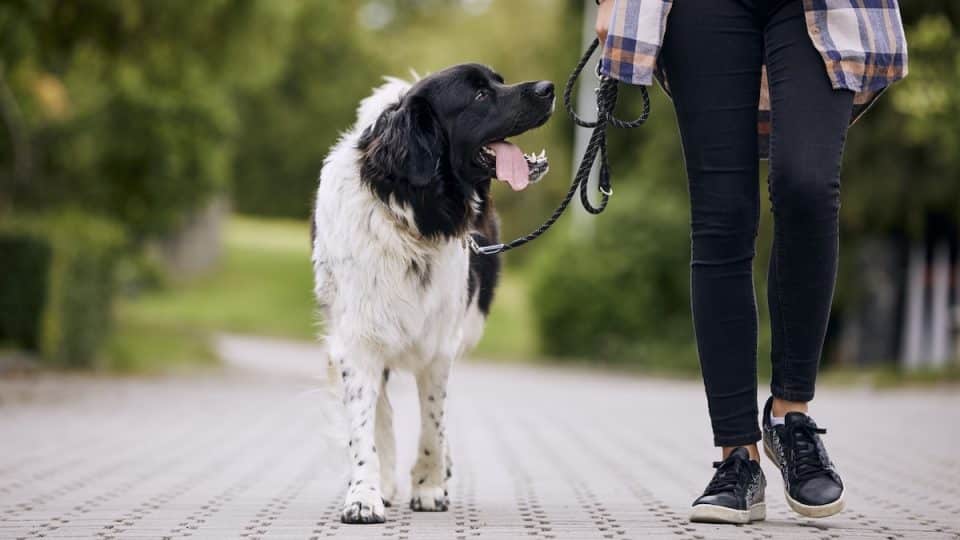
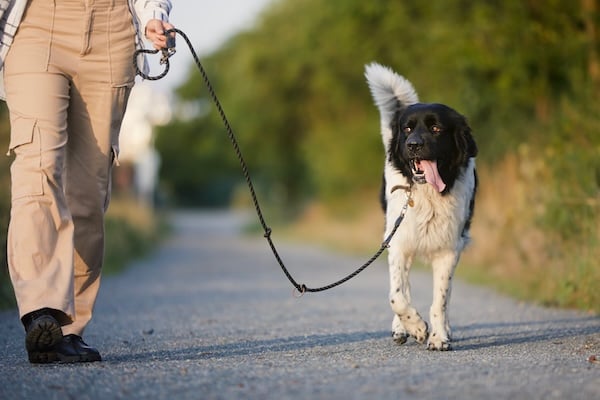
Loose-leash training is the art of teaching your dog to walk beside or even ahead of you without putting tension on the leash. Unlike a heel, the goal isn’t to cue your dog to your side for a period of time until you release them. Instead, it’s meant to make walks calmer and more relaxed while still giving your curious canine the freedom to sniff and explore—all while keeping a loose U-shape in their leash.

“Walking on a loose leash is an important skill for every dog to learn,” says CPDT-KA certified dog trainer Sassafras Patterdale. The ability to walk and keep a loose leash can turn stressful strolls into enjoyable routines, helping you build a lifelong bond with your pup. It also makes it easier for friends, family, and pet sitters to walk your dog when you’re away.
Read on to learn how to teach your dog to walk on a loose leash, along with tips on how to troubleshoot common leash-walking issues.
Pro-tip: To streamline your dog’s loose-leash skills, consider professional training. Rover makes it easy to filter for dog trainers near you who specialize in leash manners.
How To Teach Loose-Leash Walking, Step by Step
“The most effective way to teach loose-leash walking is to reward the behaviors we want and ignore the behaviors we don’t,” says Patterdale. That means a high rate of reinforcement and lots of small training treats. So grab your pup’s favorite snacks and follow these five steps.
Step 1: Teach your dog to check in with you
Engagement is key to loose-leash training. “By rewarding dogs for staying close and checking in with us, they’re more likely to walk beside us and keep the leash loose,” says Patterdale.
Teaching your dog to check in with you will help them stay close to you on walks. To start, train at home in a quiet area with minimal distractions before taking your practice outside and increasing the difficulty.
Training steps:
- Grab a handful of your dog’s favorite treats.
- Drop one treat on the ground and let your dog eat it.
- As soon as they glance back at you, mark the moment with a clicker or a “yes!”
- Immediately drop another treat and wait for your dog to look back up at you again.
- Continue this until your dog gets into a rhythm of looking up at you.
Step 2: Train your dog to walk by your side
Once your dog knows how to check in with you, you can start adding movement. Start in a low-distraction room inside and train without the leash first to build your foundation.
Training steps:
- Click or mark when your dog is beside you and reward them with a treat. (You can help them get into position by using a “touch” cue, name game, or luring them with a treat.)
- Take a step forward, wait until your dog is beside you, then click and reward again.
- If your dog doesn’t move with you, use a treat to bring them back to your side. Drop it next to you when you take a step, or put it in front of their nose to lure them beside you.
- Keep practicing in short bursts, keeping things exciting and encouraging.
- At the end of each session, scatter treats to practice a “go sniff” release cue.
Step 3: Add changes in direction and speed
Once your pup learns that walking next to you is a fun game that earns them rewards, start repeating the training steps above while gradually increasing the difficulty. For example, take two steps before marking and rewarding, and then three.
When your dog can take five to six steps and stay engaged by your side, add changes in direction and speed. Go fast, slow down, turn around, stop suddenly—rewarding when your pup adjusts their pace to yours.
Step 4: Add the leash
Once your pup can reliably walk beside you, add the leash to your indoor training and practice all the steps above again with it clipped on.
Step 5: Go outside
Next, take your routine outside. Start just outside your door, then gradually increase the distance and duration, moving down your yard, into the driveway, down the block, and so on.
-

Chalabala via iStock
Loose-Leash Training Timeline
Developing reliable loose-leash walking skills can take anywhere from a few months to a year, though many pet parents will notice improvement within a few weeks.
Patterdale says that progress can depend on the individual dog’s temperament, natural behaviors during walks, and environment. For instance, a dog who is naturally even-keeled will have an easier time developing loose-leash skills than a dog who is typically anxious or reactive.
Where you live matters, too. For example, if you live in a quiet neighborhood, walks will be less distracting or stimulating than if you live downtown in a busy city.
Pro tip: Use a short leash when you’re loose-leash training, and a long leash when you’re not. This can help your dog differentiate between training sessions and more relaxed walks. The extra length can also prevent your dog from rehearsing unwanted behaviors like pulling.
Troubleshooting Common Loose-Leash Issues
Loose-leash walking is a hard skill. “While loose leash walking is important, it’s not a natural behavior for most dogs and has to be taught,” explains Patterdale. “Most common behavior issues pet parents run into during training come about because dogs don’t understand the concept of loose-leash walking.”
Here are some common hurdles pet parents encounter when loose-leash training, plus what to do about them.
Zoomies
If your pup gets the zoomies as soon as you break out the leash, chances are high that your walks are going to be filled with pulling, lunging, and other chaotic behavior. Before you even attach the leash, ensure your dog is calm. If you need to, take a few steps back and work on re-introducing the leash and desensitizing your dog to their walking gear.
For dogs who get overstimulated by encountering exciting new sights and smells on walks, you can bring the hype down by scattering treats and helping get their noses to the ground to reset.
Pulling
If your dog gets excited during walks and pulls ahead, there are a few things you can do. First, stop moving forward and redirect your dog back to your side by using a hand target, name game, or a treat lure. Once your dog has redirected their attention to you and relaxed the leash, reward them and continue forward.
Additionally, you can teach your dog that any pressure on the leash means to come running back to you by turning it into a fun game.
Lunging
If your dog lunges at squirrels, birds, or other exciting things on walks, keep working on your engagement. When they lunge ahead, redirect their attention back to you by calling their name, cueing a touch, or tossing a treat away from the trigger. Create distance from the exciting distraction and then practice dropping a treat and rewarding your dog for engaging with you.
Reacting
For dogs, who bark, snarl, or lunge at people or other animals on-leash, you’ll need to shift your training focus to address the underlying cause of their leash reactivity, which is often fear or frustration. This is where enlisting the help of a professional dog trainer can do wonders.
While you work on behavior modification training for your dog’s reactivity, you can also implement management tactics on your walks to keep your dog from spotting triggers in the first place. For instance, you can teach a “let’s go!” cue, turning it into a fun game of running in the opposite direction when you spot a trigger. Or you can use a treat scatter to block your pup’s view of the things that will upset them.