Should You Take Your Rover Dog to the Dog Park?
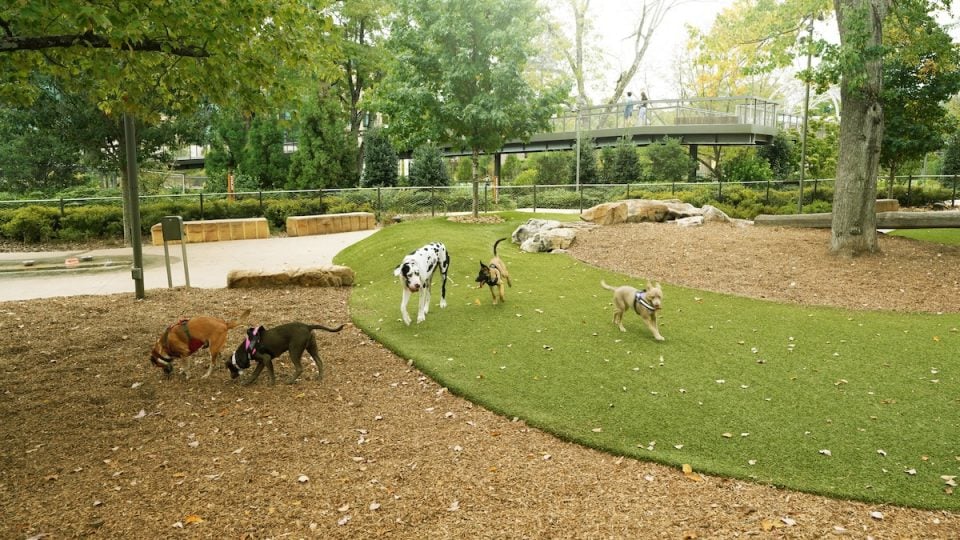
For pet sitters, dog parks can be a conundrum. At their best, they’re a fun way to tire out and offer enrichment to energetic pups. But they also come with risks, and bringing a dog who isn’t your own adds another layer of complexity.
Ultimately, it’s up to every sitter and walker to set their own dog-park policy. Two basic guidelines that can help:
- Never bring a dog to the dog park without the owner’s permission.
- Clients might request a dog park visit—but if you’re not comfortable or have reservations, always feel empowered to say no.
To help you decide on your dog-park protocol, we’ll review the benefits and risks, plus what you can do to help keep the dogs in your care safe if you go.
Reasons Not to Take a Dog to a Dog Park
The main problem with dog parks is their unpredictability. You can’t be sure what types of dogs—or dog owners—will be there. And even if the dog you’re watching is always friendly and sweet, they might behave differently in a new setting without their owner nearby.
Here are some reasons you might choose to skip the dog park while dog sitting:
- Your dog isn’t neutered or spayed. Bringing intact pets to the dog park is too risky. Leave these pets at home to avoid unwanted pregnancies and hostile behavior from other dogs.
- The dog in your care isn’t well-socialized. Taking a dog who doesn’t have much practice interacting with other dogs to the dog park is throwing them in the deep end. Behavior on all sides can be unpredictable.
- Your dog shows some aggressive or reactive behaviors. If a dog goes into flight-or-fight mode when they encounter other dogs on walks, they probably won’t love a bunch of unleashed dogs approaching them.
- Your dog has other behavioral issues that make it unsafe. Dogs with a history of resource guarding can become a liability at the dog park. A proclivity for herding or mounting may also cause conflict.
- Your dog is fearful, nervous, or anxious. The dog park can be a scary place for anxious dogs. Nervous dogs may do better with smaller, controlled meetups (or no meetups at all).
- The dog is sick or injured. Dogs who are unwell should stay home to avoid spreading germs or worsening their condition when things get rowdy.
- They have health complications. Dogs with limited mobility might struggle to escape from bothersome dogs, while those with breathing issues can get overexcited.
- Your dog is too big or strong to control. Are you watching a burly Cane Corso? Assess whether you can reliably manage them if there’s a scuffle or you need to remove them from a situation.
- Your dog doesn’t have a reliable recall. It can be dangerous if you can’t call a dog back to you. Even dogs with good recall may struggle in an exciting new place full of distractions—and without their owner.
- The park’s layout complicates supervision. Does the park’s design make it difficult to keep a close eye on the dog? If there are a lot of hiding spots and barriers, you may want to keep them at home.
- The dog park is too crowded and noisy. A packed dog park increases the likelihood of negative encounters. If your local park gets rowdy, consider a no-dog-park-on-weekends policy.
- The dog is under four months old. Puppies who aren’t fully vaccinated can contract serious illnesses at the dog park.
- The dog is a new client. If you’ve just booked a new dog and their temperament is still relatively unknown, hold off on dog park visits until you’ve become familiar with each other.
Always remember you’re in charge of your business. If you prefer to avoid the dog park altogether, that’s perfectly fine. You can mention this on your sitter profile so prospective clients know your policy upfront. There are plenty of other ways to provide exercise, socialization, and enrichment for the dogs in your care.
rsmseymour via iStock
When a Dog Park Might Be a Good Idea
In some cases, it might be okay to accept a client’s request to take their dog to the dog park.
Here are some scenarios where the dog park could be a positive experience.
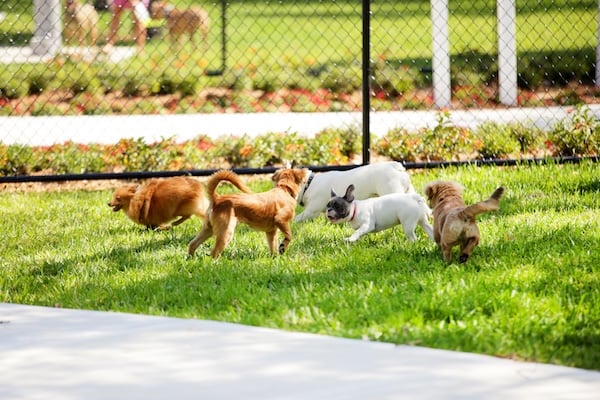
- The dog in your care is a social butterfly. Just like people, some dogs are naturally extroverted. Pups with good dog manners and an easygoing temperament can benefit hugely from supervised playtime with other dogs.
- Your dog has a solid recall. They should reliably come when called, even in a new, exciting place with someone who isn’t their primary caregiver.
- Your dog is healthy. That means they’re up to date on vaccinations and can move around easily.
- The park has a thoughtful layout. Typically, parks that encourage movement are best for preventing scuffles that arise when dogs congregate in one area or feel trapped. Look for bigger parks with winding paths that keep attendees in a constant state of flow.
- The park has separate areas for small and large dogs. Small dogs can be mistaken for prey or sustain injuries during energetic play. If you’re watching a tiny dog, consider parks with separate areas based on size.
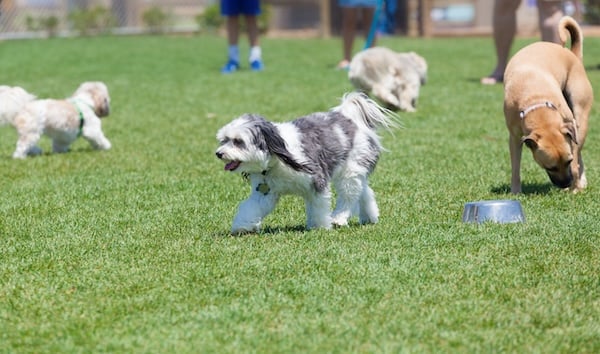
- The dog park is low-density. An overcrowded park can overwhelm dogs and make it harder to keep track of them. Stick to parks with a moderate number of dogs, or visit during off-peak hours.
- Other guardians are acting responsibly. If you’ve visited the dog park before, consider how the other dog owners acted. If you usually observe attentive owners who pick up after their dogs and follow park rules, it could be a safe option. If the park tends to be a chaotic free-for-all, skip it.
felixmizioznikov via iStock
Dog Park Tips to Keep Everyone Safe
After weighing the pros and cons, you and the owner might decide that the dog park is a good idea. For everyone’s safety, you’ll want to make a few preparations before your visit. Here are some strategies for enjoying the dog park safely.
- Scope out the park ahead of time. Look for attentive owners, secure fencing, double-gated entrances to prevent escapes, and clean premises free of trash, poop, and hazards like toxic plants or algae blooms.
- Discuss how to get to the dog park. Ask the owner how best to safely transport their dog. Do they use a car harness, a carrier, or a crate?
- Request a trial run with the owner. If you’re unsure how the dog might behave, ask the owner if they’re willing to join you at the dog park for a trial run.
- Discuss when to end or break up play. To keep dogs from becoming overstimulated or exhausted, make sure you know how long a typical dog park visit lasts, plus the body language signals that indicate their dog is done.
- Don’t bring toys. Dogs can become possessive of toys and may start a fight over them.
- Do bring your own water bowl or water bottle. It’s important to stay hydrated, but diseases can spread through communal water bowls. It’s safer to bring your own.
- Exercise first. This might sound counterintuitive, but exercising a dog beforehand can prevent overexcitement and erratic behavior. Try a quick warm-up walk before entering the park.
- Stay vigilant. Keep your phone in your pocket (except to capture a quick photo for the owner of their dog living their best life), and keep your eyes on the dog.