Pet Sitter Tips for Safe Interactions Between Dogs and Kids

Kids and dogs are great playmates—but safe introductions and supervised interactions are key. In a dog’s eyes, children can move and behave unpredictably, and they don’t always recognize the signals of discomfort a dog is sending.
When you’re caring for a client’s dog, navigating introductions with children can be especially difficult. You might not know a Rover dog well enough to be able to predict how they will respond to children. And even if the dog seems friendly, behavior like running, high-pitched voices, or sudden grabbing can throw the dog off balance.
Here’s what you can do to help set up safe interactions between Rover pets and kids, from knowing when to say no to getting introductions off on the right paw.
Ask About Your Rover Dog’s History With Kids
Before you welcome a Rover dog into an environment with kids, try to gather as much information as you can upfront. Start with the dog’s Rover profile, where owners will often indicate whether their dog is comfortable around children and what ages they’ve been exposed to.
You can gather more information by following up with the owner directly in your booking messages. Ask specific questions like:
- How does your dog typically behave around children?
- What ages of children do they have experience with?
- Are there any behaviors that stress or upset your dog (hugs, loud play, fast movement)?
- Have there been any concerning incidents?
A “yes, they’re great with kids!” is encouraging, but remember: dogs can behave differently in unfamiliar environments, with new people, or with kids who act differently than they’re used to. On the other hand, a clear “no” from the owner may be your cue to decline the booking. Safety first!
If the dog will be boarding in your home and you have kids, try to include them in the meet and greet. Watch the dog’s body language closely to determine if the stay will feel safe and comfortable for everyone involved.
Familiarize Yourself With Signs a Dog Is Uncomfortable Around Kids
A huge part of keeping kids safe around dogs is recognizing early signals that a dog is feeling apprehensive. Most dogs try to communicate discomfort through body language long before things escalate. If a dog is showing any of these behaviors, they’re probably trying to tell you they feel uncomfortable.
Signs of minor discomfort
- Tense or stiff body
- Yawning or licking lips (when not tired or eating)
- Ignoring the child
- Side eye or looking away
- Ears pulled back
- Tail held low or at mid-height
- Tail wagging slowly or slightly to the left
Signs of major discomfort
- Leaning away, shaking, or lunging
- Growling or baring teeth
- Attempting to avoid or escape the interaction
- Whale eye (whites of the eyes visible)
- Ears flat against the head
- Tail tucked tightly or arched high and stiff
- Tail wagging fast and rigid
If you spot any of these signs, it’s best to separate the dog and child right away and put the dog in a quiet, comfortable space where they can decompress. Dogs can growl or bite for many reasons, but often they are telling us they are scared, startled, or feeling threatened, so try to be sensitive to their needs.
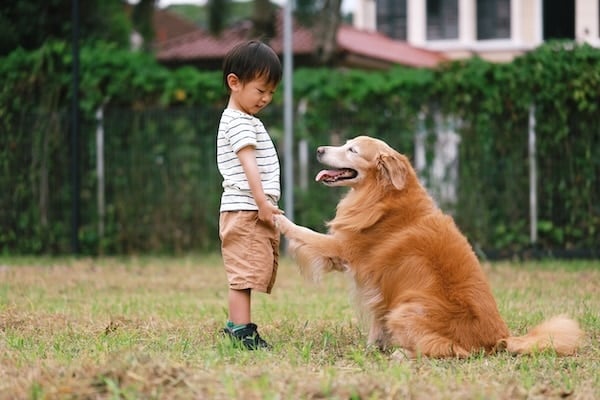
Thai Liang Lim via iStock
Set House Rules
Clear boundaries help kids and dogs feel safe together. Before the stay begins, walk your children through what’s okay and what’s not so there’s no confusion in the moment.
- When to approach (and when not to). Kids should only approach a dog who is awake, relaxed, and choosing to come toward them. It’s best not to interrupt a dog who is eating, drinking, chewing a bone or toy, or sleeping.
- Petting guidelines. Show kids where gentle pets are welcome (usually shoulders or back). Explain that hugs, climbing on the dog, or getting in a dog’s face can feel overwhelming for the dog, even if the dog tolerates it.
- Play rules. Keep play sessions calm and avoid roughhousing. If the dog gets jumpy or overly excited, it’s time for a break. Dogs might nip and bite during play. This may be fun for the dog, but it can be dangerous, especially for small children.
- How to talk about body language. Have a simple conversation about how dogs “talk” with their bodies. Encourage your kids to look for signs the dog wants space. You can even make it a team effort where everyone helps the dog feel comfortable.
How To Introduce Rover Dogs to Your Children
It’s important to safely introduce dogs and children so that their interactions get off on the right foot. Below are practical steps you can follow to set up a safe and smooth first meeting between a client’s dog and your kids.
- Choose a relaxed, neutral setting. Make sure the dog is calm, on a leash, and in a space without immediate distractions or high-energy activity.
- Have the children stay still and quiet at first. Ask the kids to sit or stand in one place and let the dog approach them, rather than them rushing towards the dog.
- Use treats or positive reinforcement. Let the dog see the kid offer a treat from the palm of their hand, or toss a treat gently to build a positive association between the dog and the child.
- Observe body language carefully. If the dog shows any signs of stress like the warning signs described above, pause the interaction. Give the dog space, remove the children if needed, and reset when the dog appears relaxed.
- Allow the child to pet gently once the dog is clearly comfortable. If the dog remains calm, reward the dog for that calm behavior with another treat. When the dog seems comfortable enough to receive pets from the child, make sure the child avoids reaching over the dog’s head, hugging them tightly, or moving too quickly.
- Repeat and gradually increase freedom. After a successful first interaction, the children can behave more casually—but continue to supervise closely until the dog clearly views children as safe. Even then, it’s best to never leave them unsupervised.
Meeting Unfamiliar Children
Sometimes you’ll meet kids who aren’t part of the original plan, like a visiting friend at your home, or a curious child who wants to greet the dog on a walk. These moments might require quick judgment, so you can keep the interaction safe for both the kids and the dogs.
Before agreeing to an introduction, pause and assess the situation to decide if it’s okay to introduce the dog:
- Is the dog calm and showing interest?
- Are you in a controlled environment with enough space?
- Does the child appear respectful and able to follow directions?
When in doubt, it’s best to err on the side of caution. You don’t know the child’s experience with dogs or how they may react if the dog gets nervous. It is always okay to politely decline the child’s offer to pet the dog.
Example ways to politely decline:
- “We’re in training right now, but maybe next time!”
- “He’s a little nervous around new people, so we’re going to skip saying hi today.”
- “Thanks for asking, but he needs a little space.”
If you decide the introduction is appropriate, try to keep it brief. Here are a few ideas to keep the interaction quick and safe:
- Dog stays on leash and in a sit or calm stance.
- Ask the child to stand still and hold out a closed fist for sniffing.
- If the dog approaches willingly and stays relaxed, allow one or two gentle pets on the back or shoulder, not over the head.
- End the interaction on a calm note and move along before excitement builds from either the child or the dog.
If anything feels off at any point, end the interaction immediately. Safety always comes first.
And remember: if you ever have a concern during a stay, Rover Support is available 24/7 at 888-727-1140 to help guide you through the situation.