- Not a substitute for professional veterinary help.
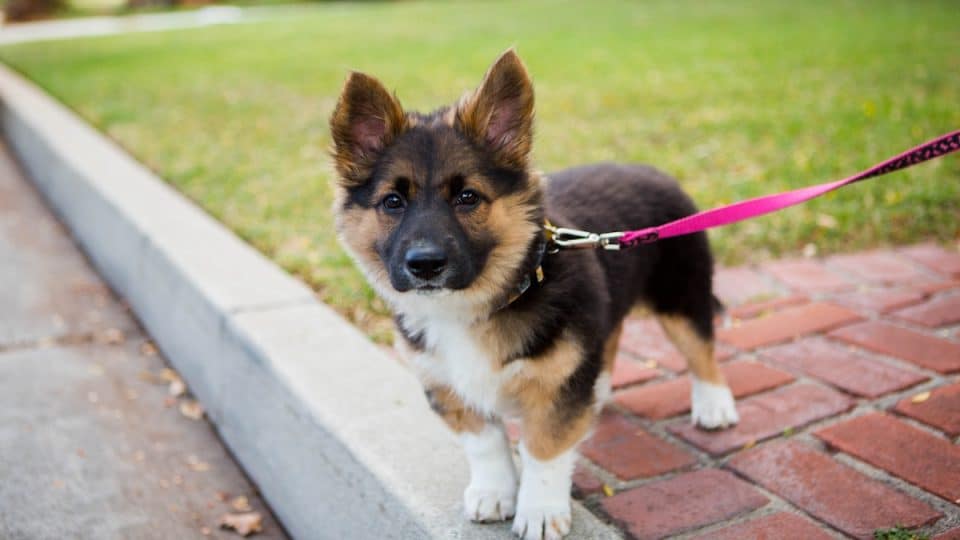
Walks are an essential part of caring for a dog, but they don’t always come naturally to a brand-new, explorative puppy. In fact, learning to walk on a leash is a skill that must be honed over time, which is why starting leash training early is crucial to setting your puppy up for success.
Dogs are especially open to new experiences between 3 and 12 weeks of age, making this the ideal time to introduce a leash and begin building positive walking habits. The sooner you start acclimating your puppy to their walks, the easier they will be. Here’s how to do it.

Pro-tip: Stuck or frustrated with trying to teach your puppy how to walk nicely on a leash? Rover makes it easy to filter for both puppy and leash training near you.
How To Leash Train a Puppy
Early leash training can make your walks safer and more enjoyable in the future. Here’s how to leash train your pup in three steps.
Step 1: Introduce the leash
Take the time to slowly introduce the leash and get your puppy used to it. This desensitization will help prevent your puppy from biting the leash and getting overly excited (cue the zoomies) or scared when wearing it. Pair the leash with delicious treats, and practice putting it on and taking it off before heading outside.
Step 2: Take mini walks inside
Go on mini walks inside your home for 5 to 10 minutes at a time to help your puppy get comfortable with the leash’s weight and restriction. Let them explore nooks and crannies, and sweeten the pot by scattering treats in corners as you go.
To keep your puppy from pulling ahead or lagging behind, drop treats by your side as you walk. Make sure to reward any preferred leash behavior you notice—like looking back at you, or staying close to you without pulling away.
Step 3: Take short walks outside
Once your puppy is comfortable wearing their leash in short bursts, you can take your routine outdoors. This transition is a big step for both puppy and pet parent, since there will be many new distractions, says Nikita Poe, a certified dog trainer at Force Free DC. “I recommend starting easy,” she says. “Once you get outside, aim for just a few good steps at first.” Practice just outside your door, in your yard, or in your driveway, slowly expanding your time outside.
Helpful Training Cues & Skills
Building leash etiquette takes time. Having these helpful dog cues and skills under your belt can make your walks around the block easier while you’re leash training.
- Touch. A hand target—teaching your puppy to boop their nose to your palm on cue—is a fun way to position your pup by your side. It’s also a helpful way to redirect them if they’re pulling ahead, zig-zagging, or biting the leash. You can also use it to politely greet new people.
- Name game. Teaching your puppy to come when you call their name is another great skill to have for leash training. It can help reposition them to your side and interrupt biting, picking things up off the ground, and other unwanted behavior.
- Leave it. Teaching your puppy to leave things alone on cue can keep them from putting something harmful in their mouth. You can also use it to stop them from bolting after something exciting, like a squirrel or cat.
- Drop it. If your puppy already picked up something that you don’t want them to have, a strong “drop it” cue is extremely helpful. Just practice plenty of repetitions, slowly building up the difficulty as you go.
- Watch me. To help your puppy get past exciting distractions without lunging or pulling ahead, this cue teaches them to redirect their attention to you.
- Heel. Another way to position your puppy by your side, especially when moving past triggers or distractions like people or other dogs, is to teach them to heel on cue.
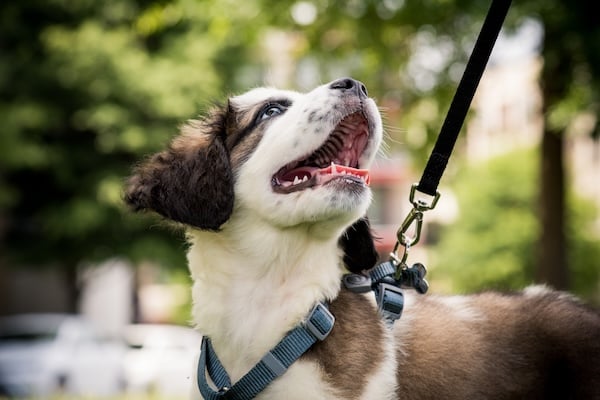
- Loose-leash skills. Unlike a heel, which keeps your puppy close to your side until you release them, loose-leash walking allows freedom of movement while encouraging engagement and preventing any tension in the leash.
Brendan von Wahl via iStock
Troubleshooting Common Issues
Walking on a leash isn’t the easiest experience for puppies, so it’s common to encounter issues along the way. When challenges arise, keep walks short, positive, and engaging so that your pup stays excited to learn.
Leash biting
To prevent leash biting, take your time when introducing the leash. Try to get ahead of the pesky behavior by increasing the rate at which you deliver treats, rewarding when your puppy is able to keep the leash on without chomping on it.
When you begin adding movement to the mix, drop a treat before you take a step so your puppy goes after it instead of the leash (holding the line away from their head).
To stop leash biting once it’s already started, redirect your puppy with the name game, a touch cue, or tossing a treat or toy away from the leash.
Overly excited
If your puppy has started associating the leash with exciting outdoor time and quickly gets over-aroused once it’s on, you’ll want to take a few steps back. Practice putting on the leash and taking it off by the door without ever going outside, rewarding for calm behavior. Once your pup is ready to move outside, try training in low-distraction areas, even if it’s just outside your door.
For pups who get overstimulated while out on walks, try bringing the arousal down by scattering treats in the grass and getting their nose to the ground. If you know your puppy has certain triggers—like other dogs or people—you can also use a “watch me” cue or a heel to quickly move them past.
Sitting down or not moving forward
Pups who freeze and don’t move forward when the leash is attached are likely still getting used to its weight and restriction. Go back a few steps and practice putting the leash on and off and leaving it on them for longer periods inside, heavily rewarding them for having it on.
On walks, use high-value treats or their favorite toy to lure them forward. You can also make a game out of using a touch cue to move them along.
Practicing walking inside your house without the leash first and then attaching it later can also help get your pup in the habit of walking by your side.
Picking things up off the ground
This is where a strong “leave it” or “drop it” comes in handy. While you’re working on both, you can also use a “trade” to offer something of greater value to your puppy, like a delicious treat or exciting toy, to get them to exchange unwanted objects. To keep your pup focused and help them walk past things you know they’d like to pick up, like a food wrapper or chicken bone, you can also use a “touch” or “watch me” cue.
Zig-zagging
If your puppy zig zags, fear not. This is typical behavior for dogs when they first start using a leash. Learning to keep to one side of the sidewalk is a challenge, since it isn’t something a canine would do on their own. Use “touch” or the name game to bring them back to your side.
Pulling
Working on loose-leash skills can help combat pulling before it becomes second nature. While your puppy is getting used to walking nicely beside you, use a longer leash (8 to 10 feet for neighborhood walks and longer lines for empty fields). This extra length can prevent your puppy from pulling ahead and associating that tension with moving forward. You can also designate a standard six-foot length for loose-leash training and a longer leash for all other walks to help your puppy differentiate between the two.
Where To Get Help
If you suspect your puppy is feeling stressed, anxious, or overwhelmed during walks, Poe recommends seeking expert support. A certified positive-reinforcement trainer or vet behaviorist can help you create a customized plan tailored to your pup’s individual needs.
To find a professional dog trainer in your area, explore puppy training options with Rover. With a little extra support, you and your dog can be enjoying walks together before you know it!