- This post contains affiliate links. Read more here.
- Not a substitute for professional veterinary help.
Adopting a puppy is all fun and games—until the biting begins! If your new dog responds to every touch with a mouthy nip, it’s easy to feel frustrated. Biting is a natural behavior in puppies and is often their way of exploring the world around them. Fortunately, with a little training and a lot of patience, this behavior usually decreases around the age of 8 to 10 months.
GoodVets Medical Director Dr. Jordan Beauchamp, DVM, shares insight into why puppies bite and healthy ways to redirect puppy biting. “Your puppy doesn’t necessarily understand what a person’s hands are, for example,” she says. “They might not realize they’re hurting you, but it’s still important to show them what’s appropriate to chew on versus what’s not.”

In this guide, we’ll share more information about why puppies bite, the different stages of puppy biting, and how to better manage living with a tiny land shark.
Pro-tip: Nipping and biting won’t be the only puppy training you’ll need help with. Rover makes it easy to filter for puppy training near you.
Stages of Puppy Biting
Let’s look at a typical timeline of when certain biting behaviors emerge and how to handle them. Here’s what to know for each stage.
| Age Range | What’s Happening | What To Do |
| 8 to 16 weeks | Your puppy just left their litter mates and is exploring the world with their sharp baby teeth. | Avoid sudden movements that turn your hands or feet into a fun toy to chase. Redirect biting with a toy, away from your hands and feet. |
| 16 to 22 weeks | Your puppy’s baby teeth are starting to fall out and their adult teeth are erupting. They’re likely chewing and biting on everything to soothe their sore gums. | Use gates or play pens to keep your puppy from chewing on furniture or unsafe items.
Offer appropriate outlets for chewing, like puppy-safe chews or frozen puzzle toys. |
| 5 to 7 months | Teething settles, but many puppies begin to enter their adolescent stage, where they often test boundaries. | Use management to curb unwanted chewing and biting and stay consistent with your training to build the behaviors you want to see. |
| 8 months to 1 year | Mouthiness begins to subside around 8 to 10 months, though some puppies may stop earlier. | Continue management, training, and giving your puppy appropriate outlets for chewing and biting. |
How To Manage Puppy Biting
Since biting is a natural behavior, it’s important to teach puppies when it’s appropriate to bite instead of urging them to stop altogether.
Redirect exploratory biting
If your pup bites or nibbles on items they shouldn’t, consider redirecting the behavior to a good puppy chew toy. You might consider a toy that has a similar texture to the object they’re mouthing. Socialization is also important so that your puppy can learn to properly greet other dogs and unfamiliar humans.
Soothe teething aches
Teething puppies may appreciate a frozen toy like the Nylabone freezer chew. Choosing toys that are meant to soothe achy gums and alleviate pain can keep your pup from turning to your favorite pair of shoes.
Offer opportunities for play and hunting
If your hands or feet are taking the brunt of your puppy’s biting, consider keeping a toy on hand. As soon as they bite, redirect their attention to an appropriate toy. Diversifying their toys can help a puppy chew, play, and practice hunting instincts safely and healthily.

Sergeeva via iStock
Fight boredom
Spending quality time with your puppy is crucial for building the dog-human bond. Going on walks, safely exploring nature, and enjoying play and training sessions together at home can help provide your puppy with mental and physical enrichment. This can also curb excessive biting.
Additional tips
Remember to reward your puppy for good behavior and positive progress! If your puppy is biting your hand as you present them with treats, try closing the treat in your fist and touching your fist to your dog’s nose. Open your hand when your puppy displays gentle behavior, such as sniffing or licking.
Avoid yelling, scolding, or physically punishing your dog for biting and chewing. Instead, focus on positive reinforcement to encourage the behavior you want to see in your adult dog. Rewarding your puppy with treats, pets, and praise for good behavior will go a long way in setting them up for success!
Why Do Puppies Bite So Much?
Knowing more about why puppies bite can help you tailor your training and management strategies. As Dr. Beauchamp explains, biting isn’t inherently bad during this stage of life. It’s developmentally appropriate—and it serves a variety of purposes.
Exploration
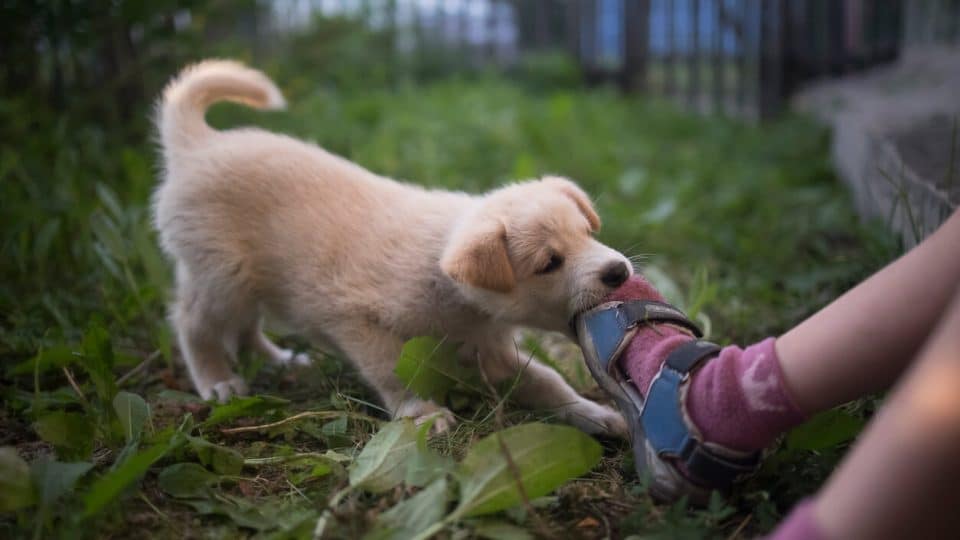
Since your pup doesn’t have opposable thumbs, they use their mouths and teeth to gain more information about their surroundings. “Everything is new to puppies,” Dr. Beauchamp explains. “They explore the world with their mouth like sharks do, and we see that manifested in biting or chewing.” Chewing on socks and shoes, for example, can be their way of trying to figure out what these objects are.
Teething
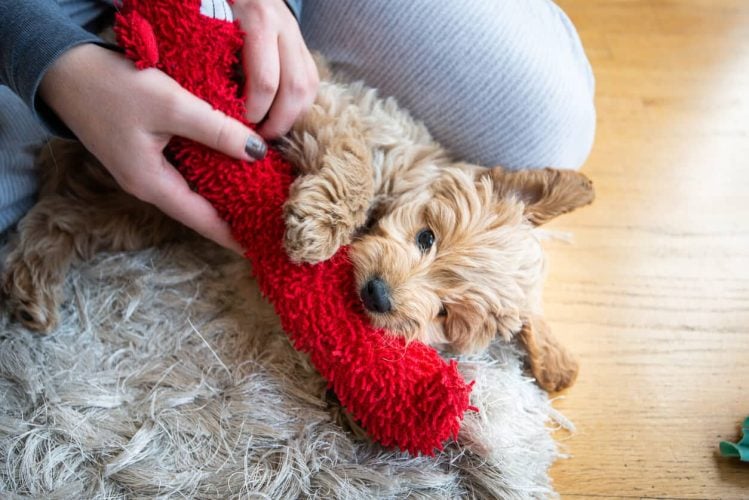
“Puppies typically begin to lose their teeth around 16 weeks of age, depending on how aggressive a chewer they are,” Dr. Beauchamp says. “Then, they’ll usually lose their puppy teeth in those next 1 to 2 months. You can see an increase in mouthiness when a dog is teething.” When your pup tries to soothe sore gums, they might start gnawing at things all over the house—including you.
Spiderplay via iStock
Play
Mouthing can be a natural part of puppy play, just like growling or wrestling. If a puppy bites a littermate too hard, the puppy receiving the bite will typically squeal to let them know. Most of the time, puppy nips aren’t malicious—they’re just trying to figure out the rules of the game.
Hunting behavior
A dog’s natural hunting instincts, also called a prey drive, can lead puppies to bite. Puppies who don’t have siblings to practice hunting behavior with might redirect this practice to people in the house.
Boredom
Without toys or interaction, a bored puppy might self-soothe by biting or chewing inappropriate (and even dangerous) items. Dr. Beauchamp cautions against scolding a puppy who bites furniture or clothing. “It can feel frustrating, but keep in mind that they might not understand the word ‘no’ yet. They might be thinking, ‘If I chew on this, mom will come talk to me!'”
Breed
Certain breeds are typically mouthier than others. “Golden Retrievers, Labradors, and French Bulldogs are known for being chewers,” says Dr. Beauchamp. “These puppies love to explore and play and might need a little more redirection to toys and treats when they’re biting. I see less mouthiness in more aloof breeds such as Poodles and Shiba Inus.”
Small breeds such as the Pomeranian or Yorkie might have difficulty losing puppy teeth on their own when teething. “At six months, if your dog hasn’t lost their canine teeth, we recommend removing them at a spay/neuter appointment or sooner. Keeping these teeth can affect the growth of adult teeth and the shape of the jaw.”
Why Is My Older Puppy Still Biting?
While puppies usually grow out of their mouthy phase, teaching them healthy habits is key. “The best thing you can do in those first few months is focus on redirecting the biting behavior toward an appropriate object,” says Dr. Beauchamp. “I recommend carrying around a toy they like in your pocket so if they do bite on your hands or shoes, you can remove that item and give them what is appropriate.”
If biting persists in a one-year-old puppy, it could be time to chat with your vet or seek the support of a professional trainer. Consistent biting in an older dog might be a sign of stress, anxiety, or lack of mental stimulation and physical exercise. Working with a pet professional can help you form the right behavioral training plan for your dog.