- Not a substitute for professional veterinary help.
There’s a lot to look forward to as the holiday season unfolds between November and January. For pet parents, this time also comes with some potential hazards that can be easy to miss. Your pets may have to contend with the stress of guests, tempting foods that could upset their stomachs, and a gauntlet of decorations.
Fortunately, with a little planning and environmental management, you can enjoy a safe and memorable time with your pets—no matter what the season throws at you. To point you in the right direction, we asked two emergency veterinarians for tips on holiday pet safety. Here’s your complete guide to navigating the holidays with pets.
Holiday Safety Checklist
- Be mindful of hazardous foods. Many holiday foods can be harmful to pets. Avoid sharing high-fat meats and bones, baked goods, candy, garlic, onions, and spices.
- Pet-proof the tree. Anchor the tree or use a free-standing gate to prevent pets from tipping it over. Avoid edible ornaments and tinsel, and place fragile glass ornaments up top.
- Avoid open flames. Use battery-operated candles to prevent burns or fires.
- Watch for toxic plants. Many traditional holiday plants like lilies, poinsettias, mistletoe, and holly can make your pet sick. Keep them out of reach, or swap them with pet-safe alternatives.
- Post emergency numbers. Keep the following contact details handy: your regular vet, the closest emergency vet, and the Pet Poison Helpline (855-764-7661).
- Store gifts safely. If you don’t know what’s in a wrapped gift, keep it out of reach. Dogs can sniff out treats and candy through wrapping paper and are liable to break into them.
- Double down on escape-proofing. With an increase in guests and deliveries comes a heightened risk of pets escaping. Use gates and/or crates as needed, and make sure microchips and ID tags are current in case an escape does occur.
- Give your pet their own quiet space. Your pet may need a break from the festivities. Set up an out-of-the-way area where they can decompress, filled with comforting items like blankets and toys.
- Prepare for holiday guests. Supervise interactions with kids, and communicate any house rules, such as not feeding pets table scraps or disturbing them in their safe spaces.
- Stay safe while traveling. Use a secure harness or carrier during car travel, and never leave pets alone in the vehicle. Pack essentials like food, medications, comfort items, and a health certificate if you’re crossing state lines.
- Arrange pet care in advance. With demand for sitters and walkers peaking during the holidays, ensure you book needed services early.
- Minimize your pet’s stress. Help anxious pets cope with holiday activities by providing more exercise, mental stimulation, and a quiet place to retreat.
Tighten Up Food Safety
Under normal circumstances, food safety may not be an issue, but the holidays introduce some new complications—guests who don’t know the rules, new dishes in the mix, and general holiday chaos that keeps you from supervising closely.
Dr. Michael Hyder, Medical Director at VEG ER for Pets in Palo Alto, says one of the most common emergencies his clinic sees during the holiday season is pets ingesting harmful foods.
1. Know which holiday foods are dangerous
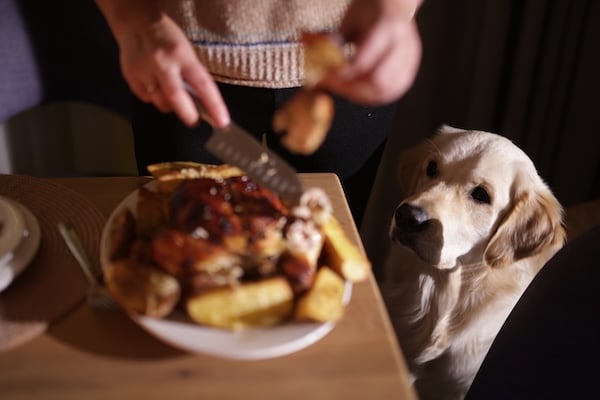
We love our pets like family, so it’s tempting to share our holiday spread with them. However, many holiday foods can be harmful—sometimes even deadly for cats and dogs. Since even a small taste can lead to big problems, it’s best to stick with pet-safe treats.
As you prepare your holiday feasts, here are some common hazards to avoid:
- Traditional holiday meats. While a little plain turkey breast might be fine, most holiday meats are risky. High-fat meats like ham and turkey skin, along with rich gravies, can cause inflammation and lead to pancreatitis in pets. Avoid giving cooked bones, too, as they can splinter and cause internal perforations, broken teeth, intestinal blockages, and choking.
- Garlic & onions. These staples show up in lots of holiday foods, but they are harmful to pets. Watch for garlic powder and onion powder, as well.
- Sweets and baked goods. Most of us know to keep candy and chocolate away from pets. You’ll also want to avoid xylitol, a sugar substitute that can turn up in sugar-free bakes and cookie mixes. And be on the lookout for raisins hidden in holiday cookies and fruitcakes.
- Holiday spices. While they add flavor to our signature holiday dishes, certain spices can be dangerous for pets. Don’t share foods containing nutmeg, cloves, allspice, cocoa powder, or cinnamon.
- Alcohol & caffeine. Spirits and stimulants are a no-go—keep the spiked eggnog and coffee far away from your furry friends.
StockSeller_ukr via iStock
2. Keep human food out of reach
Many dogs and cats are expert food thieves. Never leave food out unattended—pets who can reach the table or countertops may not be able to resist the temptation. To prevent pilfering, you can also use pet gates to keep your pets out of the kitchen while you’re cooking and serving meals.
We recommend politely reminding your guests not to share human food—they may not realize which foods are harmful to pets. Always store leftovers in tightly sealed containers, and put them in the fridge or freezer right away. Table scraps should go straight into a secure pet-proof trash can or be taken directly outside or to the garage.
3. Have a plan if your pet eats something they shouldn’t
Even with precautions in place, accidents can happen. If you suspect your pet has eaten something harmful, it’s essential to act quickly. “Even if your pet seems fine, toxins can take hours to cause symptoms,” notes Dr. Hyder.
Make sure you have easy access to the contact information for:
- Your veterinarian
- The nearest 24/7 emergency vet clinic
- The ASPCA Poison Control Center (888-426-4435)
- The Pet Poison Helpline (855-764-7661)
When calling the vet, Dr. Alex Maclean, an emergency veterinarian at VEG ER for Pets, says to have details ready about what your pet ate, including packaging if possible. Dr. Hyder advises against inducing vomiting or trying home remedies unless a veterinarian specifically instructs you to do so.

Keep an eye out for these warning signs that your pet may have ingested something harmful:
- Vomiting
- Diarrhea
- Excessive drooling
- Lethargy
- Tremors
- Difficulty breathing
- Loss of appetite
- Unusual behavior
4. Make some special treats just for your pet
Just because your pet can’t enjoy your holiday feast doesn’t mean they can’t have something special during the festivities.
You can put your Thanksgiving leftovers to use by whipping up some DIY dog treats. If you love baking during the holidays, try your hand at some dog-friendly Christmas cookies, cranberry coconut cookies, or pumpkin pie treats.
Not a baker? Spread holiday cheer with a simple dog-approved eggnog or no-bake snowball treats. For cats, try a pumpkin no-spice latte or savory cheesy pumpkin snacks.
Make Decorations Pet Safe
Holiday decorations get us in the festive mood, but they can also pose unexpected dangers for pets. “If it sparkles, crinkles, or dangles, assume your pet will investigate,” says Dr. Hyder. Give your home a once-over and make your decorations pet-proof with these tips.
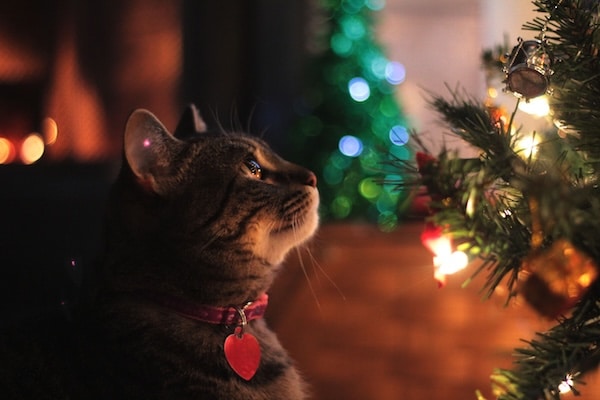
- Pet-proof the tree for curious dogs and climbing cats. Christmas trees—both real and artificial—come with some risks. Pine needles are sharp and harmful if swallowed, and the water base can foster bacteria and mold. If possible, anchor your tree to the ceiling or doorframe, or block it off with a free-standing gate.
- Choose pet-safe ornaments. Dr. Hyder advises against edible decorations like popcorn strings, candy canes, or salt dough ornaments that might tempt pets. Place fragile ornaments up top, and consider skipping tinsel in homes with cats.
- Snow globes. Many snow globes contain ethylene glycol (the same substance in antifreeze). This chemical smells sweet but is lethal for pets. Keep snow globes out of reach. If a globe does break, keep pets away from the area.
- Protect cords and wires. Electrical cords can be tempting chew toys for pets, which can lead to burns or electrocution. Keep them hidden or shield them with protective tubing to prevent any accidents.
- Swap candles for electric flames. Open flames can be dangerous around curious paws and wagging tails. Dr. Maclean recommends using battery-operated candles for a safer glow.
- Be cautious with holiday plants. Plants like poinsettias, holly, lilies, and mistletoe can be toxic to pets. Keep them out of reach or avoid them entirely. “Use pet-safe plants such as Christmas cacti or African violets instead,” suggests Dr. Maclean.
- Keep gifts out of reach. Make sure any unwrapped gifts are stored securely, especially if you’re unsure what’s inside. Your dog can sniff out chocolates and other goodies, even if you can’t, and they may tear into boxes to get them.
- Use pet-safe gift wrap. Be mindful of what you use to wrap your gifts. Festive ribbons and wrapping twine can cause serious blockages if ingested.
- Practice costume safety. If you’re dressing up your pet, make sure outfits fit properly, keep costume time short, and avoid anything that could tangle or choke your pet.
EyeEm Mobile GmbH via iStock
Escape-Proof the House
Winter escapes can be especially dangerous due to cold, wet weather and low visibility. Keep your pets safe by doubling down on door safety during the holidays.
1. Practice door safety
The holiday season brings an influx of guests and deliveries, which means your front door will see a lot more action. With this increase in traffic, some pets may seize their chance to bolt.
To prevent escapes, consider installing a pet gate at your entrance. You may even want to leash your pet during times you know guests will be arriving. For particularly busy moments when you’re unable to supervise closely, it’s smart to keep your pet in a cozy crate or quiet room, away from the front door.
2. Update your pet’s microchip and ID
If your pet does manage to slip outside, having a microchip and ID tag greatly increases the chances of their safe return. Make sure both are up to date, with your current address and contact info. Always keep ID tags on pets at all times (even if they’re wearing a costume).
3. Don’t rely on guests to watch out for your pet
Remember that visitors are unlikely to have door safety top of mind. It’s up to you to supervise your pets to prevent escapes. If you’ll be swamped with hosting and cooking and won’t be able to watch your pet, it might be best to board them.
Guest Protocol
Hosting holiday guests when you have pets can be fun, but it requires some planning. Follow these tips to keep both guests and pets safe.
- Be upfront about your pet’s quirks. Give your guests a heads up about any peculiar habits, whether you have a dog who likes to jump or a cat who can’t resist snuggling (especially important if your guest has allergies). This sets clear expectations and helps your guests know how to interact with your pet.
- Set house rules about pets ahead of time. Let guests know what’s off-limits for pets, like certain foods or furniture, to avoid any confusion or accidents.
- Give your pet a space that’s all their own. Designate a cozy space where your pet can escape if they need a break from the excitement. Include comfort items like a cozy bed, blankets, and favorite toys.
- Follow best practices for kid introductions. Children may not instinctively understand pet boundaries, says Dr. Hyder. Supervise interactions with kids, and teach them how to approach pets gently and respect their space.
- Make a plan if your guests are bringing pets. Don’t assume your pets will get along. Consider a trial introduction before the event to see if everyone is compatible, or set up separate areas if needed. You can also say no if you don’t think it’s a good fit.
Viktoriya Telminova via iStock
If You’re Traveling
If holiday travel is on the docket, prepare your pet accordingly. Whether you’re bringing your pets with you or leaving them at home, here are some tips to keep travel safe and low-stress.
1. Traveling with your pet
Traveling with your pets during the holidays can be an adventure, but it requires some thoughtful planning.
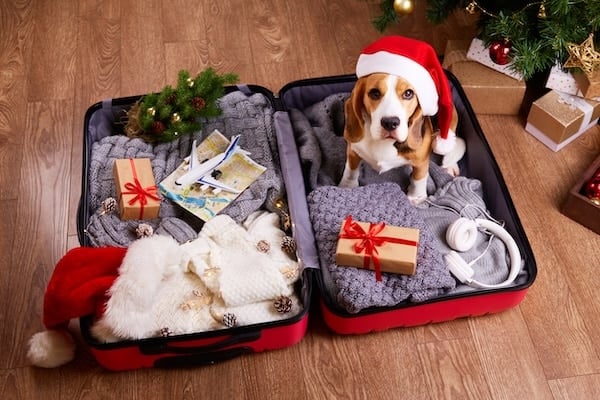
- Consider your pet’s comfort. Before packing their bags, think about whether your pet will be more comfortable at home with a drop-in sitter or house sitter. Cats and senior pets, in particular, often prefer the familiar surroundings of their own space.
- Secure pets in the car. Always use a secure harness or a designated pet carrier to safely restrain your pet while driving. Keep your pet away from airbags, and never leave them alone in the car, especially in hot or cold weather.
- Pack the essentials. This includes your pet’s food, medications (enough for the whole trip), and a copy of their medical records. Comfort items like toys and bedding can also help ease travel stress. Don’t forget waste bags, water bowls, first aid supplies, and a travel litter box for cats.
- Health checks. If your journey involves crossing state borders or international travel, your pet might need a health certificate from your vet. Make sure to schedule an appointment at least two weeks in advance to get paperwork in order.
- Address car sickness. If your pet is prone to motion sickness, ask your veterinarian for possible solutions. They may recommend over-the-counter remedies or prescription medications to keep your pet comfortable.
- Air travel considerations. Every airline has its own policies regarding pet travel. Check ahead of time to ensure your pet’s carrier will be allowed on board.
2. Traveling without your pet
Sometimes, it’s not practical to include your pets in your travel plans. If you’re leaving them at home, be sure to:
- Arrange pet care early. Reliable pet sitters book up quickly during the holiday season. Generally, 4-6 weeks before your trip is a good window to aim for.
- Update care instructions. Provide your sitter with updated care instructions, including your vet’s information and a reliable emergency contact who isn’t traveling with you. Prepare a detailed list of feeding instructions, medications, routines, favorite games, and any quirks or special needs your pet has.
- Communicate your check-in preferences. Discuss how often you’d like to receive updates during your trip. If a daily picture of your pet will put you at ease, let your sitter know!
Tips for Helping Anxious Pets Through the Holidays
“Holiday crowds, new visitors, and extra noise can make pets anxious,” says Maclean. Here’s how to ease your pet’s nerves during this busy time.
1. Create a safe space
One of the best ways to help your pet cope with holiday stress is to set up a quiet pet zone. Designate a space that’s away from the front door and main activity. This could be a bedroom with the door shut or an area blocked off with pet gates. Keep this space free from guests and equip it with food, water, and a litter box for cats.
Make your pet’s space cozy with a favorite bed, familiar toys, and blankets. To drown out holiday noise, play soft music or white noise. You can also consider using calming aids like pheromone diffusers, calming chews, or Thundershirts. In more extreme cases, ask your vet if prescription medication may help your pet settle.
2. Put a sign on the door
If the doorbell sets your pet off, a simple reminder asking guests not to ring the bell can significantly reduce stress for your pet.
3. Tire your pet out
Exercise is a natural stress reliever. Before any holiday events, take your dog for a long walk to shake off the jitters. If weather conditions are bleak, you can blow off steam with indoor activities using things like a flirt pole, agility kit, or balance tools. Cats benefit from exercise, too—try engaging them with a dangling wand, catnip toys, or a laser pointer.
4. Offer treats, chews, and puzzle toys for distractions
Engaging your pet’s mind is a great way to relieve stress. Provide your dog with long-lasting chews, a stuffed KONG, or puzzle toys that engage their problem-solving skills. Cats will also enjoy puzzle toys, lick mats, and scratching posts to keep them engaged and distracted from the holiday chaos.
5. Consider boarding your pet
If your holiday plans involve hosting a house full of guests and you anticipate this will be too much for your pet, boarding them might be in their best interest. Look for boarding facilities that cater to anxious pets, or opt for a private pet sitter who will treat your pets like their own.