- This post contains affiliate links. Read more here.
- Not a substitute for professional veterinary help.
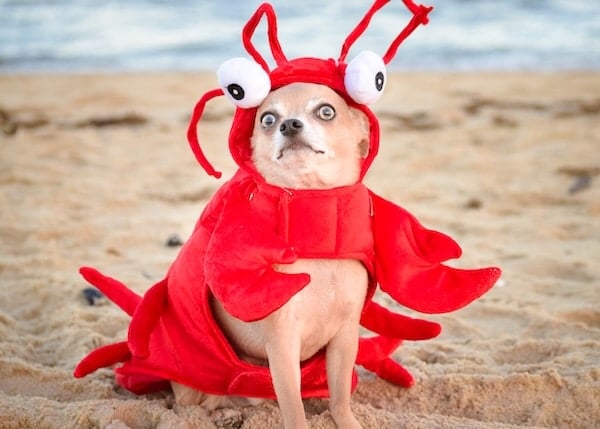
These days, dog clothes are standard gear—for lots of pet parents, dog raincoats and even boots are handy tools for protecting pets from the elements. But what about dog costumes and clothes that don’t serve a practical purpose? Is okay to dress up your dog in a Halloween or holiday costume just for fun?
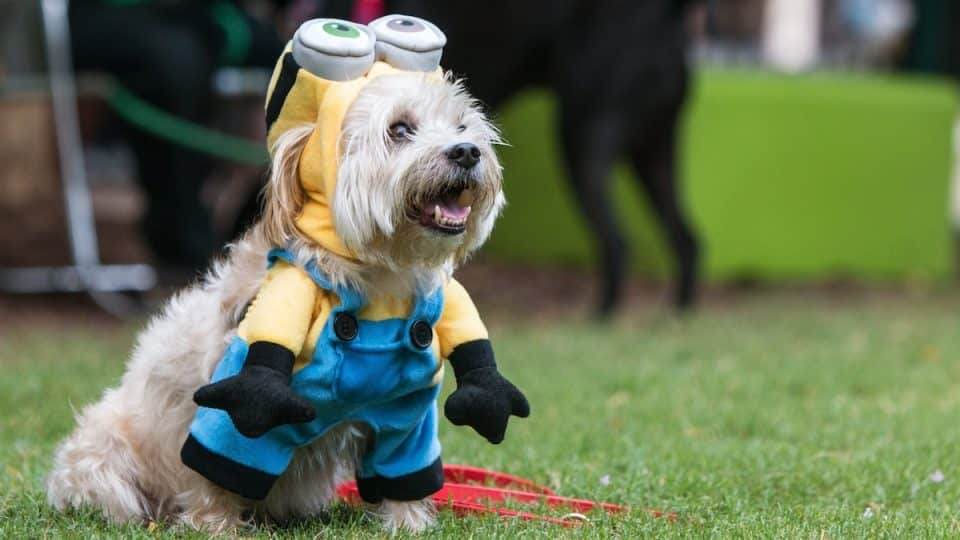
According to CPDT-certified trainer Paige Gordon of SpiritDog Training, the answer depends on the individual dog and the particular circumstances of wearing a costume, including whether it’s for a quick photo or an extended period of time. Some dogs don’t mind wearing a costume for a photo shoot or a holiday party, while others might find it distressing or flat-out refuse.

To help you figure out which camp your dog might be in, we review the signs to watch out for, plus tips from Gordon on when it’s okay and what kind of costumes work best.
Do Dogs Like Being Dressed Up?
The short answer: It varies! Some dogs might love the attention that comes from dressing up, while others may merely tolerate wearing a costume. Still other dogs may find it difficult or uncomfortable and will express frustration or stress when wearing one.
“It depends on your dog’s individual personality, and how you introduce clothing and costumes,” says Gordon. Dogs who have positive associations with costumes are more likely to tolerate or enjoy wearing them.
To build good associations, Gordon recommends slowly introducing clothing and rewarding your dog with a treat or verbal praise for wearing it for short periods. Aim for just a minute or two to begin with, then gradually build up to longer periods of time.
Some dogs, though, might never like costumes, no matter how many good things are associated with them—and that’s okay too.
Firn via iStock
Signs Your Dog Likes Their Costume
While not every dog will love wearing a costume, if your dog demonstrates the following behaviors, it’s typically a good indicator that they’re okay with it:
- Loose body language, including a wagging tail and relaxed ears
- Normal movement, including freely walking around and sitting, that’s unimpeded by the costume
- Familiarity with wearing other types of clothing, such as sweaters or coats
Signs Your Dog Won’t Like a Costume
Watch out for warning signs that your dog isn’t comfortable or happy wearing a costume. If your dog is displaying any of these behaviors, it’s best to take the costume off immediately:
- Tense body language, such as a stiff posture, pinned back or alert ears, or whale eye
- Any attempt to bite, scratch, or remove the costume
- Limited movement or a refusal to walk or sit in the costume
- Any signs of stress, such as shaking, barking, vocalizing, or attempting to hide from the costume
When Costumes Are Dangerous
Even if your dog is happy to don a pair of butterfly wings or a lion’s mane, there’s safety to consider. For some dogs and in some circumstances, costumes are a no-go. Here’s what to know.
Puppies
For puppies and young dogs, avoid costumes with loose or dangling pieces or small parts like buttons. “We don’t want to accidentally encourage chewing or have them swallow any pieces,” explains Gordon.
Pet parents should also skip any costumes with lights or musical elements. “It is too easy for it to malfunction and cause a dog significant distress,” adds Gordon.
Seniors
Some costumes can present a mobility hazard for senior dogs. Outfits that are too bulky or loose may make it difficult for older dogs to move around, so it’s important to choose a lightweight and well-fitting costume for seniors.
Flat-faced dogs
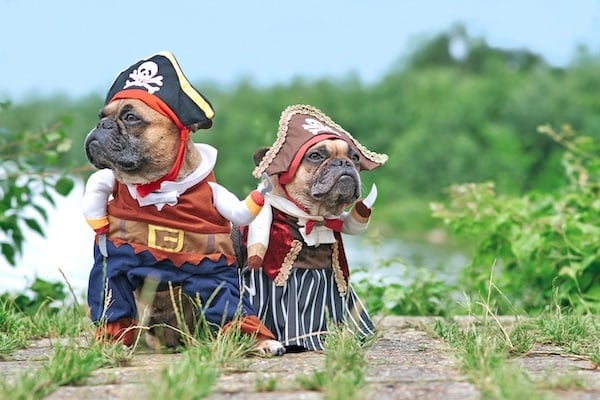
Be cautious when selecting a costume for a flat-faced dog. Breeds like Pugs, Bulldogs, and Boston Terriers are already prone to breathing problems, so any outfit that covers their face, puts pressure on their neck or chest, or can cause them to overheat may pose a safety hazard. Instead, consider a festive accessory such as a cape or a specialty collar.
Any situation where you can’t supervise closely
Any time your dog is in a costume, they need supervision to make sure they don’t get tangled, trapped, or tempted to start chewing. If you can’t watch them closely, it’s better to skip the costume.
Posh_portraits via iStock
Best Practices for Safe Dog Costumes
If your dog is comfortable wearing a costume, keep things safe with the following tips:
- Consider materials. Aim for breathable, soft fabric that won’t rub or chafe your dog’s skin or cause them to overheat. Avoid any flammable materials.
- Take measurements. Clothing that’s too tight or too big isn’t just uncomfortable—it’s also a safety hazard. Measure carefully before shopping, and don’t forget that your dog needs to be able to relieve themselves.
- Choose a costume that’s not easily chewable. Avoid any dangling fabric pieces or costumes with small parts like buttons that could cause choking hazards or blockages if swallowed.
- Take the costume for a test-drive. Don’t wait until the holiday or event itself to show your pet their costume. Work on introducing it slowly over several days or a week.
- Keep costume sessions short and sweet. Even when your dog is comfortable wearing a costume, it’s still best to give them lots of breaks to prevent stress or overheating.
Costume Alternatives
Wearing a costume isn’t the only way to celebrate Halloween or the holidays with your pet. If your dog isn’t a fan of dressing up, consider whether they have more tolerance for a festive accessory such as a cape, a headpiece, or a decorative collar.
Or consider skipping the clothes and accessories all together and opt for a festive toy that your pet can carry around. Even better—bake some dog-safe holiday treats to share with your pet!
No matter which option you choose, the most important thing is to include your dog in the holiday celebrations in a way that makes them feel safe, happy, and comfortable.