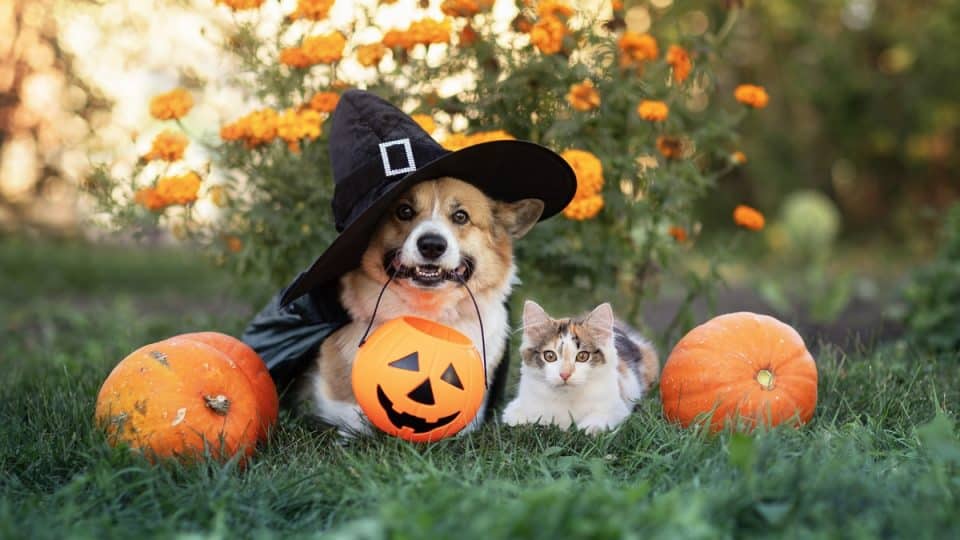
For many people, Halloween is a fun and festive time—but our pets don’t always find it so exciting. The non-stop doorbell ringing, costumed trick-or-treaters, and spooky decor can overwhelm even the calmest dogs and cats. Plus, Halloween pet safety is a concern, with candy hazards, escape risks, and potentially dangerous decorations.
The good news is that with a little preparation, Halloween doesn’t have to be a frightful experience. This guide offers simple tips for a safe Halloween with your pet, featuring insights from Dr. Rachel Cocchiaro, a veterinarian at Bahama Road Veterinary Hospital in North Carolina.
With her help, we’ll cover how to pet-proof your home, prevent escapes, choose appropriate costumes, and manage a pet’s anxiety on this spooky night.
Halloween Checklist
- Secure all candy. Store treats out of reach and remind household members not to share candy with pets.
- Choose pet-safe decorations. Avoid decorations with small parts that pets could swallow, and place fake webs where pets won’t get tangled in them. Avoid open flames and use battery-operated lights instead.
- Escape-proof your home. Keep doors and windows secure to prevent pets from escaping during trick-or-treating. Use pet gates for added security.
- Create a safe space. Designate a quiet, cozy area for pets away from the front door.
- Provide calming distractions. Keep pets occupied with puzzle toys, snuffle mats, chew toys, lick mats, or long-lasting chews to distract them from the activities outside.
- Check your pet’s identification. Ensure your pet’s microchip info is up-to-date, and outfit both cats and dogs with ID tags.
- Be attentive outdoors. Supervise your dog in the yard, even if it’s fenced in. If your dog is joining you for trick-or-treating, keep watch for discarded candy, scary decor, or approaching children who might frighten them.
- Stay visible outside. Use light-up and reflective collars, leashes, and harnesses to stay visible to drivers.
- Monitor pets in costume. If your pet can tolerate a costume, make sure it fits well and doesn’t have small pieces that can be chewed off. Watch for signs of discomfort.
- Have emergency contacts handy. Make sure you have the ASPCA Animal Poison Control Center hotline (888-426-4435), your own vet clinic’s number, and the number for an all-hours emergency vet.
Keep Candy and Decorations Out of Reach
Halloween is all about treats and fun decor. But what’s fun for us can pose serious risks to our pets. Here’s how to pet-proof for spooky season.
Candy
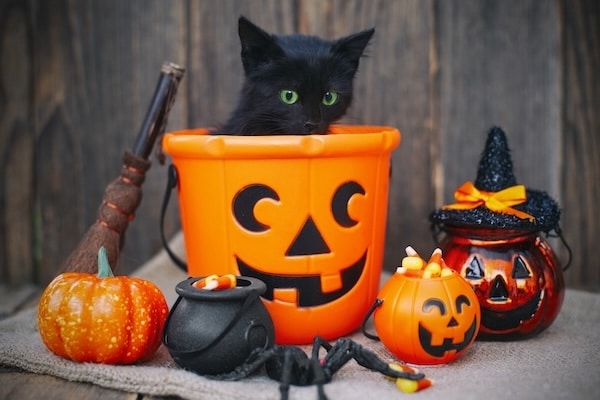
No Halloween candy is safe for pets. Most people know that chocolate and sugar-free candies containing xylitol are toxic. But there are less obvious items like raisins (and Raisinets!), grapes, and apple seeds that can also be harmful. Even the wrappers themselves can cause gastrointestinal upset.
You can manage your pet’s access to candy by:
- Storing it out of reach. Keep all candy in a high cabinet, preferably in sealed containers. Avoid lower cabinets, counters, kitchen tables, or any easily accessible areas. You might even use a child-safety lock for determined pets.
- Being careful with candy bowls. If you’re handing out candy, watch where you set down the bowl after trick-or-treaters arrive. Always place it high enough where your pet can’t reach it—not the coffee table or entryway bench.
- Securing trash. Dispose of candy wrappers in a dog-proof trash can to prevent choking or intestinal blockages.
- Educating kids & guests. Make sure your housemates and/or children know not to share their candy stash with pets, and encourage them to enjoy treats in a designated area. If you’re hosting a Halloween party, remind guests not to feed your pets anything, even as a “special treat.”
Just because candy and chocolate are off-limits doesn’t mean your pet can’t enjoy any halloween treats. Even the most amateur cook can whip up some dog-friendly pumpkin popsicles, pumpkin softies, or banana bat cookies. Cats may enjoy a frozen pumpkin push-pop or a pumpkin “no-spice” latte.
eli_asenova via iStock
Decorations
Nothing gets us into the Halloween spirit like a festively decorated home. As you spookify your place, be mindful of potential hazards for your pet, including:
- Open flames. Candles and jack-o-lanterns add ambiance, but a wagging tail or curious kitten can easily knock them over, leading to burns or fires. Choose battery-operated candles to keep the festive feel without the risk.
- Electrical cords. Wires and cables are particularly tempting to puppies and kittens who love to chew. Since this puts pets at risk of mouth burns or worse, consider using protective tubing to shield electrical cords from curious mouths.
- Pumpkins, gourds, and festive corn. “Edible” autumnal decor can cause stomach issues if eaten in large quantities—especially if it’s moldy or rotting.
- Choking hazards. Long, stringy cobwebs or small decorations like rubber eyeballs can pose choking or tangling risks. If you want to use them, place these items high enough so pets can’t reach them.
Glow sticks
Glow sticks brighten up Halloween, but keep them away from pets. Although the liquid inside is technically non-toxic, it tastes bitter and can lead to drooling, vomiting, or agitation. If your cat or dog accidentally chews and breaks one open, rinse their mouth with water immediately.
Escape-Proof the House
With the door constantly opening to a stream of trick-or-treaters, some pets may seize their chance to escape. Avoid the stress of a runaway pet with these strategies for escape-proofing your home.
Door safety
Halloween brings new sights and sounds that can unsettle even the most relaxed animal. An excited or stressed pet may try to flee the scene, so it’s critical to double down on your escape-proofing plan.
First, consider limiting door traffic by greeting guests from your porch or driveway. If your pet likes saying hello to visitors, keep them leashed for the evening. They might think it’s odd, but it’s a simple way to prevent dogs from darting out the door if their nerves get the better of them.
You can also install a pet gate at the front door or use it as a barrier to keep your pets in a secure area. For agile cats, consider investing in an especially high, sturdy gate.
For their comfort and safety, Dr. Cocchario recommends keeping pets in a crate or an interior bedroom for the evening. Make it a cozy space with your pet’s favorite toys and soft background music. Feline or canine pheromone sprays or diffusers may help create a sense of calm.
Microchip and ID
Dr. Cocchario recommends microchipping pets and ensuring they have a well-fitted collar with ID tags. This improves the odds of a reunion, should they manage to sneak out while you’re distracted. Never remove a pet’s collar for costume purposes; it should stay on at all times.
Follow Costume Protocol
Whether your pet is going as a taco or a pirate, safety and functionality always trump fashion. While dressing up your pet can be a fun way to celebrate, keep in mind that not every pet enjoys the experience. Always consider your pet’s preferences.
Conduct a costume test
Some pets may love the attention that comes with a cute outfit, but many feel stressed or restricted in clothing. To see where your pet lands, start with a costume test and observe how they react. If they show signs of discomfort—like backing away, growling or hissing, or freezing—it’s best to reconsider.
Some pets may prefer simpler alternatives, like a festive collar or bandana, which can be just as fun without the stress.
For pets who don’t mind dressing up, choose a costume that is:
- Comfortable. Ensure the fabric is soft and doesn’t irritate or chafe your pet’s skin. Dr. Cocchiaro notes it shouldn’t make them too hot, either.
- Well-fitted. Look for costumes that fit well—that is, loose enough for easy movement without risking a trip or snag. Dr. Cocchiaro reminds us that costumes shouldn’t interfere with a pet’s ability to go to the bathroom.
- Safe. Avoid costumes with small parts like buttons or loose strings that can be chewed off and swallowed. Make sure costumes don’t restrict breathing or obstruct a pet’s vision or hearing.
Costume practice
Once you have the right costume, let your pet get used to wearing their outfit slowly. Start with just a few minutes each day. Use treats and praise to create positive associations, and supervise closely to prevent chewing.
Keep costume time short
Remember to keep the costume fun brief. Capture those adorable moments with some quick photos, then remove the costume before it becomes uncomfortable. This is especially critical for puppies and kittens, who shouldn’t be left in a costume without close supervision.
monkeybusinessimages via iStock
Stay Safe When Trick-or-Treating
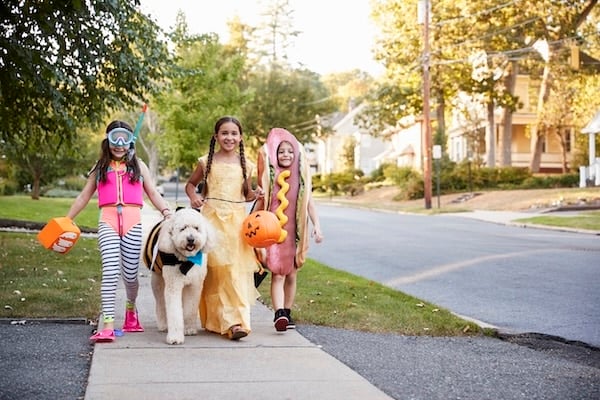
Many families love bringing their dogs around the neighborhood for trick-or-treating, but it’s essential to consider your pet’s temperament first. Well-socialized dogs might enjoy the excitement, but nervous ones may feel overwhelmed by the noisy crowds and would be better off staying home.
If you choose to include your pup, ensure they’re securely leashed with an escape-proof harness, and stay alert to your surroundings. Keep overly enthusiastic kids at a distance; sudden movements can startle dogs in the dark. Finally, Dr. Cocchario suggests bringing a wagon or stroller for small dogs who may be walking longer distances than they’re used to.
Visibility
As nighttime falls, help your dog stand out with a light-up collar and a reflective leash. LED clip-ons are great additions to existing collars. Choose waterproof options to ensure visibility even in soggy fall weather. And don’t forget to carry a flashlight!
Watch for loose candy and wrappers on the ground
We may not notice them in the dark, but our dogs can easily sniff out lost candy, discarded wrappers, or lollipop sticks on the ground. Keep an eye out and teach your dog cues like “leave it” or “drop it” to steer them away from dangerous items. It’s a good idea to bring high-value treats to redirect their attention when necessary.
Have a backup plan
Not all dogs are suited for trick-or-treating—and that’s okay! If your pet shows signs of stress like excessive panting, yawning, whining, or trembling, be prepared to adjust your plans. Ignoring stress signals and forcing dogs to stay out can lead to panic or even aggressive behavior. Once you’re back home, escort your pup to a quiet, peaceful space where they can decompress.
Helping Anxious Pets Through Halloween
Even laid-back pets can be overwhelmed by strange costumes, noisy decorations, and constant doorbell ringing. Dr. Cocchiaro notes that severe anxiety can lead to destructive behaviors and potential health issues like vomiting or diarrhea. So it’s not something you want to ignore.
Fortunately, there are simple steps you can take to help your pets feel more relaxed while the festivities unfold.
Tire your pet out
Exercise is a great stress reliever for pets. A long afternoon walk or game of fetch can help relieve tension before the big night. If your dog is a social butterfly, you could visit the dog park beforehand. Cat exercise looks a little different—you can engage them with enrichment activities like laser pointers, dangling wands, or puzzle toys.
Create a safe space
Before Halloween arrives, designate a cozy, secure space for your pet. Choose a quiet area away from the chaos—ideally in a separate room or behind a barrier away from the front door.
Fill this area with your pet’s favorite items: a comfortable bed, blankets, chew toys, and interactive puzzle toys to keep them occupied. (Remember that cats like puzzle toys, too!) Scratching posts and creamy lickable treats on a lick mat encourage self-soothing behavior in cats. And long-lasting chews and snuffle mats do the same for dogs.
Consider using calming aids like a ThunderShirt or pheromone sprays and diffusers. Playing soft classical music or white noise can also ease nerves and drown out jarring sounds from outside. Anxiety meds are another option to discuss with your veterinarian.
In extreme cases, it might be best to get your pet out of the home entirely. “If dogs are upset by ringing doorbells, screaming kids, or costumes, consider boarding your pets during Halloween,” says Dr. Cocchiaro. Ultimately, your goal should be to ensure that your pet enjoys a peaceful night.
Interested in finding trusted pet care on Rover?
Dog Boarding | Pet Sitting | Dog Walking | Doggy Day Care | House Sitting | Dog Training