- This post contains affiliate links. Read more here.
- Not a substitute for professional veterinary help.
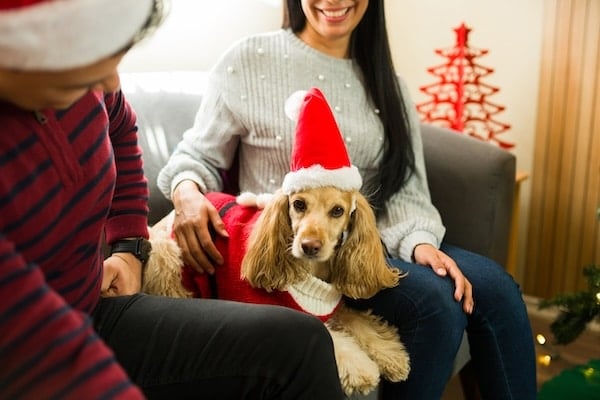
The holiday season is a great time for opening your home to family and friends—but hosting holiday guests can present some challenges for pet parents. Anxious pets may need extra care, door safety can be an issue, and it can be tricky to get everyone on board with rules against sharing table scraps.
The good news is that you can include your pets in your holiday gatherings and still have a wonderful time—it just takes some planning.

In this guide, we’ll lay out practical tips for managing pets and holiday guests, with advice from two veterinarians: Dr. Aimee Warner, resident veterinarian at Waggel, and Dr. Christie Long, veterinarian and chief medical officer at Modern Animal. Here’s how to make the holiday season memorable and safe for your favorite people and pets.
Pet Checklist for Holiday Guests
- Prepare for guests with pet allergies. Ask guests with allergies how you can make them more comfortable. Before their arrival, remove as much pet dander as possible with a thorough house cleaning.
- Communicate any house rules. Let guests know what foods or areas are off-limits to pets, and remind them to keep medications and toiletries out of reach.
- Plan safe introductions for guests bringing pets. Consider setting up a meeting before their stay, and don’t feel bad about saying no to pets if it doesn’t feel safe.
- Make your home escape-proof. Use pet gates, leashes, or crates to secure pets.
- Ensure identification is current. If your pet happens to escape, an ID tag and up-to-date microchip dramatically improve the odds of a reunion.
- Inform guests about food hazards. Guests may be unaware that certain foods, like grapes, onions, and dairy, can be harmful to pets.
- Post emergency numbers. Write down and display the phone numbers for your veterinarian, the closest emergency vet, and the Pet Poison Helpline (855-764-7661).
- Set up a safe space. Give your pet a quiet area to relax away from the holiday excitement. Include comforting items like blankets, chew toys, and pheromone diffusers.
- Practice important training cues. To encourage good behavior, brush up on “place” training, “leave it,” and a relaxation protocol.
- Maintain your pet’s routine. Try to keep your pet’s regular feeding, bathroom, and playtime routines to minimize anxiety.
- Increase exercise and enrichment. Consider boosting your dog’s physical activity before hosting guests. This blows off steam and may help them stay calm.
Communicate Ahead of Time
For a smooth visit, keep the lines of communication open with your guests. Being upfront about everyone’s needs can help prevent misunderstandings and keep pets and guests safe. Here’s what to talk about before the visit.
1. Ask guests with allergies how you can help them.
Even if they love animals, folks who are allergic to cats or dogs can struggle in households with pets. Start by reaching out before their arrival to find out if there are ways to make their stay more comfortable.
Once you understand your guest’s needs, you can let them know what steps you’re taking to ensure their comfort, such as deep cleaning or creating pet-free zones, like their guest room. Consider keeping allergy medications, nasal sprays, and eye drops on hand in case they forget theirs.
2. Offer reassurance to guests who don’t like dogs or cats.
Not everyone will feel comfortable around pets. If a guest is wary of cats or dogs, be honest about what accommodations you can reasonably offer. This might include keeping pets in a different area of the home or taking your pup to doggy daycare for the afternoon.
3. Be upfront about your pets’ quirks and how you manage them.
Your pet’s unique habits are normal to you—but they’ll be new to visitors. Before their arrival, share any peculiar behaviors that could impact their stay.
For instance, you might mention, “My dog loves to dig through trash cans, so I keep them locked.” Or maybe you have a senior cat who has occasional accidents, and certain spaces need to be off-limits. Additionally, Dr. Long says if your pet has specific vices—like a knack for stealing socks—make sure to mention these to avoid surprises.
4. Set house rules about pets ahead of time.
“One of the most important things to keep top of mind when you have guests over during the holidays is that not everyone lives with pets, and they may be unaware of many common household hazards,” says Dr. Long.
Set your event up for success by clearly outlining house rules regarding pets. Dr. Long says to inform guests about foods that are off-limits, whether pets can access the outdoors, and items that should be kept out of reach. “Once those directives are clear, people and pets can relax and enjoy the day.” You’ll also want to let guests know if your pet needs space or loves attention, adds Dr. Warner.
5. If your guests are bringing pets, make a plan.
When your guests want to bring their pets, don’t assume they’ll get along. Instead, brainstorm ways to help pets share the space before throwing them together.
Introducing dogs outside rather than at the front door can reduce territorial tensions. If possible, arrange for them to meet before the main event. This way, you can gauge how they interact and make any necessary adjustments. Remember that meal times can spark tension and resource guarding; feeding pets in separate rooms helps prevent any conflicts.
Finally, always have a backup plan ready. Can you create a separate space for your pet, like a bedroom or basement? Baby gates can also keep pets apart if needed.
If you’re not sure you’ll be able to supervise pet interactions safely, it’s okay to politely decline your guests’ request to bring their pets.
Antonio_Diaz via iStock
Increase Door Safety and Escape-Proofing
With guests coming and going, some pets will see an open door as an invitation to bolt. Guests might not have watching the door on their radar. As the host, the responsibility falls on you to ensure that your furry friends don’t accidentally slip out. Here’s what you can do.
1. Use gates.
Installing a pet gate at the front door is a good first line of defense against sneaky pets slipping out when guests arrive. You can also use gates to contain pets in a safe area away from the front door.
Practice getting your pet used to this confined area ahead of time, so it’s not stressful to them. In the days leading up to the holidays, hang out in their designated area and give your pet treats to create positive associations.
2. Consider leashes or a cozy room for busy moments.
While it may seem unusual to leash your dog indoors, it’s not a bad idea during arrival times. Alternatively, you can keep pets in their crate or a closed bedroom during high-traffic moments.
3. Update your pet’s microchip and ID.
Lastly, don’t forget to check your pet’s identification. Ensure their microchip information is up to date, and that they wear ID tags with your current address and contact details. These precautions greatly increase the likelihood of reuniting with your pet should they escape.
Get on the Same Page About Table Scraps
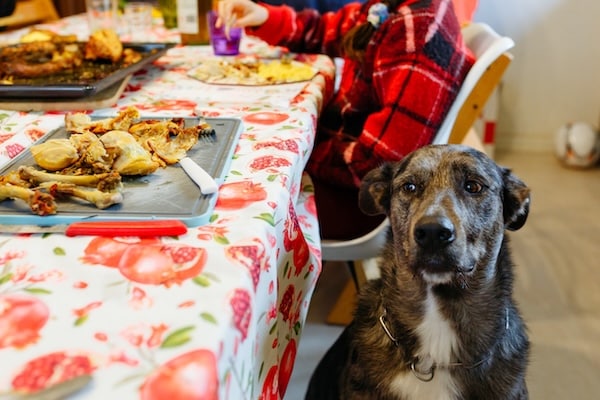
Food takes center stage during holiday gatherings. However, some of our favorite dishes can be dangerous for our pets. Guests may not be aware of which foods can be harmful, and you might be too busy hosting to keep a close eye on them. Here’s what you can do.
1. Talk with guests about feeding pets.
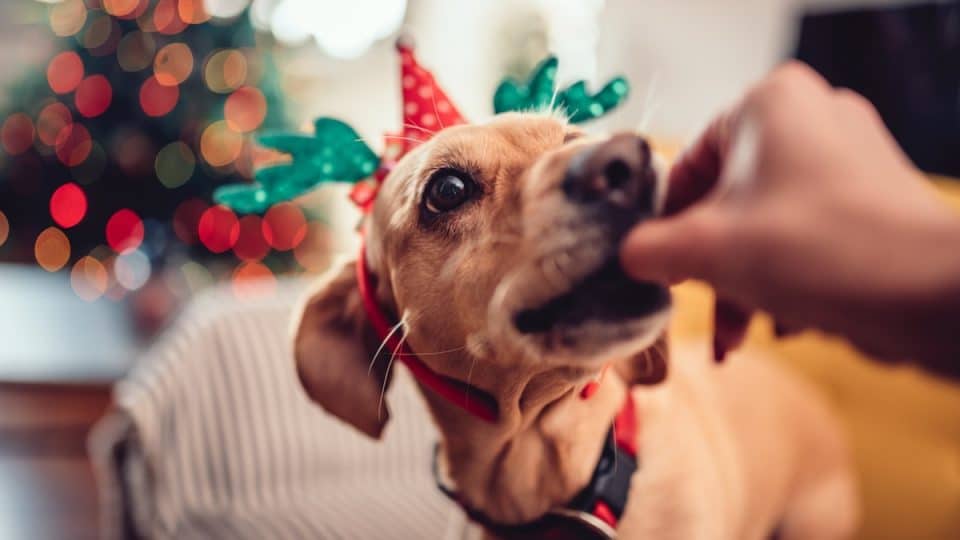
Before the festivities begin, have a conversation with your guests about what foods are safe and what should be avoided. Many people may not realize that even seemingly healthy foods, like grapes and onions, can be toxic. Even foods that aren’t outright toxic, like dairy, can still upset your pet’s tummy.
Make it clear that guests shouldn’t share any food without your permission—this helps to maintain training routines and avoid unwanted begging. If guests are really eager to share, provide them with festive pre-approved pet-safe treats instead.
2. Keep human food out of reach.
Remind guests not to leave food unattended on countertops, tables, or coffee tables—many cats and dogs can reach these surfaces. You may also want to consider using a gate to keep your pet out of the kitchen and dining area entirely.
After your meal, secure leftovers in containers and place them in the fridge or freezer right away. Immediately remove scraps and dispose of them in a pet-proof trash can, or take them directly outside.
Be careful with wrapped edible gifts, too. Dr. Long says not to leave these unattended, as dogs can sniff out goodies even through wrapping paper.
3. Have a plan if your pet eats something they shouldn’t.
Despite your best efforts, accidents can happen. Always have your veterinarian’s contact information & hours easily accessible, along with the nearest emergency vet clinic’s details. Save the numbers for the ASPCA Poison Control (1-888-426-4435) and the Pet Poison Helpline (855-764-7661) in your phone.
Some signs that your pet may have eaten something they shouldn’t have include:
- Vomiting
- Diarrhea
- Excessive drooling
- Lethargy
- Tremors
- Difficulty breathing
- Loss of appetite
- Unusual behavior
EyeEm Mobile GmbH via iStock
Make Your Pet a Safe Space
Some pets aren’t used to company and can find it overwhelming. That’s why both experts recommend giving pets a designated safe space where they can retreat when they need a people-free moment. This could be a quiet bedroom or a space blocked off with a pet gate away from the commotion.
Equip your pet’s space with essentials like food, water, a cozy bed, familiar toys, and a litter box for cats. Dr. Long suggests playing soft music or white noise to mask stressful sounds. Include stress-relievers for dogs like chew toys, snuffle mats, and long-lasting chews. For cats, scratching posts, puzzle toys, and lick mats can encourage self-soothing behaviors.
When your pet retreats to their safe zone, guests should respect their need for solitude and leave them undisturbed. During your event, watch your pet’s body language and behavior. If you see signs of stress or overexcitement, gently guide them to their sanctuary.
Brush Up On Training
Want to improve the odds of a smooth visit? In the weeks leading up to your event, practice some handy cues, like place training and “leave it.”
Place training or “go to spot”
Place training teaches your dog to go to a designated spot—like their bed or a mat—and stay there until given a release cue. This is especially useful when guests arrive or during meal prep, and it keeps excitable dogs from jumping on people. When your dog is in their spot, you can ask guests to ignore them until you give the okay.
Leave it
The “leave it” cue teaches your dog to ignore potentially dangerous items that might fall on the floor, such as food scraps, broken glass, or small toys.
Desensitize your dog to guests
If your dog isn’t used to a lot of people, gradual desensitization can help them adjust. Dr. Warner suggests inviting one or two friends over for a short visit, offering plenty of treats to help your pet associate guests with positive experiences. Rewarding calm behavior during these “practice” gatherings can help reassure your pet and make it easier for them to handle larger groups when the holidays arrive.
Relaxation protocol
Developed by Dr. Karen Overall, the relaxation protocol helps dogs learn to stay calm amidst distractions and stress. This 15-day program aims to teach dogs that being calm and sitting still leads to rewards. It helps dogs regulate their emotional response, which will make gatherings much more manageable.
Kristina Chizmar via iStock
Tips for Helping Anxious and Protective Pets Through the Holidays
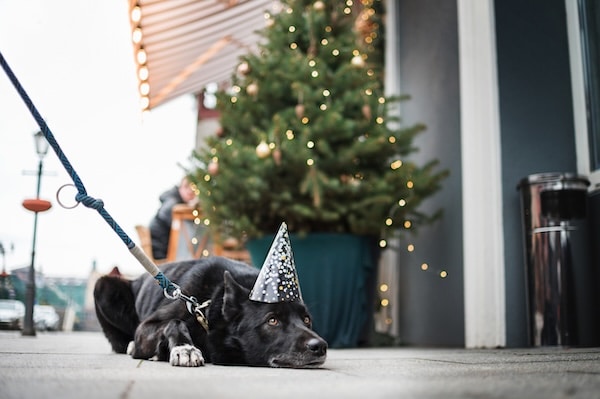
For anxious or protective pets, hosting a house full of people can be a stressful ordeal. They have to contend with unfamiliar faces, loud voices, and changes in routine. Here’s what you can do to support a nervous pet.
1. Keep your pets’ schedule the same as much as possible.
Dr. Warner emphasizes that abrupt change can cause stress, particularly in cats and small animals. Maintaining your pet’s routine for meals, walks, and playtime can offer a sense of stability during an otherwise hectic time.
Additionally, Warner recommends gradually introducing new scents, sounds, decor, and changes in furniture. For example, if you’ll be rearranging your living room to add more seating, do this well in advance to give your pet time to acclimate.
2. Consider increasing exercise.
Physical activity is a natural stress reliever. A good run or an energetic round of fetch can expend excess energy, making it easier for dogs to relax when guests arrive. Get your cat moving with a laser toy, dangling wand, or electronic toy. Enrichment activities, like puzzle toys and snuffle mats, also help.
Too busy with cooking and entertaining? Consider hiring a dog walker or pet sitter to ensure your pet gets the exercise they need.
3. Ask your vet about anxiety medications.
If your pet has a history of anxiety, it’s wise to discuss potential solutions with your vet. They can help you determine whether medications might alleviate your pet’s stress during the holidays.
4. Consider boarding your pet.
In some cases, holiday gatherings may be too much for your pet. If your dog or cat is fearful of large groups, boarding with a loving pet sitter for a few days may be the better option. Start planning early to find a pet sitter or boarding facility that caters to anxious pets. When it comes to packing, include comforting items that help your pet feel safe, like a cozy blanket, a favorite stuffie, or a t-shirt that smells like you.
If You and Your Pet Are the Guests
Just as you expect guests to respect your home, it’s important to follow suit when visiting others. Dr. Warner says to start by confirming that your destination is truly pet-friendly. A quick conversation with your host about house rules and routines will set clear expectations.
You’ll also want to:
- Pack the essentials. Bring along food and water bowls, food, treats, and distractions for busy times like puzzle toys, KONGs, and long-lasting chews. Don’t forget familiar items like your pet’s bed or favorite toys, along with poop bags and any necessary medications.
- Follow house rules. Everyone has slightly different standards about appropriate pet behavior. Ask your host about areas that are off-limits and whether pets are allowed on beds and furniture. If you’re bringing along a crate, ask if they have space for it.
- Supervise your pet. Keep your pet in sight at all times to avoid any accidents or mischief. Use a leash or carrier when necessary, especially around other guests.
- Clean up after your pet. Scoop up any poops right away. If you’re bringing your cat, maintain their litter box and the surrounding area.
With a little planning and preparation, you and your pet can be excellent guests and have a wonderful holiday visit.