It’s no secret that the cost of living goes up each year. In 2026, the cost-of-living adjustment (COLA) rose by 2.8%. But have you thought about how much this affects the costs of raising your dog? This year, dog parents can expect costs to rise as much as 15%, due in part to rising vet costs and tariff-inflated prices for gear.
According to a Rover survey* of 1,000 pet parents, 83% of parents have noticed pet related costs increasing over the past 12 months, with 34% reporting a significant change. At Rover, we’ve witnessed costs rise as we’ve refreshed our data each year, researching prices across the nation and interviewing experts.
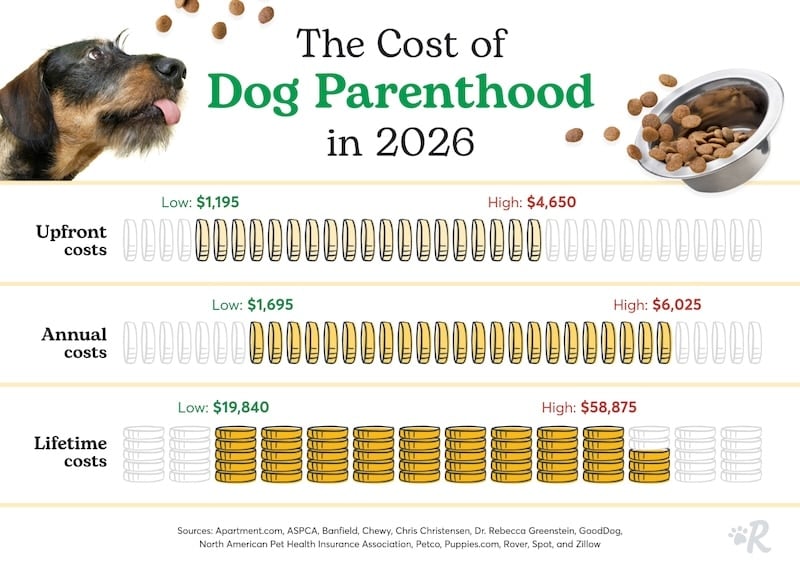
From the moment you bring them home, your dog’s lifetime care can range from $19,840 for a small breed to $58,875 for a large breed. Costs vary significantly based on breed, size, and ongoing health conditions, with smaller dogs generally being less expensive over time.
Looking for medium breed representation? The lifetime costs of a medium dog range from $35,415 to $43,285.
If these costs feel overwhelming, remember that the average healthy dog has a lifespan of 10 to 13 years. Understanding the costs you’ll need to anticipate can help you stay on budget.
Below, we’ve broken down the costs of dog parenthood into four categories: upfront costs when you first bring your dog or puppy home, annual essentials, and unexpected costs that many forget to budget for.
Cost of Adopting or Buying a Dog
When it comes to choosing a pet, the cost of care is often a lower priority than factors like a dog’s size and breed. However, a dog’s size and breed play a major role in the initial costs for supplies, such as dog food and toys to flea medicine. For example, a dog’s weight can determine whether you are paying $60 or $450 for food.
In 2026, the upfront costs of bringing your dog home range from $1,195 and $4,650. That’s 4.9% higher than in 2025. One culprit is vet costs, which have continued to rise beyond the national inflation rate in 2026. And puppies need a lot of shots and check ups.
Pet parents have noticed the change. They report vet visits (50%), pet food (43%), and medications (28%) are the top sources of increased financial pressure.
Knowing what to expect and how to budget can help. Here’s a look at the up-front costs of bringing a pet home in 2026.
Up-front costs of bringing a dog home:
| Item | From | To |
|---|---|---|
| Adoption fee | $50 | $500 |
| Breeder costs | $675 | $4,440 |
| Spay/neuter | $300 | $800 |
| Microchip + ID | $30 | $80 |
| Initial vet exam | $80 | $180 |
| Vaccinations | $180 | $300 |
| Preventatives | $75 | $175 |
| Essential supplies | $260 | $1,125 |
| Grooming supplies | $50 | $725* |
| Food and treats | $60 | $450 |
| Cleaning supplies | $55 | $165 |
| Pet license | $35 | $80 |
| Toys | $20 | $70 |
*Why is this so high? Doodles! If you get a breed with a high-maintenance coat and opt for DIY care at home, supplies like a dog hair dryer come with the territory.
First up, adoption vs. breeder fees
Generally, the cost of dog adoption increases as one’s criteria do. A puppy or specific breed may cost up to $500 more than a senior or mixed breed. Fortunately, the adoption fee often includes many of the up-front costs, such as the spay/neuter surgery, a microchip, and the first round of vaccinations.
Adopting a dog from a shelter is the most budget-friendly way to bring a dog home. Though average adoption costs are up 13% from last year, shelters continue to be significantly more affordable than breeders.
Why the rise? Most likely vet costs. Shelters frequently pay the cost of spay and neuter surgeries, as well as vaccines and heartworm testing. With narrow margins, they have little choice but to pass the cost on to the adopter.
Breeder prices range from $675 to $4,400, depending on the breed and sex of the dog. Purchasing from a breeder may require you to spend up to $1,100 more to cover a puppy’s vaccines and spay/neuter surgery.
Vet visits, surgeries, and vaccinations
The cost of vet visits and vaccinations will vary based on the age of your dog. For example, puppies require regular vet visits and vaccinations until they are six months old — and they are more likely to get into mischief, such as swallowing a sock, in their first year. Adult dogs typically only need annual check-ups as part of their preventative care routine.
Initial vet fees are up as much as 32% in some places, as pre-anesthetic bloodwork and IV catheters become the norm.
If you need to pay for your dog’s spay or neuter surgery out of pocket, you might find yourself postponing the procedure until their second or third year. For larger breed dogs, a vet may recommend waiting until they are fully developed, around two years old. If you choose to wait, expect higher spay/neuter costs due to your dog’s increased weight.
Cost of new dog supplies: essential, grooming, and cleaning
You should expect to spend more on essential puppy supplies than essential adult dog supplies — unless you’re bringing home a second pet. In that case, many of these supplies may already be in your home.
How much you initially spend on your dog’s essential supplies, from grooming to gear, will depend on whether you are buying generic or premium brands:
- Toys: $30 to $95
- Treats: $9 to $44
- Food and water bowls: $5 to $65
- Leash: $10 to $65
- Collar and harness: $50 to $150
- Crate(s): $45 to $365
- Dog bed(s): $25 to $350
- Poop bags: $6 to $12
- Pee pads: $26 to $120
- Stain and odor removal: $5 to $30
- Pet hair vacuum: $210 to $860
- Brushes: $15 to $65
- Shampoo and conditioner: $15 to $80
- Pet hair dryer: $85 to $560
We didn’t factor in the scenario of buying some of these items twice, but it’s important to consider how destructive a puppy can be. A teething puppy, for example, will go through toys and chews at a rapid pace. A large breed puppy may outgrow multiple harnesses in the first year. When it comes to getting premium items like fancy beds or aesthetic dog crates, we recommend waiting until your puppy has learned how to settle down.
How Much Does a Dog Cost Per Year?
Thankfully, the initial expenses are not always reflective of the ongoing annual costs for a dog. If your puppy has grown into an adult dog, you may see a decrease of 21% in your yearly spending. That’s because you’ll already have certain essentials, such as crates, beds, and harnesses, and you’ll likely see fewer vet visits.
In 2026, the annual cost of caring for your dog can range from $1,930 to $5,305. Factors such as your dog’s size, breed, and medical needs play a significant role in determining what you’ll spend.
Here is how the annual cost of a dog can differ based on their age:
- $1,460 to $6,745 per year for a puppy
- $1,930 to $5,305 per year for an adult dog
- $2,475 to $5,200 per year for a senior dog
Breed size also plays a large role in the cost of dog care. Small-breed adult dogs can cost as much as 63% less per year than large- to giant-breed adult dogs.
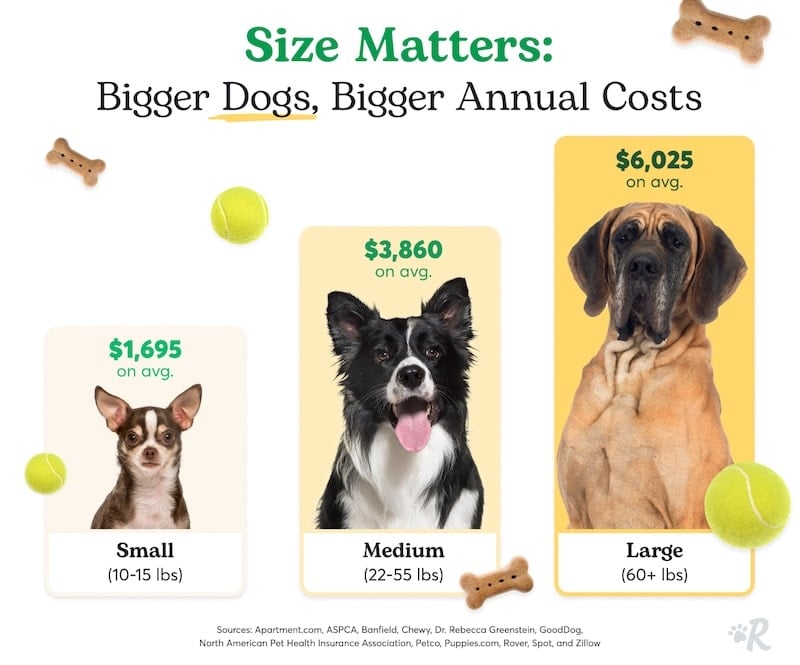
Note: The above costs for a senior dog do not include end-of-life care, although we have factored two annual vet visits, one round of blood work, and medications.
Annual Cost of Dogs By Life Stage
| Item | Puppy | Adult | Senior |
|---|---|---|---|
| Food | $575 to $4,775 | $785 to $2,635 | $1,060 to $2,545 |
| Treats & chews | $110 to $530 | $55 to $360 | $55 to $360 |
| Gear and supplies | $110 to $640 | $75 to $175 | $205 to $380 |
| Vet visits | $145 to $305 | $80 to $135 | $125 to $355 |
| Preventatives | $295 to $355 | $295 to $360 | $295 to $360 |
| Training sessions | $235 to $385 | $40 to $290 | $40 to $290 |
| Dental hygiene | $55 to $370 | $55 to $490 | $435 to $490 |
| Pet insurance | $175 to $880 | $520 to $1,230 | $630 to $4,595 |
| Toys | $30 to $95 | $5 to $90 | $5 to $90 |
Costs that increase as a dog ages
- Health checkup: While puppies require more frequent vet visits in the first year, the average adult dog will only need one annual wellness checkup. However, as your dog becomes a senior, they’ll need to visit the vet twice a year for preventative care and bloodwork.
- Grooming: Grooming sessions are often charged by the hour. As your dog gets bigger and their adult coat grows in, the groomer may need to spend more time bathing and brushing them.
- Dental cleaning: The cost of dental cleanings increases with your dog’s size due to the expense of anesthesia and the additional time required to clean their teeth.
- Senior dog care: Older dogs often require extra supplies, from mobility aids to joint supplements. Life-extending medications may also become part of your budget as your dog enters their golden years.
Costs that decrease or stay the same
- Food: Surprisingly, food costs often decrease as your dog enters adulthood, because adult food is usually less expensive than puppy food. As your dog becomes a senior, food costs can fluctuate either way: your dog may need to eat fewer calories, but they may also need a more expensive prescription diet.
- Treats: As your dog matures, treats, which can be a big help in training your dog, slowly become more of a nice-to-have than a necessity.
- Toys: As your dog becomes a less active adult, they may play with fewer toys. Toys will likely transition from an annual cost to an optional add-on.
- Flea and tick preventatives: Flea and tick prevention typically costs between $295 to $360 per year, depending on your dog’s weight and the type of preventative you choose. These costs are likely to remain stable throughout your dog’s life.
- Poop bags: Your dog’s size and your personal preference on factors such as scent, eco-friendliness, and quality also affect these costs. You may go through bags a little faster as your dog ages and starts to poop more frequently during walks.
- Training: As your dog matures and settles into their personality, training becomes less of a regular requirement. While training sessions typically cost around $113 each, they will become more of an as-needed expense.
- Gear: In the first year of owning a dog, you may spend up to $1,125 on harnesses, carriers, and leashes. However, this cost can drop to between $75 and $175 per year once your dog reaches adulthood.
What Does a Monthly Budget for Dog Expenses Look Like?
Breaking down your budget into monthly expenses can make it easier to know how much to set aside. On average, dog parents with a medium-sized breed can expect to spend between $145 and $505 per month on their dog’s care.
This marks a 15% increase from last year, covering everything from food and vet visits to grooming and unexpected expenses.
Which Pet Care Costs Should You Save Up For?
According to Rover’s survey, most pet parents (89%) felt prepared for the ongoing financial commitment before getting their pet. But rising costs can be hard to account for, and now one in three (38%) pet parents report they would not be able to cover the cost of an emergency vet visit without taking on financial debt.
Just one in ten (10%) have started or contributed to a savings account specifically for pet-related expenses or emergencies.
Knowing what you might need to have saved can help you plan ahead. From emergency visits to dog boarding, the average cost for additional dog-related expenses ranges from $1,055 to $4,425. Depending on your lifestyle or the age of your dog, you can expect to pay for these services either once a year or once every few years.
Additional expenses worth budgeting for
| Item | Low | High |
|---|---|---|
| Emergency vet bills | $300 | $2,500 |
| Diagnostic testing | $105 | $210 |
| Dog care services | $210 | $375 |
| End of life care | $570 | $1,005 |
| Misc. | $50 | $800 |
A stubborn puppy who refuses to be potty trained or chews on baseboards could cause you to lose your security deposit, ranging from $300 to $750. If an older dog eats a bag of candy, they may need to visit the emergency room. But now you have a heads-up on how much to save for unexpected expenses.
Emergency vet visits and diagnostic testing
Emergency vet visits are pricey. The typical visit starts at $300 and can rise to $4,000, depending on whether your dog needs additional testing or overnight care. If your dog’s condition is unclear, your vet may recommend diagnostic testing. Diagnostic testing can help identify chronic dog illnesses and diseases like cancer, parasite infection, Addison’s disease, and more.
Pet care services: boarding, walking, and day care
Dog enrichment costs vary based on your dog’s needs and your location. For instance, a puppy may require more frequent walks to maintain their potty training schedule. Services like dog walking, doggy day care, and dog training typically cost between $210 and $375 in a year. In cities with a higher cost of living, dog parents might spend over $900 annually on these services.
If you have a reactive or anxious dog, you might spend an additional $975 on training or boarding to ensure their comfort and safety. While at-home training is an option, first-time dog parents with sensitive dogs may find that professional help can be especially beneficial. Luckily, virtual dog training can be just as effective and often cheaper than in-person training.
Grooming costs for severe matting
If you have a breed with a coat that requires regular maintenance, such as a Havanese or large Poodle, you should budget between $300 and $975 per year for professional grooming sessions. While some dog owners try to save on grooming costs with at-home care, situations like severe matting, rolling in sticky substances, or needing anal gland expression are when a professional groomer may be appreciated.
On average, a high maintenance dog needs to be professionally groomed every 8 to 12 weeks.
End of life care for dogs
It’s hard to imagine saying goodbye to our beloved dogs, but it’s important to plan for end-of-life care. A common sentiment is, “Better to be one day early than too late.” Financial planning can help ensure that costs don’t prevent you from choosing the best services during such an emotional time.
Typical costs for end-of-life care can range from $570 to $1,005, depending on your dog’s situation and your preferences. In-home euthanasia and private cremation, which many pet parents prefer, can be more expensive than less private options.
Additional Resources
Budget Tips for Cost of Pets
Looking for ways to keep costs low? Our guide on saving money on pet care walks through options such as switching to dry food or getting pet insurance.
Do You Need Pet Insurance?
Pet insurance can make a big difference when it comes to managing unexpected vet bills. We’ve partnered with Lemonade to help you save.
How to Adopt the Right Dog for You
Now you know you’ve got the dimes to spoil that dog, let’s take a look at what it takes to find your newest best friend. It’s more than just how they look. From being realistic about your lifestyle fit to choosing the right rescue shelter, our guide to adopting a dog has you covered.
How Much Does Doggy Daycare Cost?
Ready to budget for extra care for your pup? If you find yourself leaving your dog alone for long periods of time during the day, doggy daycare might be just the solution you need.
How to Find Low Cost Vaccinations Near You
To help reduce the initial cost of bringing home a new dog, we recommend looking for low cost options for vaccinations. Need to know where to start? Our guide to low cost vaccinations has you covered.
How Much Does Dog Training Cost?
A well-trained dog can actually save money in the long run, especially when it comes to not having to replace belongings lost to insatiable chewing. Proper dog training is worth the investment. Learn how much dog training costs so you can plan your budget in advance.
*Methodology: A Rover survey of 1,000 pet parents conducted in May 2026, via Pollfish.
Interested in learning more about services Rover provides?
Dog Boarding | Pet Sitting | Dog Walking | Doggy Day Care | House Sitting | Dog Training