A Pet Sitter’s Guide to Reading Dog Body Language
Reading a dog’s body language can be challenging—and that’s doubly true if you’re a pet sitter who’s still getting to know the dog in your care. Subtle changes in posture, tail position, and ear movement are easy to miss. Plus, some breeds have certain features, like curled tails or cropped ears, that make it even harder to read typical cues.
While every dog expresses themselves differently, knowing some general dog body language principles can help with everything from monitoring dog introductions and play to approaching a nervous pup.
In this guide, we’ll review tips for reading dog body language, particularly in situations you’re likely to experience as a pet sitter or walker.
Relaxed Body Language
When a dog is relaxed, their body is loose and free from tension. Many dogs wag their tails or give a slight open-mouth smile when they’re feeling content, but their energy remains calm and comfortable.
Here are some of the ways relaxed body language may present.
- Body: Loose posture with no sign of body tension.
- Ears: Resting in their natural position, not perked in alarm or pinned back.
- Mouth: Relaxed lips with no tension in the jaw. The mouth may be closed or slightly open. No heavy panting.
- Eyes: Soft eyes, sometimes with a slight squint. The forehead is neutral, not tense or wrinkled.
- Tail: Carried at a neutral height, not tucked or held high. The tail may be slowly wagging in wide, sweeping motions.
- Other: A dog may sprawl out or lie on their side. They might also be observing or sniffing their surroundings.
Breeds with naturally erect ears (like German Shepherds, Siberian Huskies, and Australian Cattle Dogs) may look alert even when they’re feeling relaxed. You may need to rely on other body language cues to tell how these dogs are feeling. The same goes for dogs with cropped ears, short or curled tails, or no tail.
Common situations where you’d expect to see relaxed body language include:
- Resting on the couch or taking a nap
- Greeting familiar people and pets
- Engaging in normal activities like eating or going outside
Relaxed body language generally indicates that a dog is feeling safe and comfortable. If a dog appears too lethargic, however, it could be cause for concern. When a dog becomes difficult to rouse or unresponsive to sound or physical contact, it’s a good idea to consult your client and their vet.
Playful or Excited Body Language
Playful or excited body language may look similar to relaxed body language, but with more energy and movement.
Here are some of the signs a dog is feeling playful or excited.
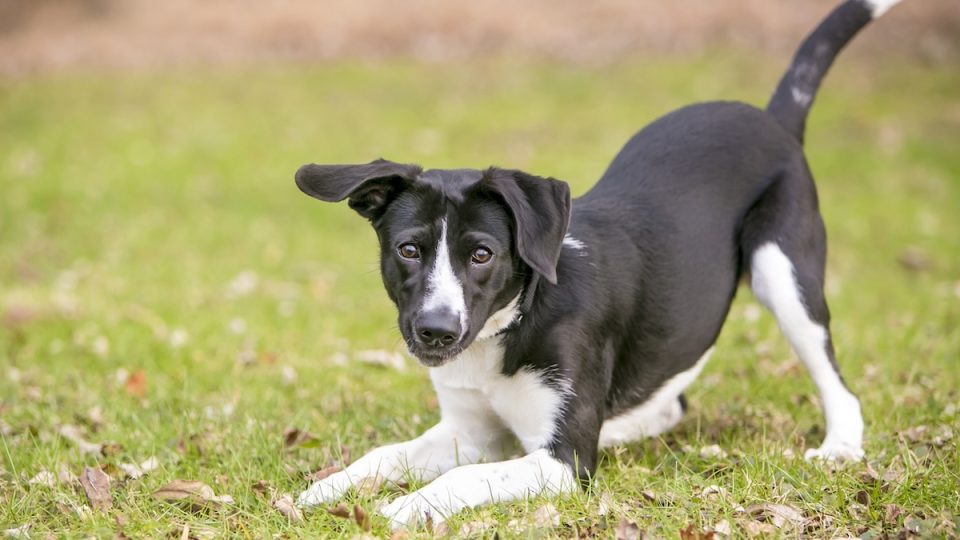
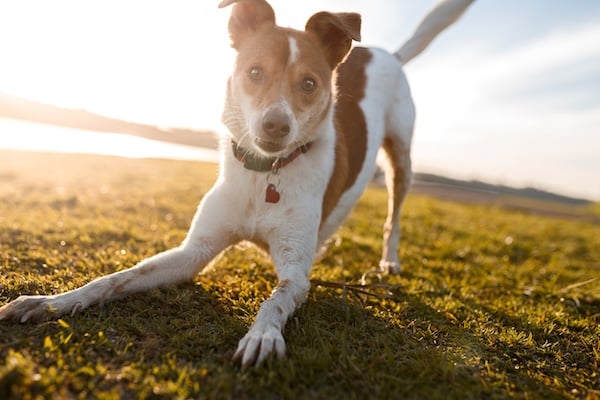
- Body: Loose, often with wiggly movements like play bows, jumping, or turning in circles.
- Ears: Relaxed or perked slightly forward, especially when interested in something.
- Mouth: Soft and slightly open, often turned up at the corners. Some dogs pant or loll their tongues.
- Eyes: Soft eyes, relaxed facial expression, and frequent blinking.
- Tail: Carried at neutral height or slightly raised but not stiff. The tail may be wagging quickly or with sweeping motions.
- Other: Some dogs bark when they’re excited. These barks are often higher in pitch than agitated barks.
When you can’t rely on signals like ear position or tail movement to judge a dog’s mood, look to their eyes, mouth, and posture. Even tail wagging isn’t always a sign of happiness. If the dog’s tail is carried high and rigid, they may be feeling alert or agitated.
Common situations where you’d expect to see excited body language include:
- Playing with toys or other dogs
- Engaging in favorite activities like going for a walk
- Jumping or spinning in circles while you’re preparing a meal
- Seeing you reach for the leash, a bag of treats, or a favorite toy
While excitement is generally a positive emotion, some dogs can wind up over-aroused. Similarly, if the thing they’re excited about is withheld for too long, excitement can turn into frustration. Watch for signs of tension in the body, like a stiff posture, whining, or tail flicking.
Capuski via iStock
Alert Body Language
In a state of alertness, a dog’s body goes still. They’ll be intently focused on an object of interest as they decide how they’re going to respond.
Here are some of the ways alertness can present in a dog’s body language.
- Body: Still or slightly leaning forward. Body weight is evenly distributed as the dog decides their next steps.
- Ears: Perked up and pointed toward the object of interest.
- Mouth: Closed. There may be tension in the lips, but generally, the teeth aren’t showing.
- Eyes: Opened wide and focused on the object of interest. The forehead typically remains relaxed.
- Tail: Extended from the body, either at neutral height or slightly higher. The tail may wag slowly.
Ear position is a key indicator of alertness in dogs, but it can be difficult to spot in floppy-eared breeds like Cocker Spaniels, Bloodhounds, and Beagles. The trick is to look at the base of the ears (this works with cropped ears as well).
Common situations where you’d expect to see alert body language include:
- Wild animals or other dogs crossing through the yard
- A new or unfamiliar scent reaching the dog’s nose
- An unfamiliar person approaching the dog or the home
- A loud sound while the dog is playing or at rest
Alertness can quickly transition to excitement or anxiety, depending on the situation. It doesn’t automatically mean a dog is frightened. They’re simply gathering more information to plan their next move. Be ready to respond, if necessary, once they decide how they’re feeling.
Stressed, Anxious, or Fearful Body Language
The signs of stress and anxiety in dogs can be subtle. It’s easy to mistake fearfulness for stubbornness, especially when a dog hesitates or refuses to follow cues.
Here are some of the signs a dog is feeling fearful or stressed.
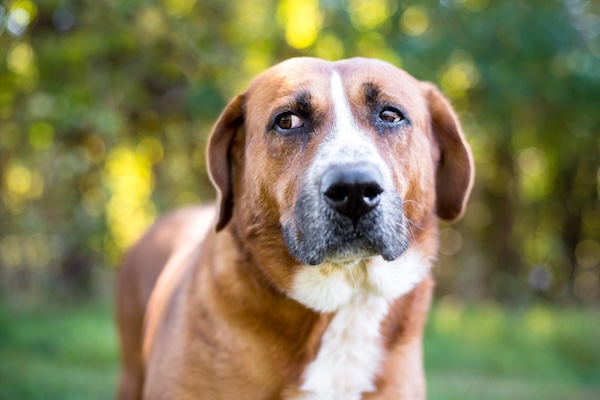
- Body: Stiff, crouched, or hunched posture. The dog may lower their head or lean away from whatever is frightening them.
- Ears: Pulled back or pinned against the head. The ears may move continuously as the dog monitors their surroundings.
- Mouth: Closed tight with the corners pulled back. The dog may frequently yawn or lick their lips.
- Eyes: Wide with visible whites or dilated pupils. The dog may avoid direct eye contact but glance quickly around.
- Tail: Held low and stiff or tucked between the legs, sometimes wagging low and fast.
If you’re not sure whether a dog is feeling anxious or fearful, take a look at their stance. When alert, a dog will distribute their weight evenly while assessing the situation. If their feelings turn toward fear, their weight may shift backward so they’re ready to run away.
Common situations where you’d expect to see stressed, anxious, or fearful body language include:
- Another dog approaching during a walk
- During a thunderstorm or other loud noises (like fireworks)
- Unfamiliar people approaching or entering the house
- During car travel or visits to the veterinarian
As a pet sitter, it’s helpful to be able to read stressed body language in dogs under your care. That way, you can quickly intervene and help calm the dog down. Anxiety can escalate to fearfulness if the dog feels threatened without a means of escape. In these situations, the dog may bark, snap, or lunge to try to reclaim their space.
Mary Swift via iStock
Frustrated or Overstimulated Body Language
Frustration is easy to confuse with excitement—especially since frustration can start as excitement but shift when the dog doesn’t get what they want. Overstimulation can also occur when a dog is excited and doesn’t have a chance to calm down.
Here are some ways dogs present frustration or overstimulation through their body language.
- Body: Tense muscles and frantic movements, sometimes continuing past the point of exhaustion. The hackles on the back of the neck may also be raised.
- Ears: Upright and turned forward, following the object of interest.
- Mouth: Often tightly closed but sometimes open with excessive panting or drooling.
- Eyes: Intensely focused on the object of interest.
- Tail: Often held high or straight out from the body, sometimes wagging stiffly or flicking.
- Other: Many dogs vocalize when frustrated. They may whine or bark persistently in a high pitch.
Common situations where you’d expect to see frustrated or overstimulated body language include:
- Loud or crowded environments, especially while a dog is restrained
- Not being able to reach a toy, treat, dog, or person
- Being on the other side of a barrier (like a gate or fence) from a desired person or object
- Playing for too long or at too high a level of intensity
When a dog you’re caring for becomes overstimulated, it’s important to recognize the signs and help them calm down. You may need to guide the dog to a quiet area or redirect their attention with a calming activity, like a puzzle toy, lick mat, or treat scatter.
Aggressive or Warning Body Language
Aggression is often a fear-based response in dogs. It’s their way of communicating that they don’t feel safe and that they need some space.
Here are some common body language warning signs to watch for.
- Body: Stiff and tense, often with hackles raised. The dog may be leaning forward, ready to respond to a perceived threat.
- Ears: Held stiff and forward, toward the trigger, or pinned back against the head.
- Mouth: Lips pulled back to show teeth. The dog may also growl, snarl, or snap.
- Eyes: Intensely staring and watching the perceived threat, often with dilated pupils.
- Tail: Held high and rigid. The tail may flick quickly in a tight wag.
- Other: The fur on the dog’s body may stand out (especially across the shoulders and at the base of the tail), making the dog appear larger.
Dogs with muscular builds, like Rottweilers, Boxers, and American Pit Bull Terriers, are sometimes mistakenly assumed to be aggressive by nature. These breeds may also have short tails or cropped ears, which can make certain body language signals harder to read. Check how the dog is distributing their weight and what their eyes and mouth are doing for clues to how they’re feeling.
Common situations where you’d expect to see aggressive body language include:
- Someone trying to touch or take away a toy while the dog is playing
- Another dog approaching during a walk (especially while they’re on a leash)
- A stranger trying to approach or touch the dog without their consent
- Feeling trapped in an enclosed space or boxed in by another dog
Aggressive behavior can be alarming, but it’s crucial to realize it’s not a personality trait. Even dogs who are leash reactive are responding to a perceived threat, not acting out of meanness or spite. Take extra precautions when caring for a reactive dog to avoid situations where the dog might feel threatened and act unpredictably.
What If You’re Not Sure?
Reading dog body language can be tricky, and signals may vary from one dog to another. Whether you’re just starting out as a pet sitter or you’ve been doing it for years, you’re not going to get it right every time. That’s okay!
If you’re not sure what a dog’s body language is telling you, you can always reach out to the client for insight. It never hurts to ask questions until you get better with time and practice.
While you’re getting to know a new dog, it’s still important to go slow. Even familiar dogs can react unpredictably when making introductions or experiencing new things. Always err on the side of caution to keep yourself and the dog safe.