Dog Walking Tips for New Sitters
When you’re just getting started as a sitter, walking someone else’s dog may be more of a challenge than you think. There’s a huge variety of dogs out there, and each one has their own habits, behaviors, walking style, triggers, and needs.
But don’t worry! A little preparation and experience can go a long way towards equipping you for your next outing.
Below, we’ll walk you through some handy tips from trusted dog walkers. We’ll cover first walks, safety, and etiquette to keep walks smooth as you build your clientele.
Gather Info at a Meet & Greet or a Trial Walk
One of the best tips for a new dog walker is to schedule a meet and greet or a trial walk with a potential client. During a meet and greet, you’ll be able to ask questions and observe the dog’s behavior to identify specific needs and quirks. During a trial walk, you’ll accompany the owner and see what a typical outing with the dog is like.
Here are some great questions to ask when you meet with a new client:
- What kind of walking gear do you use? Determine which types of leashes, harnesses, and collars your client prefers, and make sure you know how to put it on and use it safely.
- How should I enter/exit the home? Pay special attention to where walking gear is stored and any security practices.
- Does this dog have reactivity, stress, or anxiety triggers? Know both what to avoid and how to handle it if you encounter a trigger.
- How far and how long does this dog typically walk? It’s important not to over- or under-exercise a dog, especially if the dog has health issues.
- What routes do you suggest? Are there places to avoid? Discuss the dog’s favorite places to go to, and determine whether there are any areas to avoid where they might feel unsafe or encounter triggers.
- Does this dog feel comfortable walking with new people? Some dogs might resist walking with an unfamiliar person.
- Can people greet this dog? Some dogs are happily social, while others prefer not to interact with strangers or children.
- Can other dogs greet this dog? Some dogs love to say hello to other four-legged friends, while other dogs prefer to keep their distance.
- What cues does this dog know? Knowing what kind of training a pup has had can help you direct them during walks (think “leave it”).
- Should I use treats on walks? Treats are a helpful tool, but it’s important to know if the dog has any dietary restrictions, health issues, or limits on the treats they can have.
Tips for trial walks
A trial walk accompanied by the owner is a great way to help subsequent solo walks go smoothly. Here’s what to pay attention to when you’re out and about:
- Size and strength. Some dogs can be hard to keep up with—make sure you’re comfortable with the physical work involved.
- Pulling. How much strength is required to control the dog? What techniques does the owner use?
- Prey drive. If a critter darts by, how does the dog react? What should you be prepared for?
- Scavenging. Does this dog tend to pick things up off the ground? How does the owner keep them safe?
Important disclosures
There are also things you’ll want to make sure you communicate to the client during this time—notably if you plan on doing group walks with multiple dogs. Discuss the owner’s comfort with multi-dog walks and how you’ll handle it if dogs aren’t compatible. Remember that it’s up to you to ensure all needs are met and every walk is fulfilling for the dogs under your care.
alexei_tm via iStock
Plan Your First Walk Ahead of Time
Figuring out the details of your first few walks in advance can help you avoid issues and build a strong walking rapport. Here are some helpful tips for those first few outings:
- Plan your route with flexibility. Consider taking easy, nearby routes until you have a better idea of the dog’s pace and the time needed for their walks.
- Consider routes with minimal distractions. Quieter streets with limited triggers are a good place to build your bond.
- Avoid greetings with other dogs and people. Even if the client says it’s okay, it might be a good idea to avoid these interactions until you’ve had a few successful walks together and feel more comfortable.
- Watch carefully for dogs who snatch things off the ground. Some dogs will scavenge food, garbage, or another dog’s waste, so keep a close eye on sneaky snoots.
Helpful supplies to have on hand
Even though your client will provide the dog’s walking gear, sometimes it’s nice to have a backup on hand. Here are a few items to consider keeping in your supplies.
- Extra poop bags (always bring more than you think you need)
- Backup leash
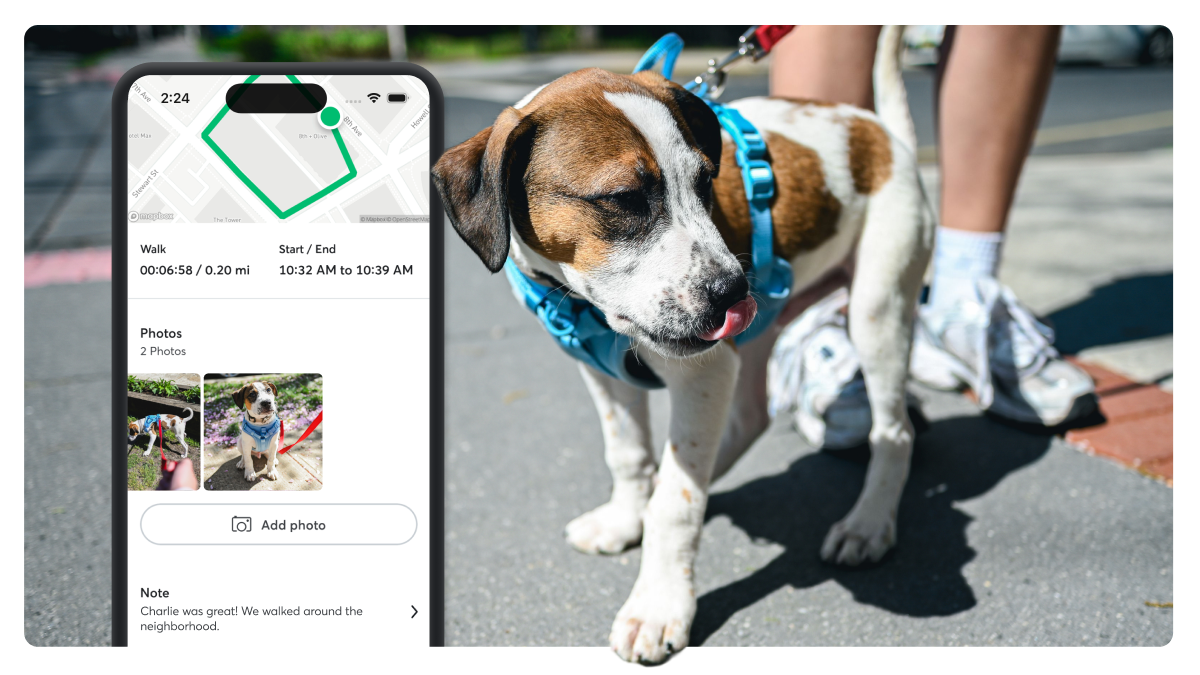
- Phone for recording your walk on the app (turn on location sharing) and taking photos
- Portable water bottle/bowl, especially in warm weather, to avoid overheating
- Good walking shoes (for comfortably navigating different weather and terrain)
Stay Vigilant—Here’s What To Watch For
Dog walking may seem like a passive activity, but it requires preparation, your full attention, and vigilance to ensure the safety of the dog, yourself, and everyone around you. Here are some tips to help you stay on top of things:
- Check that all gear fits properly.
- Stay off your phone (except when taking photos for the client).
- Keep headphones off—it’s important to hear what’s around you.
- Always keep dogs on leash during walks (even if the client says it’s okay)—you never know if a dog will bolt.
- Take into account hot temperatures and more extreme weather conditions.
- Watch body cues for tiredness, injury, or stress.
- Avoid meetings with unfamiliar dogs and people.
- Keep an eye out for wildlife and approaching dogs.
Follow Good Walking Etiquette in the Neighborhood
When you’re in new territory, it always helps to know the etiquette. Here are some general rules to follow:
- Avoid private yards and gardens. Stick to the client’s home, sidewalks, and safe public areas.
- Always pick up dog poop. Dispose of it in public bins, not private ones.
- Follow leash rules. County and city leash rules can vary for trails, parks, and other areas. When in doubt, always keep dogs leashed.
- Don’t let the dog go up to new dogs or people uninvited. Even if the dog you’re walking is generally friendly, reactions can sometimes be unpredictable. If you know your dog is reactive, cross the street when other people or dogs approach.
Know Your Pups
If you’re just starting out building your dog walking clients, you’ll soon discover that some dogs are more challenging on walks than others. Take extra precautions when you’re walking the following dogs.
- Puppies. Watch for their energy level, leash chewing, and snatching things off the ground.
- Seniors. Keep an eye on energy levels and any signs of injury, soreness, or illness.
- Pullers. Be mindful of strength and check gear and attachment points carefully.
- Dogs with high prey drive. Some breeds, such as Jack Russell Terriers and Pit Bull Terriers, are known to have high prey drives. When walking a prey-driven dog, plan routes to avoid wildlife and pack some extra treats to help navigate triggers.
- Snackers. These dogs definitely require extra vigilance, and may even require a basket muzzle—but only with the owner’s permission.
- Reactive dogs. Be sure you know their triggers, consider their strength, and make a plan with the owner in advance for different scenarios.
- Dogs with separation anxiety. Discuss with the owner ways to ensure the dog is comfortable walking with you. Have a Plan B in case the dog shows signs of stress, like playing inside or in the backyard, or giving a puzzle toy instead.
Remember, it’s okay not to take on new clients if you don’t feel equipped or comfortable walking their dog. For the dog’s safety, it’s best to be honest about what you can and can’t accommodate.
Taking a few extra steps by scheduling a meet and greet, planning before the walk, and staying alert during the outing will help ensure success. Chances are, you’ll be going on plenty of pleasant dog strolls together!