- Not a substitute for professional veterinary help.
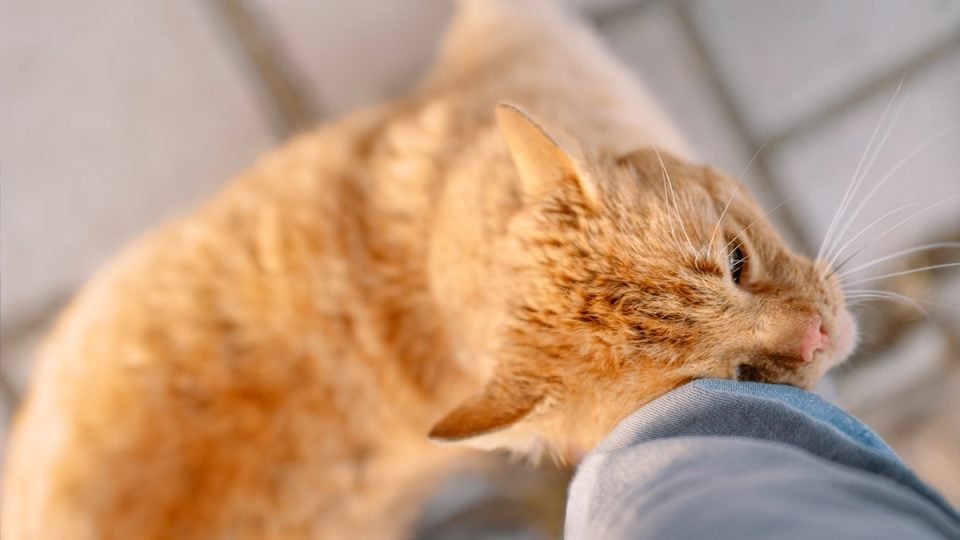
Is your cat rubbing their face on everything, including you? Don’t worry—it’s a common behavior among cats. In fact, by rubbing and leaving their scent on you, cats are actually communicating.
What your cat is communicating, though, depends on the situation. For instance, stray cats may rub against an area outside to claim their territory. House cats, on the other hand, often rub against their favorite people to greet them and show affection.

Read on for more reasons why cats rub their faces on everything, plus when to contact your vet if the rubbing seems excessive.
Greeting
If your cat rubs against your legs when you’ve returned home or first thing in the morning when you wake up, it’s likely their way of acknowledging you and saying hello! Cats generally reserve this behavior for their primary caretaker and their other favorite people.
According to veterinarian Dr. Jo Myers at Vetster, a cat rubbing against you in this way shows a high level of trust. “Some cats pair this [behavior] with a tail-up posture or vocalization, which is very social, friendly body language,” she explains.
Gathering Information
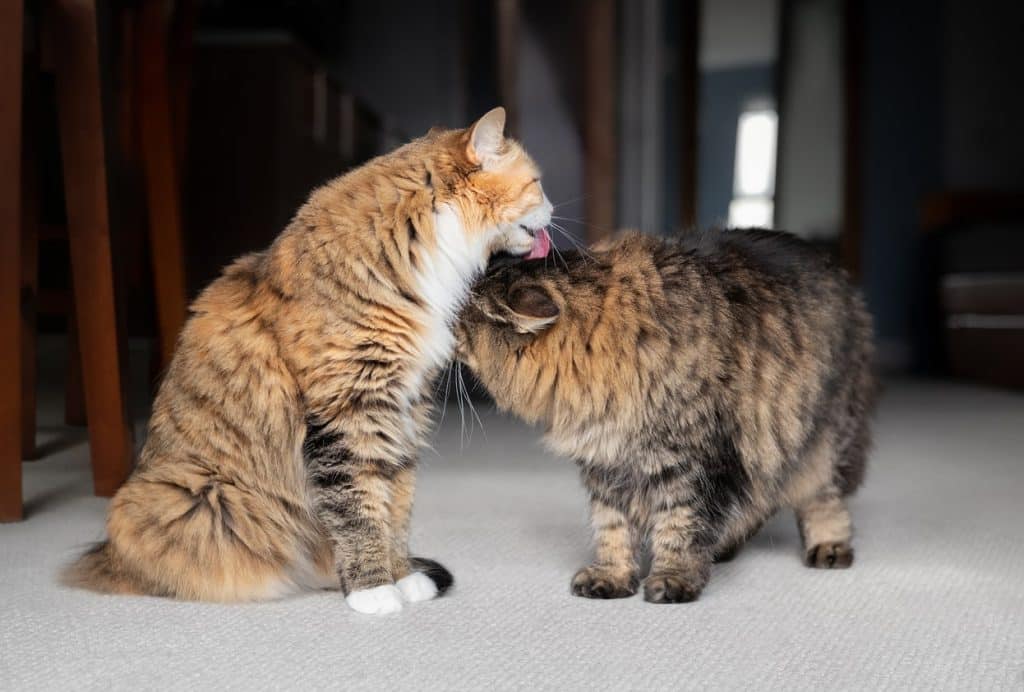
A cat may also rub against people or other animals to gather information. For example, a newly adopted cat might rub up against their new guardians, other pets, or the couch to scope out their new home. Cats also often rub against visitors when they come over to get more details about the intruder.
It’s important to note that in these cases, when a cat is getting more intel, they don’t necessarily want to be touched. Before you reach for a cat you just met, make sure they’re displaying other signs that they want to be pet.
iStock/Petra Richli
Laying Claim
Another reason why your cat may rub their head against you is to mark you with their scent and claim you as their territory. Cats have scent glands on their cheeks, at the top of their head, at the side of their lips, and under their chin.
“When cats rub their head on a person or an object, they are leaving behind pheromones from the glands in the head and face,” says author Zazie Todd, Ph.D., a psychologist specializing in pet behavior. “Those pheromones can then be detected by them—or other cats—at that time or later.”
Cats may also turn and brush their tail against you, marking you from behind with the scent glands at the base of their tail. They may also headbutt you (also called bunting) or weave around your legs to help reinforce their scent.
Since their scent will fade over time, your cat will need to “reapply,” which is why they may repeatedly rub against you throughout the day.
Showing Affection
If your cat is bunting and rubbing you and other household pets, it could be their way of showing affection. Because they have scent glands between their ears, nudging you with the top of their head is a way to mark you with their pheromones and show you they’re comfortable with you and want to bond.
One way to tell if your cat is rubbing and headbutting you out of love is if they also have a soft expression, purr, or blink slowly. If you’re not sure, let them lead the way. Research suggests that when pet parents let their cats initiate contact and take control of the interaction, it can lead to a stronger human-cat bond.
Asking for Something
Cats might also headbutt and rub against you to ask for something like attention or treats. If they’re making a request, they’ll likely be more intense with these behaviors than when they’re showing affection.
They might also gently bite you and loudly meow. If your cat is trying to draw your attention to something they want, they may also rub against it. For instance, your cat might rub against a closed door if they want you to open it to let them through or against a cabinet door if they know their favorite treats are inside.
Once your cat has figured out that they can rub against you and fulfill their request, they’re more likely to do it again, says Dr. Myers. “Sometimes rubbing can be a learned behavior,” she notes. “When cats figure out that rubbing can get them attention, food, or interaction, they repeat it.”
Signs of Excessive Rubbing: When To See a Vet
Dr. Myers adds that while rubbing is usually a normal behavior, it can be a cause for concern if it becomes excessive and creates discomfort, such as hair loss, redness, scabs, or a rash.
Make an appointment with your vet if you notice any of the following symptoms:
- Rashes, hair loss, or excessive scratching, as these could be sign of fleas or allergies
- Rubbing in one particular area, like the face, ears, or mouth. This could indicate an infection or pain
- Signs of separation anxiety, such as visible stress before you leave or intense rubbing when you come home
- Any big changes in appetite, water consumption, litter box use, or energy levels
Advocating for your cat
If your cat is showing signs of excessive rubbing, schedule an appointment with your vet so they can conduct a wellness exam and determine the cause. Otherwise, enjoy getting to know your cat better with this form of communication.
Knowing why your cat rubs against you or others can also help you better advocate for them while you’re gone. For instance, you can incorporate this information in your care notes to your pet sitter and give them a heads up if your cat likes to rub to gather intel, but doesn’t want to be touched when they first walk in the door. Or let them know to expect some headbutting around dinner time.
It’s just another piece of communication to ensure your cat is well cared for while you’re away!