- Not a substitute for professional veterinary help.
Training a rescue dog can feel very different from raising a puppy from a breeder. While puppies are learning everything for the first time, rescue dogs may be navigating major life changes, unfamiliar routines, or past experiences—including stressful shelter life.
That adjustment takes time. A standard guideline from shelters is the 3-3-3 rule, which says rescue dogs need three days to decompress, three weeks to learn the routine, and three months to start feeling fully at home. But even then, every dog is their own individual and moves at their own pace, says Kris Hale, a certified dog trainer at Best In Dog who works with rescue pups regularly.

With Hale’s help, we’ll walk through how to train a rescue dog step by step, from building trust and creating routines to troubleshooting common behavior challenges along the way.
Step 1: Help Your Rescue Dog Settle In
Before you jump into any training with your rescue dog, focus on helping them feel safe and comfortable in their new home. It’s normal for a rescue pup to act differently than they did in the shelter. After all, everything about their life has just changed, including meeting you.
“For any dog, the first 3 days or even week should be spent at home, relaxing, sleeping, getting to know each other (no visitors until they’re ready), and going for walks around the neighborhood if they’re comfortable,” she adds. “Take things very slowly. Even better, take a few days off of work or even a full week to help the dog get acclimated.”
During this stage, try to keep life predictable for them. Stick to a consistent schedule for meals, walks, potty breaks, and bedtime so your dog can start learning what to expect each day. Give them a quiet place of their own to rest, and don’t worry about introducing lots of people and other dogs to them right away.
Step 2: Focus on Building Trust
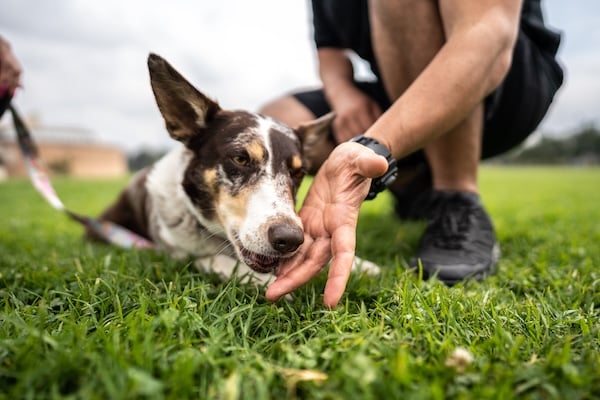
For some rescue dogs, trust comes quickly. Others may need more time before they feel comfortable being touched or handled by you. Small, positive interactions repeated consistently over time can go a long way. Here’s what you can do to start fostering trust:
- Let your dog make decisions whenever possible. Instead of going to them for pets, consider waiting for them to approach you when they’re ready.
- Be liberal with rewards. Treats, praise, and play communicate that being around you leads to good things.
- Sit nearby while they relax. Reward them for checking in with you to create positive associations.
- Try some low-pressure training sessions. Simple recall games teach useful skills with play. Hale recommends rewarding your dog for coming to you, then letting them go back to exploring so they learn that checking in with you is always a good thing. Don’t call your dog over just to end the fun and take them back inside.
If your dog seems hesitant or fearful, try not to take it personally. Some rescue dogs have very little experience with training or interacting with people. Move at their pace, and your bond will only continue to grow!
Step 3: Revisit Potty Training Basics
Even if your rescue dog is an adult, they may not be fully potty trained. Hale recommends approaching things the same way you would with a puppy.
- Take your dog outside often, especially first thing in the morning, after naps, after meals, after play sessions, and anytime they come out of a crate or confined area.
- Watch for pre-potty behaviors. If you notice your dog suddenly sniffing around or circling indoors, head outside right away for a potty break.
- Use crates, playpens, or baby gates when you can’t actively supervise. Hale explains the goal isn’t punishment—it’s helping prevent accidents while your dog learns the routine.
- Reward success outside! When your dog goes potty outside, praise them and give them a treat immediately while you’re still outdoors. According to Hale, rewarding them inside can accidentally teach the dog that coming back indoors is the exciting part.
- Make it high-value. “Try using a special high-value reward like chicken, jerky, or peanut butter that they only get for outdoor potty success,” adds Hale.
- Accidents happen—don’t stress. Clean the spot thoroughly with an enzymatic cleaner to avoid repeat incidents and do your best to move on. Punishing your dog can increase stress and confusion, especially for rescue dogs that are still adjusting to their new environment.
If progress seems stalled despite consistency and management, it’s worth checking in with your vet. Sometimes frequent accidents or setbacks can be linked to medical issues like urinary tract infections rather than training problems.
Frazao Studio Latino via iStock
Step 4: Introduce Crate Training Slowly
For many rescue dogs, a crate can become a safe, quiet place to rest and decompress. It can also help with potty training, routines, and preventing destructive behavior while your dog adjusts to their new home. The key is making sure the crate feels like a positive space, not a stressful one.
Hale recommends introducing the crate slowly and using it during calm moments when you’re home, not just when you leave the house.
“If the dog has only been in a crate when the person leaves and they’re stressed, they’ve started to associate the crate with the person leaving,” she explains. Over time, that can create an aversion to the crate itself and lead to separation anxiety.
Here’s what to do:
- Set the crate up as a cozy hangout spot from day one. Add a comfortable crate bed, leave the door open, and toss treats, lick mats, or stuffed KONGs inside so your dog starts to associate the crate with good things.
- Practice crating while you’re sitting nearby, and offer a snuffle mat or chew so your dog learns that being in the crate while you’re around is normal and relaxing.
- Take baby steps. Once your dog seems comfortable entering the crate voluntarily, try briefly closing the door while they’re happily occupied with a treat, then opening it again before they become stressed.
It’s also important to note that crates aren’t the right fit for every dog. If your rescue dog panics, tries to escape, or seems extremely distressed in confinement, it may be time to work with a positive reinforcement trainer or behaviorist. A professional can help you figure out the best path forward.
Step 5: Practice Socialization
Helping a rescue dog feel comfortable around new people, animals, sounds, and environments takes time. While puppies go through a specific “socialization window” where they’re especially receptive to new things, adult rescue dogs usually need slow, gradual exposure to build confidence.
- Start small. Short walks in quiet areas, calmly watching people from a distance, or meeting one new person at a time can help your dog learn that new experiences don’t have to be scary.
- Reward their calm behavior with treats, praise, or play so they start building positive associations.
- Pay attention to your dog’s comfort level as you go. If they seem overwhelmed, fearful, or reactive, create more distance from the scary thing and slow things down.
Until your dog is more confident, it’s okay to avoid situations that push them past their limits. And if you’re running into a lot of stressors, consider enlisting some help. Positive reinforcement trainers are pros at techniques like desensitization and counterconditioning to help dogs gradually feel better about situations they find stressful.
Step 6: Teach Leash Skills
Leash training helps rescue dogs safely explore the world while giving you both more confidence during walks. To get your rescue dog walking like a champ:
- Get the right gear for your dog. Many trainers recommend a standard 4- to 6-foot leash instead of a retractable leash, since it gives you more control and clearer communication. Front-clip harnesses can also help reduce pulling without putting pressure on your dog’s neck.
- Introduce walking gear gradually. “Put it on the ground with some kibble and let them sniff it,” Hale advises. This helps your dog build positive associations with the leash or harness before you even start.
- Practice first in low-distraction environments like your house, backyard, or a quiet area outside. It’s also helpful to go for walks at a time when you know there won’t be a lot of people around.
- Reward your dog with high-value treats whenever they’re walking next to you without pulling, checking in with you, or calmly following your lead.
- Don’t underestimate the value of sniffing! Walks aren’t just exercise; they’re enrichment for your dog, too. Giving your dog time to sniff and explore their environment can help them build confidence.
As your dog gets more comfortable, you can slowly work up to busier environments and longer walks. Keep sessions short, reward often, and remember that leash skills take time and practice.

Capuski via iStock
Step 7: Address Common Behavior Challenges
Many rescue dogs come with behavioral baggage, and that doesn’t mean you’ve done anything wrong. Fear, stress, past experiences, and major life changes can all affect how a dog behaves in a new home. The good news is that many behavior issues can improve with patience, management, and positive reinforcement training.
Reactivity
Some rescue dogs react strongly to things like other dogs, strangers, bikes, noises, or fast movement. This can look like barking, lunging, growling, or frantic behavior on walks or in the home. In many cases, reactivity is rooted in fear, stress, or overstimulation.
Hale says leash reactivity is especially common in rescue dogs, who can lack confidence in new environments and have negative experiences with tools like shock collars.
If your dog becomes reactive, focus first on helping them feel safe by creating more distance from the trigger. Then work on slowly introducing those situations at a level your dog can handle while rewarding calm behavior. Positive reinforcement trainers are a great resource for reactive dogs.
Anxiety
Anxiety in rescue dogs can show up in different ways, including pacing, whining, destructive chewing, going potty in the house or crate, or hiding. Some rescue dogs may also struggle with separation anxiety, especially if they’ve bounced around to different families and been returned to the shelter.
Structure and routine can help anxious dogs feel more secure, and mental and physical enrichment can help. But for severe anxiety, a vet is often your first stop, to help you rule out underlying health issues.
Resource guarding
Resource guarding happens when a dog feels the need to protect things they value, like food, toys, beds, or even people. This behavior can be especially common in dogs who may have experienced scarcity or competition in the past, like rescue dogs.
Try to avoid punishing growling or forcibly taking items away, since this can increase stress and make guarding worse. Instead, many trainers recommend a “trade-up” approach, where you offer your dog something even better in exchange for the item they’re guarding. This helps teach your dog that people approaching their belongings leads to good things.
When To Seek Professional Advice
There’s a common misconception that you should only contact a trainer when things have gotten really bad. In reality, the earlier you get support, the easier it often is to prevent small challenges from becoming bigger ones.
In fact, Hale recommends that first-time dog adopters consider speaking with a professional before bringing a rescue dog home. A trainer can help you understand what to expect during the adjustment period, let you know what supplies you’ll need, and even help you find a dog that’s the best fit for your lifestyle.
Most importantly, remember that asking for help isn’t a sign that you’re failing. Rescue dogs come with unique histories, and sometimes a little expert guidance can make the adjustment process smoother for both of you.