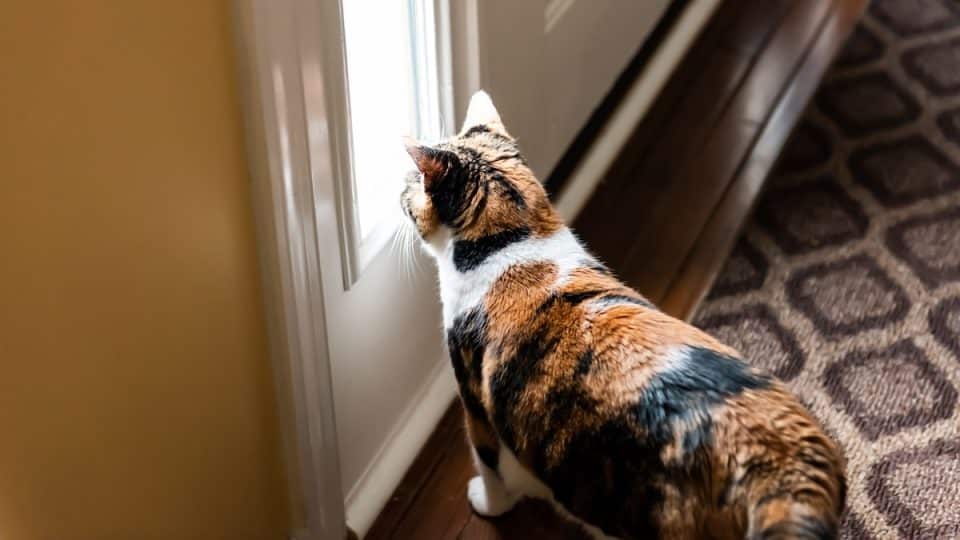
- Not a substitute for professional veterinary help.
Though cats have a reputation for being wildly independent, they often form deep emotional bonds with their humans. Which might leave you to wonder how they feel when you’re gone. Are they bored? Anxious? Lonely? The truth is, cats can miss their owners and do experience loneliness. But the signs aren’t always what you might expect.
To understand more, we spoke with Dr. Michael McCallion, a veterinarian at Radiant Veterinary. With his insight, we explore signs that your cat might be lonely and how to create a safe, stable environment where they can thrive during time on their own.

Do Cats Miss Their Owners?
Research suggests that, like humans and dogs, cats also display different attachment styles, which could, in part, affect how much they miss their owners when they’re gone.
For instance, in one study, researchers briefly separated cats with various attachment styles from their caretakers. The cats with a secure attachment style warmly greeted their owners upon their return, before confidently exploring or playing on their own. Cats with insecure attachment styles, on the other hand, either showed clingy, demanding behavior or hid or ran away.
While secure kitties might miss their owners but still be okay in their absence, even the most resilient cat can be affected by a sudden change in their routine—like if you start working longer hours or go on a trip—and start showing signs of loneliness.
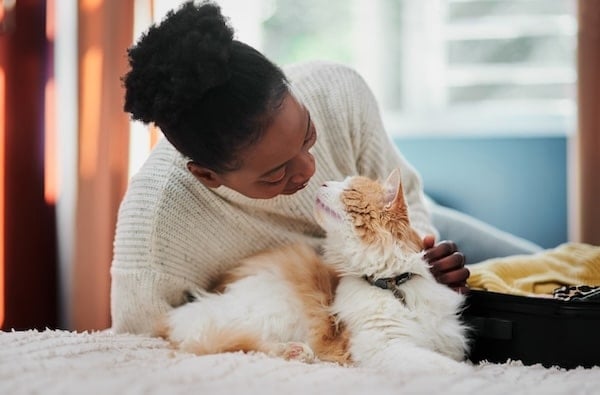
Adene Sanchez via iStock
Signs Your Cat Is Lonely
“Recognizing loneliness in cats can be challenging,” notes Dr. McCallion. He adds, however, that true loneliness often presents itself as high-stress and anxious behaviors. “You may begin to notice that your cat is hiding more or that they’re urinating or defecating outside of the litter box,” he says.
Common signs of loneliness include:
- Excessive grooming
- Destructive behavior
- Peeing or pooping outside the litter box
- Increased vocalization
- Clinginess when you come home
- Avoiding or hiding more frequently
- Refusing to eat
- Changes to sleep habits
How To Help a Lonely Cat
“Although we would all love to be home all day and play with our cats, this isn’t the way of the world,” says Dr. McCallion. “Providing a complete, enriched environment is one of the best things you can do if you have to be away from home, followed by affection and pets when you return.”
Here’s a closer look at how to do just that—and more—to help your lonely cat feel better until you return.
Spend one-on-one time when you’re home
Devoting one-on-one time with your cat every day can help them feel better when they’re alone. Cats tend to be most active at dawn and dusk, making early mornings or late evenings the perfect time to play.
Whether you’re enticing them with a feather wand or a laser toy, breaking playtime into short 10- to 20-minute sessions (perhaps before you leave and when you return) will keep your cat engaged and excited.
How you spend your time with your cat will depend on their energy and preferences, though. Your cat may find snuggling on the couch equally enjoyable.
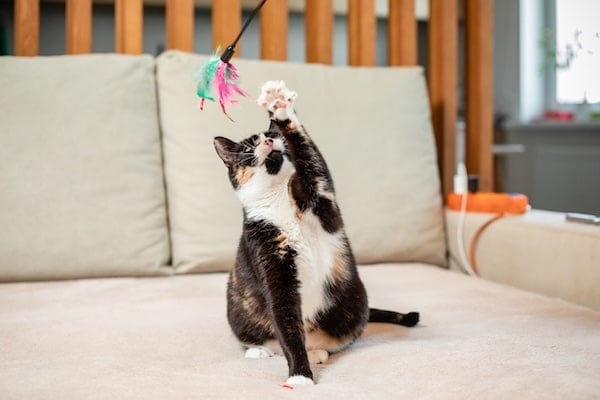
Alexander Shelegov via iStock
Provide plenty of enrichment
“The best thing you can do to help a lonely cat is to enrich their environment,” says Dr. McCallion. Along with taking time to interact or play with your cat every day, you can also provide enrichment activities while you’re away, such as:
- Areas for climbing, like vertical spaces and cat trees
- Cat-safe toys that encourage natural hunting and chasing behaviors
- Scratching posts (horizontal and vertical)
- Outdoor viewing access via window perches
Create a cozy resting place
Creating a resting area that’s all their own not only gives your kitty a comfy place to sleep but also creates a safe space when they’re on their own. Since most felines sleep between 15 and 20 hours a day, having a few cozy spots to curl up and nap makes a big difference in quality of life.
From a relaxing perch atop a cat tower to a plush bed tucked in a serene corner of the home, your furry friend will thank you for their fortress of solitude.
Invest in a pet camera
If your cat is showing signs of distress in your absence, it’s hard not to feel plagued when you’re away. A pet camera can help ease your mind by letting you to keep an eye on your pet from afar, which can help you diagnose and work through your cat’s loneliness or separation anxiety.
Some cameras even allow for interactive play through a laser toy mobile app or a treat-tossing feature, while others feature a two-way speaker so your kitty can hear your comforting voice.
Get another cat
While this might not be the best solution for every lonely cat, some social kitties might fare better having a feline sibling. Dr. McCallion stresses, however, that adding a second cat to the family is a big decision and is not a one-size-fits-all solution.
“Often, this depends on your cat’s temperament and ensuring you can find the right companion for them,” he says. “I recommend finding a cat of a similar age to your own. Younger cats may try to play with and chase older cats who may not be interested, which can lead to a stressful relationship.”
Hire a pet sitter
If your cat is lonely while you’re gone during the day, hire a trusted pet sitter to check in. This simple action can help keep anxiety at bay (for both you and your cat!).
When away on longer stints, like traveling overnight multiple days, you may want to consider booking a house sitter. That way, they can ensure your kitty has fresh food and water, a clean litter box, and daily affection in your absence.