- Not a substitute for professional veterinary help.
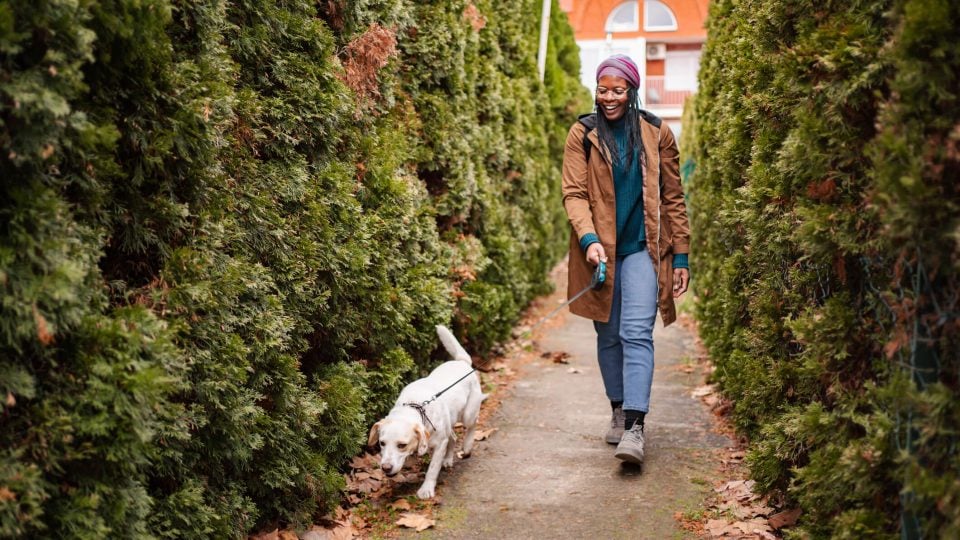
If you work during the day, a dog walker can help make sure your dog gets enough exercise and has a chance to explore new sights and smells while you’re away.

Daily walks also benefit your dog in other ways by supporting joint health, weight management, digestion, and mental health.
Of course, finding the right dog walker isn’t always a walk in the park—you need to trust they’ll keep your pet throughout the walk and encourage good leash manners.
Below, we’ll go over how to interview a dog walker, with examples of questions you can ask to help you find the right fit.
Questions To Ask Before a Meet-and-Greet
Any time you’re bringing someone new around your dog, it’s best to schedule a meet-and-greet before committing. Meeting in a public space helps establish a base level of trust with someone new and offers a chance to find out how the walker and your dog get along.
If you’re using a service like Rover, it’s easy to find dog walker profiles sorted by reviews, experience level, and distance from you. There’s a good chance most candidates will have answered these questions already on their profile, but you can check anything you’re not clear on with them before setting up a meeting.
Experience and walking style
There’s no single right way to walk a dog. Some breeds may prefer an active jog around the block, while others prefer a more leisurely pace with plenty of sniff breaks. Some dogs like walking in a pack, while others do best when they’re not sharing the walker’s attention.
Use these questions to verify your sitter has the right combination of experience to match your pup’s needs on a walk.
- How long have you been walking dogs?
- What sizes, age ranges, or breeds do you typically walk?
- Do you provide solo walks, group walks, or both?
- If you group walk, how many dogs will be paired with mine? What are their sizes and age ranges?
- Are you familiar with dog body language and how to read their social cues?
- What’s the usual pace of your walks? Can you go faster or slower to match my dog’s preferences?
- Do you strictly use positive reinforcement methods?
“The ability to control a dog around other dogs or people is one of the most important skills a dog walker can have,” says Shelby Reed, a Rover pet sitter.
“I always like to know a dog’s triggers, whether that’s big trucks, squirrels, dogs, other people, etc. That way I know what to keep a close eye on during walks. When a dog is triggered on a walk, they can yank on the leash—and knowing triggers ahead of time makes it easier to know when to hold on just a little bit tighter or distract the dog with some training treats!” Reed says.
Scheduling, communication, and booking logistics
A dog walker may have the experience level to handle your pup—but they may not have the availability. You can find out by asking these questions.
- How far in advance do I need to book regular or recurring walks?
- What’s your regular availability? Will you be able to walk my dog around the same days or times every week?
- Will you arrive for walks at a strict time or within a certain window?
- How do you communicate schedule conflicts or changes?
- What’s your cancellation policy? How far in advance do I need to notify you of a schedule change?
- Do you have any upcharges for last-minute bookings, weekends, or holidays?
Reed adds that it’s also essential to make sure the dog walker knows how to enter your home if you won’t be present when they pick up your dog for the walk.
Emergency protocol
It’s crucial to know that your dog walker can act fast and decisively during emergencies on your walk. (Even though we hope they never have to!) Ask these questions to make sure your dog walker is prepared for whatever may cross their path—before, during, or after a walk.
- Can you spot signs of a medical episode in my dog, like overheating or an asthma attack?
- Do you have pet first aid or CPR training?
- Are you familiar with the closest emergency vet? How will you get there if you’re on foot?
- How will you notify me in the case of a medical emergency or escape?
- What’s your protocol if a dog slips their leash? Can you connect to a Bluetooth or GPS tracker on their collar?
Rover allows you to filter dog walkers by qualifications like pet CPR training, so you have maximum peace of mind. The Rover Guarantee can protect qualified vet expenses claims of up to $20,000.
“I think if the dog is prone to situations that would need CPR, like choking on their favorite treat often or eating their toys, this is a must-have skill. Not every dog would need that special care, but of course it’s an amazing skill to have as a dog walker,” Reed says.
Questions To Ask During the Meet-and-Greet
If your dog walker passes your pre-screening, you can move onto an in-person meet-and-greet in a public space. It’s helpful to choose a spot with other people around, but one that’s still quiet and nonchalant, like a public park with walking trails or a cafe with an outdoor patio.
That said, it’s also OK to have the meet-and-greet at your home if this feels comfortable to you. You can have another person present if you prefer not to meet alone or meet the dog walker in your front yard.
In fact, introducing your dog to the walker outside can actually help reduce some of the dog’s guarding tension, Reed says.
“My favorite meet and greets are usually in the client’s home because that’s where the dog is most comfortable and I can learn the location of the dog’s food and water, favorite treats, and leash and harness,” Reed says, adding that having the dog walker come to your home and meet the dog there can help your dog feel more comfortable with the walker.
Wherever you choose to meet, you can use these questions to double-check the walker is organized, prepared, and can walk your dog with the same care that you would.
- How do you encourage healthy dog-to-dog interactions on walks?
- Are you familiar with the area, and have you walked similar routes before?
- How do you adapt the route to the temperature or weather? E.G. Can you avoid asphalt on hot days, or stick to a shorter route in the winter?
- Can you follow my security protocols when you enter and leave the house, like disarming and re-arming my alarm system?
- What’s your experience managing dogs with triggers, like other dogs barking or loud noises?
- How will you update me on my dog’s walk? Will you send updates while the walk is in progress, or after you’re back at my house?
- How do you build a bond of trust with the dogs you walk?
During the meet and greet, it’s also helpful to let your trainer take the leash on a trial walk. While they’re in charge, pay attention to how they walk your dog. Are they holding the leash correctly?
Questions To Ask Based on Your Dog’s Unique Needs
There’s no such thing as a “standard” dog. Dogs of every breed, age, activity level, and personality type, will have unique quirks to consider.
While only you know what your dog needs as an individual, use this section to guide you on what to ask your dog walker.
Large or strong dogs
Some dogs were bred for heavy-duty work like pulling carts or sleds. Others are so large that if you’re not careful, they could end up walking you!
You can get a feel for how your walker handles large or strong dogs on the trial walk, but these questions can also help you double-check that they’re up for the task.
- Have you ever walked large breeds before? Can you safely restrain or control my dog if they lunge for a squirrel or a garbage can?
- If you walk in groups, can you pair my dog with breeds in their size range?
- Are you comfortable using gear that makes it easier to walk with a strong dog, like front-clipped harnesses or headgear?
Puppies and seniors
Puppies are still learning how to walk on a leash for the first time, while seniors may have been around the block a few times. But both young and old dogs are prone to getting tired early and may be sensitive to extreme heat or cold, which your dog walker needs to consider.
- Can you control the distance and pace of the walk, in case my dog isn’t up for the full route?
- Can you modify a walk in more intense weather?
- Can you reinforce my puppy’s obedience training, like practicing potty training cues or the “heel” command?
Dogs with medical or mobility needs
If your dog is getting on in years, has recently had surgery, or just needs to take a daily pill, ask your dog trainer these questions to verify their experience and comfort level with special-needs pups.
- Can you pick up on cues that my dog is uncomfortable, like having achy joints or fatigue?
- Can you administer medication before or after walks? Is there an extra fee for doing this?
- Are you comfortable walking with mobility aids, like a lifting harness for seniors with hip pain?
Reactive or anxious dogs
While some pups like making new friends on walks, not every dog is happy to see encounter dogs “in the wild.” If your dog gets anxious or reactive on walks, make sure your walker is prepared ot handle their triggers with these questions.
- Do you charge extra for a solo walk if my dog doesn’t well in a pack?
- If another dog crosses your path, what redirection tactics do you use to keep my dog’s attention focused on you?
- Can you plan the route during quieter times of the day, or in areas where you’re unlikely to encounter other dogs or loud noises?
If your dog is too reactive or anxious for most dog walkers, it might be a better choice to work with a dog behaviorist or trainer first. They can help you learn how to address behavior concerns, like pulling on the leash, so you’re more confident in their ability to take walks without issue.
Escape-prone or scavenging dogs
If your dog can’t resist the temptation to explore yummy smells or new spaces, ask these questions to ensure that your dog walker can handle an escape artist’s usual tricks.
- How do you handle dogs who are prone to slipping leashes or harnesses?
- How will you redirect my dog from trash or roadkill while on a walk? Can you stick to a strong “leave it” command?
- Can you follow an “airlock” protocol to prevent escapes while you’re entering or leaving the house? For example, bringing my dog into the garage after a walk, closing the outside door, then opening the door into the house?