- Not a substitute for professional veterinary help.
Have you ever tugged on your dog’s leash to restrain or redirect them only for them to pull right back? If so, you’ve had a brush with something called dog opposition reflex. It’s actually less a reflex and more of a natural survival instinct, thought to be related to a dog’s fight-or-flight response.
Understanding the instinct behind dog opposition reflex can help you avoid frustrating situations during no-pull leash training. You may even be able to use it to your advantage when training for certain dog sports.

We spoke to Nicole Kohanski, a certified canine behavior consultant and the founder of Wiggle Butt Academy, to learn more. Here we define dog opposition reflex, explore what it looks like, and offer tips for managing related training challenges.
What Is a Dog’s Opposition Reflex?
When a dog pulls against their leash, they’re not doing it just to be stubborn. According to Kohanski, it’s often part of a natural inclination to pull in the opposite direction of pressure.
Basically, if a dog feels restricted, they may brace themselves or pull in the opposite direction to escape the pressure. That’s where the fight-or-flight response comes into play. Here are some examples of situations that might trigger your dog’s opposition reflex.
Loose-leash walking and no-pull training
In leash training, it’s important to avoid triggering your dog’s opposition reflex. That’s easier said than done, however, and it’s easy to accidentally reinforce pulling. If your pup learns that pulling gets them closer to what they want, they’ll keep doing it.
Veterinary handling
It’s also crucial to avoid triggering the opposition reflex in veterinary settings. If your pup is tense and resistant, your vet might not be able to properly examine them or administer treatments. Positive reinforcement training can help encourage your dog to be cooperative at the vet.
Sled dog racing and pulling sports
In sled dog racing and other pulling sports, a dog’s instinct to lean into resistance comes in quite handy. For example, skijoring is a sport where a dog wears a special harness and pulls a cross-country skier behind them.
Quick-start sports
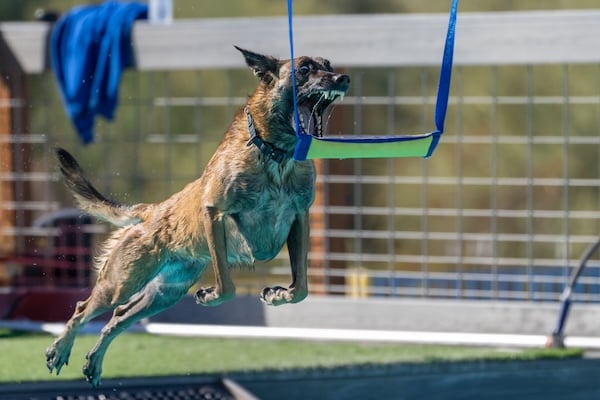
Even sports that don’t involve pulling can benefit from a dog’s oppositional reflex. In quick-start sports like agility, flyball, and dock diving, the handler might gently hold a dog’s chest back at the starting line to facilitate an explosive start.
GoDogPhoto via iStock
The Opposition Reflex in Loose-Leash Training
Giving in to your dog’s opposition reflex will only reinforce the behavior, but pulling harder isn’t the solution. Neither are training tools or methods that involve punishment, like prong collars or shock collars.
Rather, says Kohanski, the trick is to teach your dog that they’ll only get what they want when they stop pulling. Here are some strategies she recommends.
1. Don’t pull
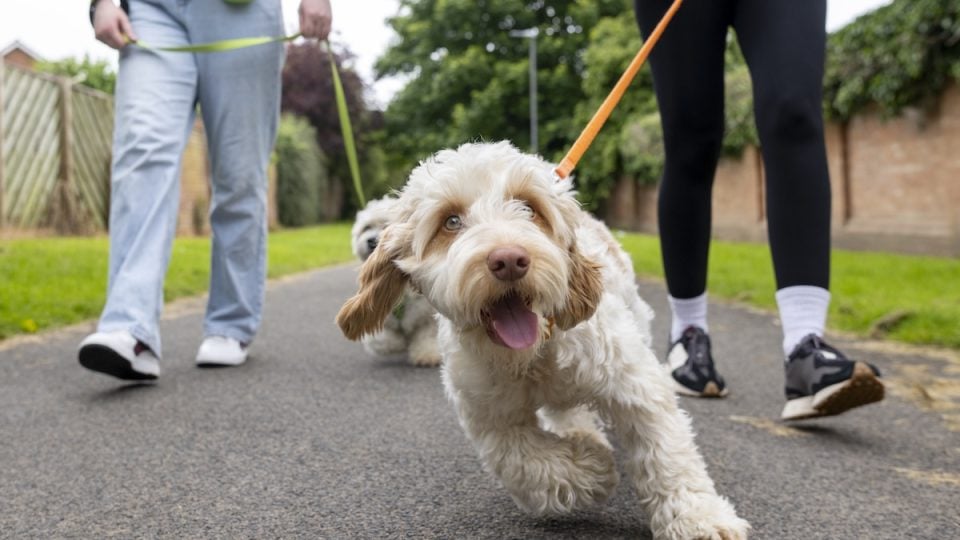
When walking your dog, take steps to avoid putting tension on the leash. If your dog is a puller, try picking up your pace or switching directions to keep them beside or behind you. When your dog pulls, don’t pull back. It’ll only trigger their opposition reflex and turn the process into a game.
2. Stop moving
If your dog’s opposition reflex is triggered on a walk, don’t feed into it. Stop walking and call for your dog’s attention. Resume forward progress only after your dog moves back toward you, creating slack in the leash.
3. Reward loose-leash walking
Practice loose-leash walking with your dog in a low-interruption environment, like your living room or backyard. Instead of walking forward, walk backward to encourage your dog to follow. You can also offer treats and praise when your dog calmly walks by your side.
4. Change up your equipment
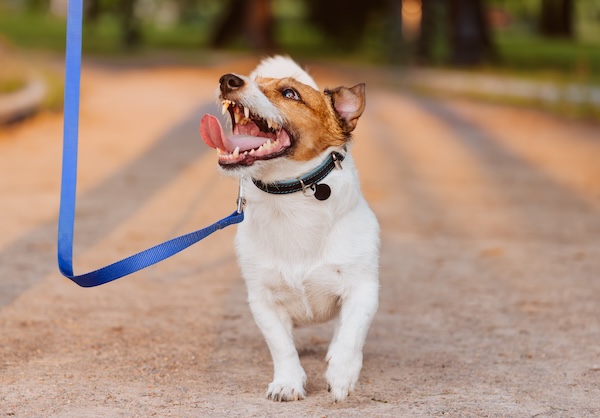
If you’re still struggling to keep your dog from pulling, it may help to change up your equipment. Stick to a short leash, ideally under six feet long, paired with a no-pull harness or head collar. This keeps your dog from gaining too much momentum and keeps them close for quick correction.
alexei_tm via iStock
Troubleshooting
As you’re working not to trigger your dog’s opposition reflex, you might encounter some challenges. Here are a few situations pet parents often run into, plus how to handle them.
Your dog lunges
When your dog lunges, take a quick step forward to avoid tension on the leash. While the leash is loose, call your dog’s name or use an obedience cue to recapture their attention. If you need to redirect your dog’s movement, walk in a small circle instead of pulling them backward.
Your dog pulls constantly
For dogs who pull constantly, head collars and front-clip harnesses can be helpful. A head collar loops around your dog’s muzzle, and the leash attaches under their chin. When they pull, the strap gently tugs your dog’s head to the side, breaking their forward momentum and pulling them back toward you. Front-clip harnesses work in a similar fashion.
Your dog pulls backward
If your dog is dug in and pulling backward instead of forward, stop walking and wait for them to relax. Try luring them toward you with a high-value treat or take a few steps in the opposite direction. This may help break their focus and encourage them to follow.
Your dog is big and strong
Using the right equipment makes all the difference when walking a big, strong dog. Front-clip harnesses and double-handled leashes can give you extra control. Training your dog to focus on you (“look at me”) or respond to a cue like “leave it” can also be helpful.
Getting Help
Leash training can be tough, especially where your dog’s natural instincts are concerned. If you’re getting stuck or want to learn how to use your dog’s opposition reflex to strengthen their performance in sports, talk to a trainer. A qualified professional can evaluate your dog’s behavior and help you develop a training program that’s safe, positive, and effective for both you and your pup.