- Not a substitute for professional veterinary help.
Looking for a way to stay active with a dog who loves the water? Dock diving might be for you! This high-octane sport has grown in popularity in recent years, showing up at state fairs and even on sports TV. It builds on a dog’s love of retrieval, teaching pups to make controlled leaps into special pools to fetch their toys—while also competing to see who can jump the farthest.
Dock diving is a great activity for high-energy dogs that thrive on opportunities to engage both their mind and body. There are, of course, physical benefits: a session of running, jumping, and swimming is great exercise for any pup. But dock diving offers mental enrichment as well. It takes training and dedication to keep your pup safe, on task, and within the rules of competition.
For humans, getting involved in the dock diving community is also a great way to build friendships and connections to other people who love their dogs as much as you do.
Ready to dive in? Keep reading to learn more about this high-energy agility sport and whether dock diving for dogs might be a good fit for you and your pup.
What Are the Rules of Dock Diving?
The concept of dock diving is simple: your dog is asked to wait at the end of a 40-foot dock while you throw their favorite waterproof toy into the water. Then, on cue, your dog runs the length of the dock and jumps into the pool to get their toy.
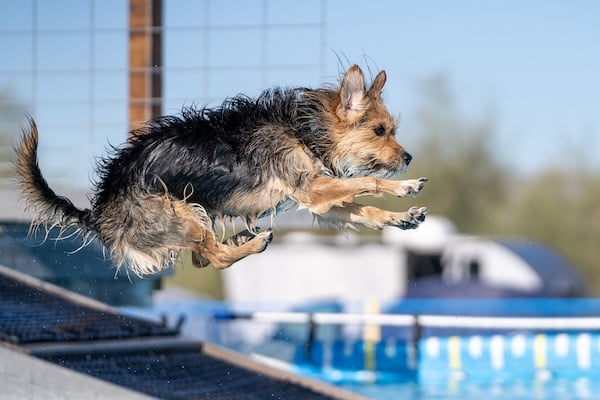
The sport is open to dogs of all sizes and breeds. Dogs typically compete based on size, but they may also fall into specialized categories like the one for senior dogs.
The goal of traditional competitive dock diving is distance: the pup with the longest jump wins. As of July 2026, the World Record for the farthest dock diving jump is held by Sounders, a Whippet who jumped 36 feet 6 inches in 2022.
Types of dock diving
More competition categories have been added as the sport has evolved. Today, there are three divisions in dock diving:
- Distance jump: Each dog is judged by how far they jump, often ranging from three feet to 30. A dog’s turn to jump is called a “splash” and includes two opportunities for the dog to jump into the water.
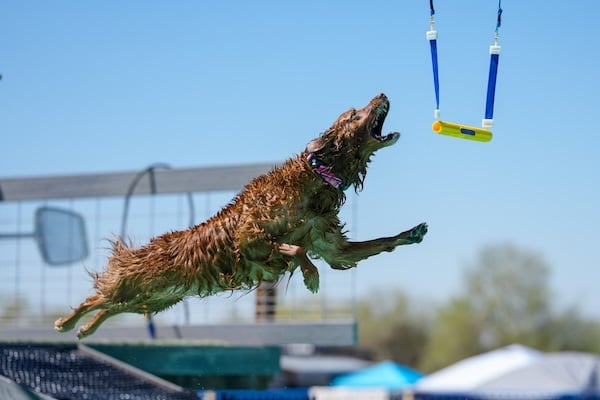
- Air retrieve: The goal is to “catch” a toy suspended over the pool, which moves progressively further from the dock. Each dog gets two chances at each distance. The dog who grabs or knocks down the bumper at the greatest distance wins.
- Hydro dash: Each dog is judged by how fast they retrieve or knock down a toy suspended toward the end of the pool. The toy is always 37 feet from the end of the dock. Each dog gets two chances to test their speed, and the fastest dog wins.
Regulations & schedule
Dock diving competitions are most commonly held in the spring, summer, and fall, but some areas have indoor training and competition facilities that allow dogs to compete year round.
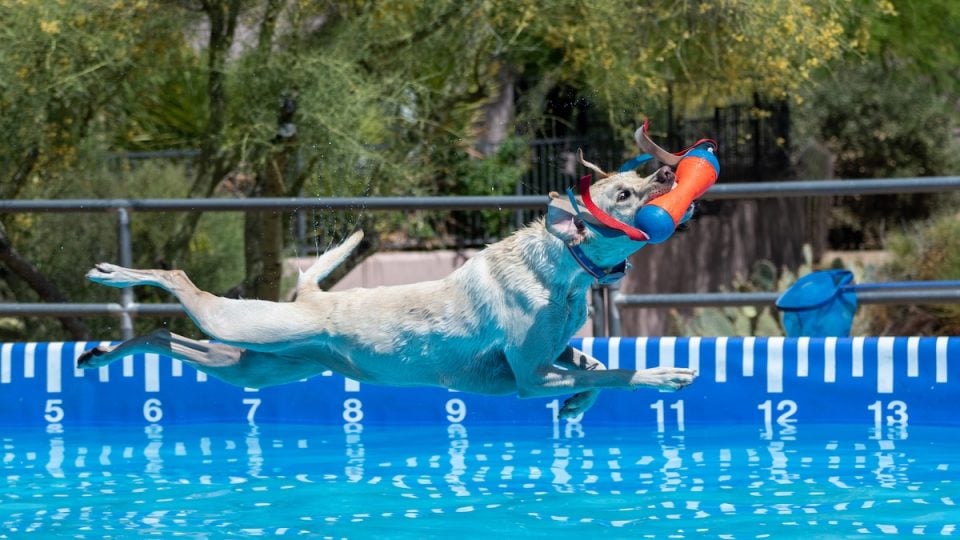
A regulation dock must be at least 40 feet long and 7.5 feet wide with a pool that’s at least 41 feet long, 20 feet wide, and 4 feet deep. A ramp from the water to the dock allows dogs to safely exit the water and get to the top of the dock. Measurements posted on both sides of the pool make it immediately clear to both judges and observers how far dogs have jumped.
GoDogPhoto via iStock
Is My Dog a Good Fit?
Dock diving is a great sport for working breeds who also enjoy the water, says Jen Zatorowski, UW-AAB, CPDT-KA, a trainer on Rover. “I would ask if they like water, swimming, running, and retrieving or carrying items naturally,” she recommends. “If they do, they might just be off to a good start for dock diving. If not, they still may but just may require more time and patience to learn and build skills and confidence.”
Popular dock diving breeds include Retrievers, Belgian Malinois, Whippets, Border Collies, and Jack Russell Terriers. But many mixed-breed dogs and non-sporting pups participate successfully. The most important qualities are enthusiasm, confidence around water, and good overall health.
Because the sport involves intense activity—sprinting, running, and jumping into the water—it’s a good idea to check with your vet before heading to the pool, Zatorowski recommends.
Dogs who shouldn’t dock dive
There are some dogs for whom dock diving poses a significant health risk. The following pups may want to look for other forms of exercise:
- Puppies. Dogs must be at least six months old to get involved in competition, but vets often recommend waiting until they’re 12 to 18 months old to ensure growth plates have closed, reducing the risk of injury.
- Dogs with vulnerable spines. Dogs with short legs and long spines, like Dachshunds and Corgis, are more prone to injuries while dock diving.
- Short-nosed breeds. Pugs, Bulldogs, and Frenchies can have difficulty breathing during strenuous exercise and swimming.
Your vet can tell you if it’s safe for your dog to dive and any precautions you may want to consider. They may also be able to offer some alternate exercises to help get or keep your pup in shape.
GoDogPhoto via iStock
How To Train for Dock Diving
Do you think your dog might be interested in giving dock diving a go? As tempting as it may be to dive right in (pun intended), the dock shouldn’t be your first step. To be successful, many pet parents start their dog’s training on land.
“Starting depends on what the dog already likes or knows,” Zatorowski explains. “We may have to start with learning to pick up a toy, retrieve, return, swimming, jumping, a stay/wait cue, and a release cue. All the segments of the sport will have to be methodically introduced. Then we can build on skills needed for the sport.”
Here are some things you can do to both gauge your dog’s interest and start preparing them for dock diving:
- Reinforce with the basics. To compete effectively—and keep your dog safe on the dock—they should have a good handle on “sit,” “stay,” and “wait.”
- Practice fetch on land. Encourage your dog’s excitement to play with and retrieve toys. This drive will come in handy when you get onto the dock.
- Introduce them to water. Let your dog get comfortable in a low-stakes, relaxed environment where they can wade or swim as they feel ready.
- Show them how to exit the water. No matter where you’re swimming, giving your dog a clear out is essential for their safety and also builds trust.
- Play a simple game of fetch in the water. Throw your dog’s favorite toy in slow-moving water that doesn’t require a jump or dive.
- Practice leaping into the water. Start with a low dock, a short drop-off, or downward-sloping ramp.
As a precaution, never encourage your dog to jump into unfamiliar water. Before practicing, make sure the water is deep enough and free of submerged hazards. Also look for a safe way for your dog to get out. Avoid repetitive jumping if your dog appears tired, and stop immediately if they show signs of discomfort or injury.
Once you’ve mastered these dock diving prerequisites, you can move to the next level of dock diving. Ultimate Air Dogs, Dock Dogs, and NADD all organize dock diving for dogs competitions. They also offer local clubs and training opportunities to help you safely introduce your dog to the dock and pool.
Many pet parents enroll their dog in specialized dock diving classes or work with a trainer. The key to successful dock diving is building your dog’s comfort, confidence, and enthusiasm—while, of course, making the experience fun.