- Not a substitute for professional veterinary help.
Getting a dog to wait patiently—especially when they’re still in that wiggly, excitable puppy phase—may be one of the hardest things about training. But it also might be the most important.
“It can save your dog’s life!” says Kasey Dugan, a certified dog trainer and owner of Get Sit Done Dogs in Denver, Colorado. “If your dog starts to run out the front door and towards the street, yelling ‘wait’ can be the difference between life and death.”

“Wait” can be used to pause your dog before crossing streets, going through doors, getting out of the car, greeting people, eating meals, or entering potentially unsafe situations before you’ve had a chance to assess them. Plus, it’s a great tool for building impulse control and bonding.
With help from Dugan and Amanda Farah, a certified dog trainer and the National Training & Behavior Coordinator at Best Friends Animal Society, we’ll review how to teach your dog to wait, plus how to troubleshoot and get help.
How To Teach “Wait”
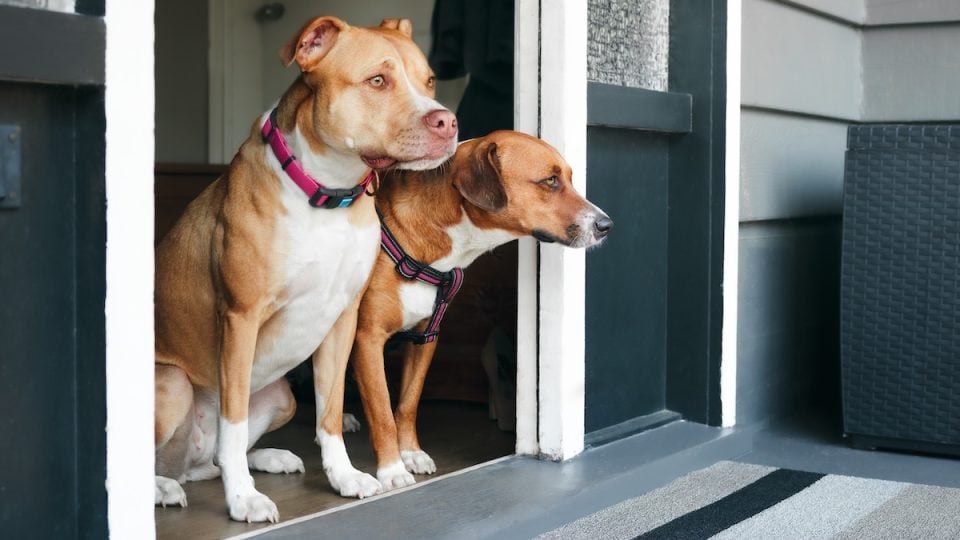
While there are several ways to teach a “wait” cue, many pet parents and trainers start at the front door. “For many people, the first ‘wait’ they want to teach is for safety,” Farah explains. “Doorways are also the most natural place to introduce ‘wait’ because dogs already learn to associate them with pausing.”
1. Put your dog on a secure leash.
This helps to ensure their safety if they don’t stay in place, which is likely to happen as you start training. It also ensures that you’re ready to step outside with your dog as soon as it’s time to reward their good behavior.
2. Lead your dog to the door.
Face your dog as you stand between them and the exit. “This way you can use your body to block them from going out the door,” says Dugan. “Once they have a better understanding of what they are supposed to do, then you can move back away from the door.”
3. Reach for the door knob or handle.
If your dog starts to move, move your hand back away from the door. If they stay in place, mark it using the word “yes” or with a clicker, and then reward them.
“Once the dog is consistently hesitating, say ‘wait’ just before you reach for the handle before the behavior, not during it,” advises Farah.
4. Slowly start to open the door.
“If your dog makes any movement towards the door, shut it,” says Dugan. “This helps to teach them that movement towards the door will make the door shut. In order to have the door open completely, they will need to remain still and wait for the release cue.”
5. Repeat step 3 until you can fully open the door.
“There are never any corrections,” says Farah. “The door closing is a natural consequence of breaking the wait, so just reset and try again.”
6. Say your release cue and invite your pup to go through the door with you.
Common release cues include “okay,” “free,” or “let’s go!”
miniseries via iStock
“Wait” vs. “Stay”
“Wait” and “stay” are both important cues that tell a dog to pause for further instruction, but they’re typically used in different ways.
“Wait” is typically used when you’re asking a dog to pause. “‘Stay’ is a more formal cue that asks a dog to settle in until they are released,” Farah explains.
“In a ‘stay,’ the handler might even walk away and expect the dog to remain in place. With ‘wait,’ we’re often waiting together or they’re waiting for me to do something like put a food bowl down before the release.”
How To Use a Wait Cue
Wondering when to use the “wait” cue with your dog? The possibilities are endless, says Farah.
“There are a lot of situations where you need your dog to pause for a moment for safety or convenience before proceeding,” she explains.
“Waiting at the door and for treats or a meal are most common, but it’s useful any time you need your dog to stop doing what they’re doing for a moment. Dog about to jump on the bed you’re trying to make? Wait. Dog attempting jump out of the bathtub before the towel is ready? Wait.”
Here’s where “wait” is handiest—and some great ways to practice.
Waiting at the door
The front door is one of the best places to introduce the “wait” cue—but for some pups, it’s too exciting. If that’s your dog, Farah suggests starting with a doorway inside. Practicing the desired behavior with a calm pup is the best way to capture their attention and increase the chance of success.
Farah also adds a cautionary note: Doorway training should never be used when a dog needs to go outside badly. “Learning under duress is hard and unfair,” she explains.
Waiting before eating
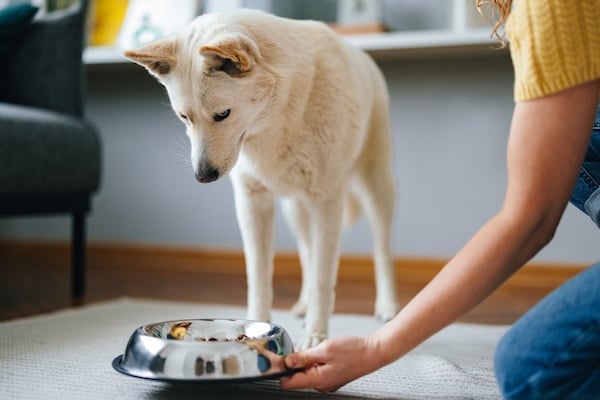
Using the “wait” cue at mealtime can help your pup learn good table manners. It helps keep meals calm and prevents your dog from rushing the bowl.
Teaching wait at breakfast and dinner is similar to doorway training. Fill your dog’s bowl and hold it at waist height. Tell your dog to wait while slowly lowering the bowl. If they move toward it before you’ve given them the release cue, restart.
Once you’ve successfully lowered the bowl to the floor, say your release cue and let them eat.
Waiting for a treat
Waiting patiently for a treat helps with impulse control—and saves your fingers from overly excited teeth. Start by holding a treat in a closed fist, then tell your dog to wait and slowly lower the treat to the ground. Reset as many times as necessary until your dog is calm.
Once the treat is on the ground, silently count for 2-3 seconds before giving the release cue.
Want to add difficulty? Increase the duration or the value of the treat and practice until your pup is a pro!
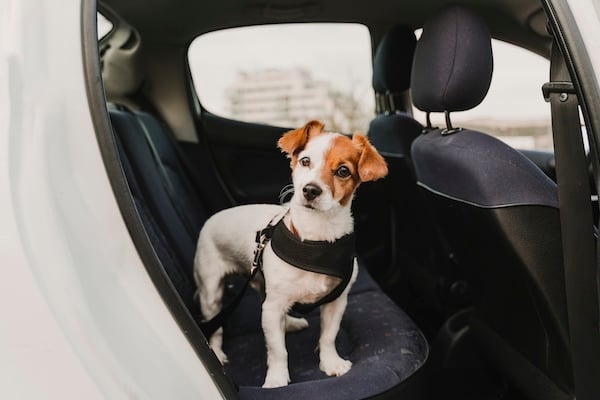
Waiting in the car
“Always use ‘wait’ when getting out of the car,” says Dugan. “Your dog doesn’t know the difference between being parked in an empty parking lot or on the shoulder of a major road.”
The trick is to teach your dog that an open car door is not an invitation. Start to open the car door while clearly saying “wait” to your pup. Then slowly open the door further, monitoring their response. If they start to move toward the door before you’ve given them the release cue, close it and start over.
Once your dog has fully settled into a “wait” position and remains still after the door is fully open, you can use your release cue to invite them out.
Eva Blanco via iStock
Other times to use “wait”
Some additional day-to-day uses of the “wait” cue include:
- Before you cross a street
- When you need to slow down on a walk
- When you’re unclipping a leash
- When you’re approaching an unknown object, animal, or person
Training Tips
Training your dog to wait takes time. Here are some additional tips from our experts to make the process smoother.
- Pick your release cue carefully. “If you are someone who says ‘okay’ all day long, maybe use ‘let’s go’ for your release instead,” explains Farah. That way, you won’t confuse your dog.
- Stay consistent. “Everyone in the household should use the same cue for both wait and release,” says Farah.
- Keep the focus on one cue at a time. Dugan suggests you don’t ask your pup to sit or “watch me” while performing “wait.” Giving a dog too many cues is more likely to confuse them, decreasing the likelihood that they’ll respond favorably.
- Use hand motions to reiterate the “wait” cue. Dugan suggests holding up your hand in a “stop” gesture in addition to the verbal “wait” cue.
- Gradually introduce “wait” in more places. “The more contexts, the stronger the understanding,” says Farah.
And if it’s still not working? Don’t worry, says Dugan: “All dogs can learn ‘wait.’ Some may just take longer than others. Practice patience and grace.”
If you’re getting stuck, consider getting help from a credentialed positive reinforcement trainer. They can spot where you might be going wrong, plus help you come up with a tailored approach that works for both you and your pup.