- Not a substitute for professional veterinary help.
When it comes to dog training, most people start with “sit,” “stay,” and “roll over.” These are useful—but they only work if your dog is paying attention. That’s why many trainers prioritize a “watch me” cue.
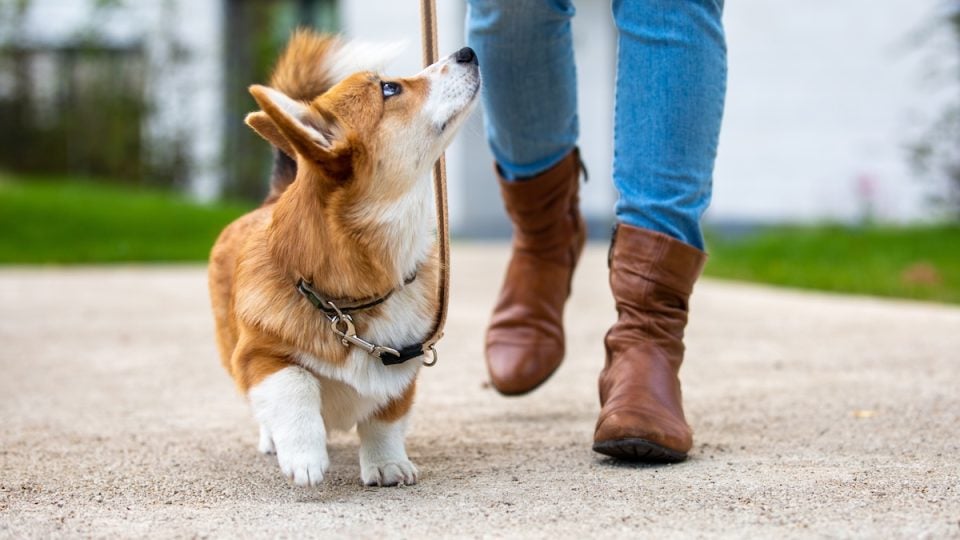
“Watch me” directs your dog’s attention to you until you release them, and it can help with everything from curious puppies to distracted adolescents to reactive adult dogs.
“Dogs can really only focus on one thing at a time,” explains Mary Van Kriedt, a CCTA/CCDT Certified Positive Reinforcement Dog Trainer and the founder of FreeRun Leashes. “If a dog is calmly focused on me, they cannot stay visually locked onto a trigger in the distance or across the street.”
The good news is that “watch me” is relatively easy to learn. Even better, you and your dog can learn it through simple games. Here’s what to do.
How To Teach a Dog “Watch Me”
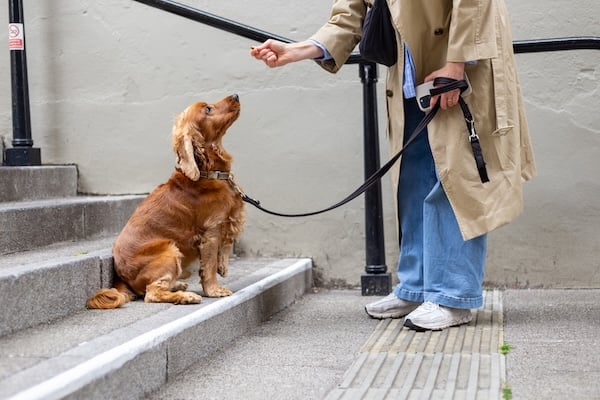
The strategy to teach “watch me” is simple: reward your dog for shifting their attention from the environment back to you.
One of Van Kriedt’s favorite methods for teaching “watch me” is the Up/Down Game. Here’s how to play:
- Find a quiet spot with few distractions.
- Drop a treat on the ground between your feet and let your dog find it.
- When your pup finishes the treat and looks back up at you, say “yes!” and drop another treat.
- Once your dog is consistently looking up at you after retrieving the treat, add the cue “watch me” before they lift their head.
Once your dog has the process down in a quiet space, start to add distractions slowly. Van Kriedt suggests having another person walk through the room or drop an item on the floor.
If your dog looks at you instead of at the distraction, reward them! If they don’t, try going back to a distraction-free training environment and continue to work on the core process.
SolStock via iStock
Training Tips
Teaching a dog “watch me” is straightforward, but building a reliable response takes practice. These tips can help you strengthen the behavior, keep training sessions productive, and set your dog up for long-term success.
Increase distractions slowly
“One of the biggest troubleshooting tips I give owners is not to rush the process,” says Van Kriedt. “If a dog cannot focus in a quiet room, they are not ready for bigger distractions yet. I encourage people to lower the difficulty, reward quickly, and keep sessions short and successful.”
Also be sure you’re using high-value treats that actually compete for your dog’s attention in more distracting situations. The more you’re asking of your dog, the better the reward should be.
Reward voluntary check-ins and engagement
Rewarding your dog for voluntary check-ins—even when you didn’t ask for the cue—is a great way to reinforce the behavior and speed up your training.
“If my dog voluntarily checks in with me on a walk, I will mark and reward that behavior even if I did not ask for it,” Van Kriedt says. “The cue simply gives me a way to ask for attention when I need it.”
Know that not all dogs like eye contact
As humans, we use direct eye contact to signal we’re paying attention. But dog communication is different, and for some pups, direct eye contact can signal aggression.
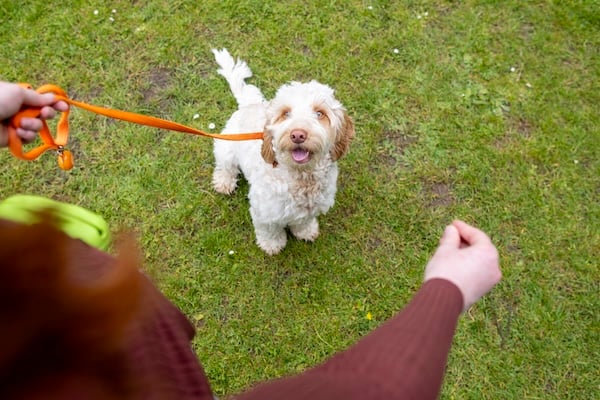
Some dogs, especially rescue dogs, may be uncomfortable staring you in the eyes. “For those dogs, I reward softer forms of engagement such as brief glances, turning toward me, or voluntary check-ins,” says Van Kriedt.
You can also try pattern games like the below, which often feel easier and less socially pressured than direct eye contact exercises, Van Kriedt says.
SolStock via iStock
Games To Practice “Watch Me”
Games are a great way to reinforce your “watch me” cue, both for puppies with short attention spans and dogs who struggle with eye contact. Here’s what to practice.
The 1-2-3 Game
Count to three out loud. On three, give your dog a treat by holding it between your legs or by your hip. This game helps to encourage your pup to check in with you, as they know that a treat is always coming on the count of three.
Treat Scatter Game
Toss a handful of treats or kibble on the ground. Hold your dog back or tell them to wait. When they look at you, release them to clean up the treats. Even without an accompanying cue, scattering treats is a great way to distract a dog from a stressful situation.
The Nose-to-Eye Game
Hold a treat at your dog’s nose, then move it in a straight line up to your forehead while saying the words “watch me.” When your dog makes eye contact, retrace the line to give them the treat.
Ultimately, the method you use for how to teach your dog “watch me” matters less than the outcomes.
“At the end of the day, ‘watch me’ is about building trust, communication, and the kind of connection that helps dogs feel safe, understood, and excited to move through life alongside us,” says Van Kriedt.
When To Use Watch Me
Once your dog knows “watch me,” you’ll find yourself using it in all kinds of situations. Some of the handiest times to use “watch me” include:
- When approaching another dog during a walk
- When seeing squirrels, birds, or other wildlife outside
- When your dog starts to fixate on a trigger
- Before crossing busy streets
- While moving through crowded environments
- Before greeting people or other dogs
- Before giving another cue to ensure you have your dog’s focus
In each of these situations, “watch me” turns your dog’s focus onto you. It teaches your dog to check in with you before making decisions, giving you the opportunity to guide their next move.
Getting Help
Having trouble with “watch me” or other basic cues? Consider reaching out to a positive reinforcement trainer, who can offer advice on where communications are breaking down and a comprehensive training plan to get them back on track. Best of all, they can offer strategies that are tailored to your and your pup’s needs, so you can get the help that works for you.