- Not a substitute for professional veterinary help.
Once your dog has mastered the basics, trick training can feel like extra—after all, “high five” probably won’t come in handy the same way “sit” will. But there’s a lot to love about trick training, and some real, tangible benefits.
“While some behaviors are naturally more useful in real-world situations, teaching tricks offers valuable opportunities for enrichment, engagement, and deeper communication with your dog,” says Yvonne Feeney, a certified dog trainer at Anything Is Pawzible.
According to Lynn Brown, a certified dog trainer and behavior consultant in the Bay Area, tricks can help with behavior, too. For instance, teaching a fearful dog to “catch” treats, toys, or other objects can be a great way for them to interact with new people without being touched, she says.
Regardless of what’s led you to trick training, we’re here to help. In this guide, we’ll cover 18 of the most popular tricks, offering tips and advice along the way.

Dog Trick Training 101
Many dog tricks build off the foundation of basic obedience cues, so teaching your pup a few of the essentials is a great place to start. For instance, a dog needs to learn “down” before they can “roll over.” Once you have the foundations down, you can progress to these 18 tricks.
1. Touch
A “touch” teaches your dog to tap their nose to your hand—think of it as a “boop” on cue. This easy trick is a great way to capture your dog’s attention and move them in a preferred direction.
To begin, place your outstretched palm a few inches from your dog’s nose to spark their curiosity. As soon as they nudge your hand, mark the behavior with a “yes” or click and reward them. With practice, your dog will associate this cue with moving straight to your hand.
2. Kiss
Who doesn’t want more puppy kisses? While your dog likely shows plenty of affection on their own, this trick is a fun way to teach them to give you a smooch on cue.
When your dog naturally licks your face, mark the behavior and reward them. You can also put a small dab of peanut butter or other spreadable treat on your cheek to entice them. Continue to mark and reward the behavior, adding the cue once it becomes solidified—and enjoy many extra kisses along the way.
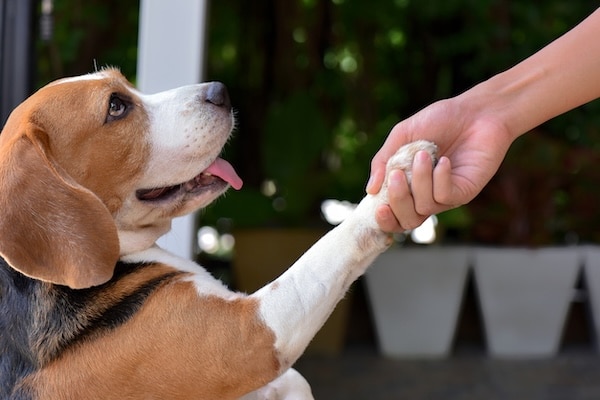
3. Shake/paw
Teaching your dog to “shake” is an excellent way to have them greet guests. It can also help get them used to having their precious paws touched.
Start by holding out your hand, palm up, in front of your dog. When they paw at your hand, say “yes” or click and give a treat. Gradually have them keep their paw on your hand longer, and then add the cue “shake” or “paw” when they do this consistently.
undefined undefined via iStock
4. High five
If your dog excels at “shake,” then learning “high five” will be a piece of cake. While the former trick requires your hand to be held low, palm up, the latter requires moving your hand higher for a slapping (or high-five) motion.
Training your dog to learn this trick is very similar: reward your pup for touching their paw to your hand, and eventually add a verbal cue to name the behavior. Soon, your intelligent canine will know how to high-five for a job well done.
5. Wave
Once your dog reliably understands cues like “shake” or “high five,” begin holding your hand slightly out of reach. Reward your pup when they lift their paw without touching your palm, which should look like a waving motion.
Introducing a verbal cue like “wave” or even “hello” marks this behavior as an adorable greeting.
6. Catch
Catching a treat or toy mid-air is a fun, confidence-building trick that your dog will be thrilled to learn. Start by getting your dog comfortable taking treats or toys gently from your hand, then toss them from a short distance away.
Over time, add a verbal cue and increase the height and distance of the toss as your dog improves.
7. Hug
Teaching your dog “hug” is a sweet way to build trust and connection. Physical affection has mutual benefits for both dogs and people, including reduced levels of stress and the release of oxytocin, a feel-good hormone.
To teach this trick, sit or kneel in front of your pup and gently guide one paw onto your shoulder. Reward this behavior with praise and treats until, over time, they learn that the “hug” cue invites a cuddly response.
8. Spin
This trick looks impressive, but it’s actually quite easy to teach. Hold a treat just above your pet’s nose and then make a large circular motion with your hand. Chances are, your curious, treat-loving dog will follow.
Once your dog has been lured into doing a 360-degree spin, mark the behavior and give them the treat. Gradually reduce your use of the hand signal once they’ve got the motion down pat.
9. Paws up
Training your dog to place their paws up on an elevated surface can boost confidence and make for a great photo op. It’s also a useful management strategy if you’re walking a reactive dog and need to block their view from a trigger.
To start, hold a treat above a couch cushion, a tree stump, or other elevated platform, motivating your dog to put their paws on top of it. As soon as they touch the surface, mark the behavior, give them the treat, and eventually add a verbal cue.
10. Jump
To train your dog to jump, start with a small obstacle placed low to the ground. Hold a treat on the other side and encourage your dog to step over it. Reward the behavior the moment they step over the obstacle, and safely increase the obstacle’s height for a trick that supports enrichment and exercise.
Pro-Tip: Always be mindful of hard surfaces, and adjust the height slowly and reasonably to keep your dog safe. If your dog has back issues, it’s best to skip this trick.
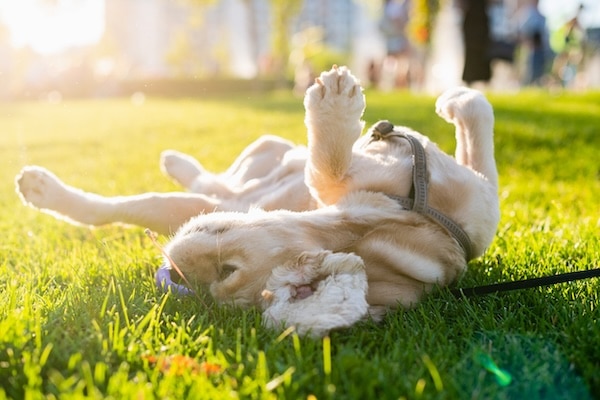
11. Roll over
Teaching your dog to roll over provides an exciting challenge. First, cue your dog into a “down” and encourage them to roll to their other side to reach a toy or treat.
This intermediate trick requires your dog to feel comfortable flopping onto their side and then back, which can be useful in moments where you might need to inspect your dog’s belly.
O_Lypa via iStock
12. Play dead
When your dog is comfortable lying on their back, add dramatic flair by teaching them to play dead. Hold a treat near their nose when they’re lying down, and gently move it toward their shoulder. Your pup’s head should follow, moving them onto their back.
Repeat this pattern and add a verbal cue to achieve this party trick.
13. Middle
Call your dog to stand beside you and then lure them between your legs using a toy or treat. They can enter this position either from the side or in front of you (going in and out).
This trick can be especially helpful when you and your dog are in crowded spaces or when you need to block their vision from something that will upset them.
14. Weave
Impress friends and family with the coolest trick around. Teaching your dog to weave between your legs is a great way to add in a little low-impact exercise and hone their coordination skills.
An easy way to teach this trick is to lure your dog in and out of your legs using a high-value treat or their favorite reward. If they know “touch” already, you can also use this cue to direct their movement.
15. Back up
“Back up” is a simple and effective cue to have up your sleeve, coming in handy when asking your dog to move away from an open door, for example. It also helps teach your pup hind-end awareness.
To teach this cue, stand in front of your dog and gently take a step toward them to prompt a step back. Or create a tunnel of sorts, stacking up a wall of cushions next to the wall or couch. Next, toss a treat inside the path so your pup is forced to back up on their own.
16. Crawl
This cue encourages your dog to move in a low, army-style crawl, engaging the hips, shoulders, and core muscles.
To begin teaching this trick, ask your dog to lie down. Slowly move a treat along the ground in front of them, urging them to move forward while staying low. As soon as they shift forward, mark the behavior and reward them.
Continue reinforcing these small movements, gradually building distance.
17. Take a bow
Your dog will be ready to take center stage with this trick! Hold a treat near your dog’s nose and slowly move it down toward their chest. As they follow the treat, they should lower their front end while keeping their rear end up. The moment their elbows reach the floor, mark the behavior and reward it.
Dogs also naturally bow to invite play, so you can also teach this trick by capturing the behavior and putting it on cue.
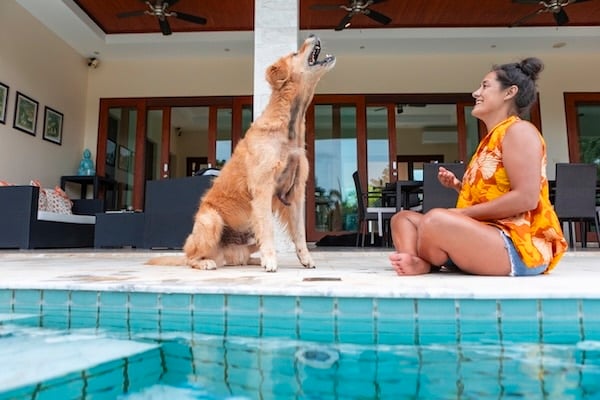
18. Speak
Teaching your dog to “speak” can provide a fun outlet for them to bark. Start by observing when your dog naturally barks, then pair that behavior with a consistent verbal cue and/or hand signal. As soon as they bark, mark the moment and reward them so they begin to associate the cue with the action.
Pro-tip: Reinforcing appropriate moments to bark and teaching a corresponding “quiet” cue can also help curb excessive barking.
juan Aizpuru via iStock
Tips & Reminders
Training a dog isn’t a linear journey. There will be plenty of ups and downs. Whether you’re teaching basic cues at home or working on more advanced tricks, patience and positive reinforcement go a long way.
If you start to feel stuck, working with a certified trainer can provide guidance and support. These five tips are also helpful to keep in mind.
Tip 1: Be clear and precise
“Whether you’re teaching a trick or a foundational behavior, the most important part of training is delivering clear, timely feedback,” says Feeney. “Using a positive marker to identify the exact moment your dog gets it right is essential, and it’s the very first skill we teach a dog to understand.”
An upbeat “yes,” “good,” or “nice” can all work as verbal markers. A click from a clicker also works the same way.
The most important part, as Feeney notes, is getting your timing right. As soon as your pup performs the behavior, mark it and immediately (within 2-3 seconds) deliver the reward. Avoid marking too early or too late, as it can cause confusion.
Tip 2: Keep sessions short
Aim for five-minute training intervals throughout the day. Puppies in particular have naturally short attention spans, so it’s important to keep an eye out for signs that they’re losing interest. Try to stop before this happens, ending on a high note.
It’s better to have your dog happy and wanting more than to have them bored and frustrated.
Tip 3: Break down complex tricks
If your dog is having trouble with a trick, break it down so they can be successful. Focus on one step at a time, rewarding progress along the way. As your dog masters each step, gradually build up to the full behavior.
Tip 4: Use the right rewards
For treat-motivated dogs, pair the type of treat with the difficulty of the task. For example, you might use kibble or biscuits for easier asks, like reinforcing tricks they already know.
But you’ll likely need to level up the treats to something more exciting, like jerky or boiled chicken, when working on more complex behaviors.
Remember, too, that not all dogs are motivated by food. Some handler-focused breeds will find praise more rewarding, while high-drive dogs might rather work for toys. Experiment to find out which your dog likes best.
Tip 5: Have fun!
Tricks are supposed to be fun for both you and your pup. If training becomes a stressful event, you both will be less motivated to continue working on new tricks.
When you or your dog are feeling frustrated or low energy, hit pause and do something else together to boost morale—like a game of tug or hide-and-seek. You can always start trick training again with your dog when you’re both up for it again.
Remember to train the dog in front of you, go at your own pace, and enjoy yourselves along the way!