- This post contains affiliate links. Read more here.
- Not a substitute for professional veterinary help.
One of the hardest parts of adopting a new puppy is leaving them at home. In an ideal world, you’d get to be together all the time while they’re learning the ropes. Unfortunately, though, most of us have commitments. And while your friends may not mind if you cancel plans for a little while, your boss probably won’t be quite as understanding. You’ll need to figure out what to do with your puppy while you’re at work.
By the time your puppy reaches the typical adoption age of 8 weeks, they can usually stay home alone for up to two hours. The time alone increases as they grow—but it can present a challenge for the first few months.

The good news is that working full time doesn’t mean you can’t adopt a puppy. But it does mean that you’ll need a plan. By carefully scheduling your dog’s day-to-day and getting a little creative, you can help ensure your pup is safe and happy while you’re away. Here’s how to do it.
Potty Breaks
Frequent potty breaks are essential for young dogs. “A very young puppy simply cannot maintain an adult working schedule without toilet breaks,” says Ali Smith, a certified trainer, canine behavior consultant, and founder of Rebarkable.
To help your pup stay consistent in their potty training schedule while you’re at work, there are a few things you can do, like:
- Scheduling your work breaks around your pup’s potty breaks if you work from home or if you work close by and can quickly pop back home.
- Enlisting the help of family members, friends, or neighbors to let your puppy out.
- Hiring a pet sitter to drop in and let your puppy out for potty breaks.
- Setting up an indoor toilet area with pee pads or turf, though Smith warns you’ll still need to teach your pup where to go potty and how to use the pee pads.
Exercise
Young puppies should exercise in short bursts, starting at just 10-15 minutes per day and increasing as they get older. “We don’t need to keep them busy for every waking second,” says Smith. “The goal is a sensible balance of exercise, interaction, enrichment and proper naps.”
She explains that a pup’s exercise needs can typically be met between work shifts, with a short walk or play session in the morning and another one in the evening. As your pup gets older and needs more activity, you can also book someone to come and walk your dog or play with them mid-day.
ti-ja via iStock
Mental Enrichment
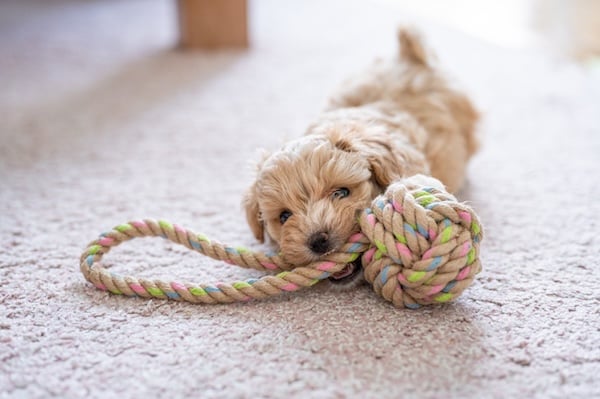
Mental enrichment is just as important as physical exercise for your pup’s development and happiness. Leaving some enrichment items out—like snuffle mats, lick mats, and stuffed KONGs—can help entertain your pup’s big brain while you’re at work.
Smith warns, however, that you’ll want to monitor your pup with these items in the beginning. “The first few times your puppy gets any chew or enrichment item, they absolutely need to be supervised,” she says. “You need to know how your individual puppy uses it before deciding it’s safe to leave with them alone.”
Daycare
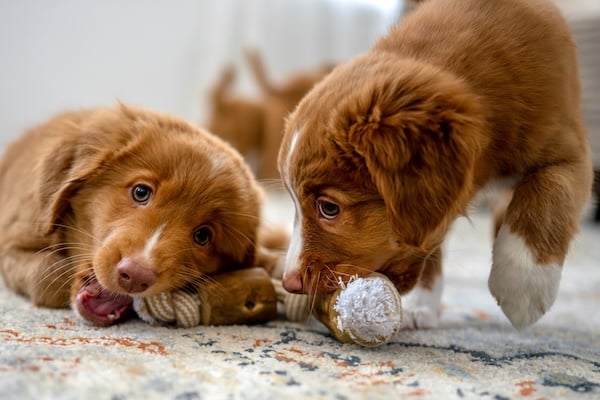
Once your puppy is old enough, attending daycare might be a great way for them to get exercise, daily care, and socialization all in one. Some daycares even include training programs so your pup can work on their foundational skills while you’re at work.
Smith recommends looking for daycares that are attuned to a dog’s individual preferences for play and socialization—advocating for pups and stepping in when they need help creating space and taking breaks. She also advises that for puppies, who need a lot of sleep, the daycare should provide a quiet space that enforces naps.
If your puppy is too young, not fully vaccinated, or working through behavioral concerns that make daycare not an option, a pet sitter may be a better option. Some sitters offer daycare in their own home with a small group of other dogs, while others will drop in at your place and ensure your puppy gets the care they need while you’re at work.
VYCHEGZHANINA via iStock
Management
One of the most important parts of leaving a puppy home alone is managing their space to keep them safe, stress-free, and out of mischief. Even if you work from home, you’ll want to be strategic with where you set up your pup while you clock in for the day.
Smith recommends the following for a puppy-safe space:
- A secure playpen or gate to enclose a space/room
- An open crate or comfortable bed
- Waterproof flooring or a protective barrier
- A pet camera
Calming music and a white noise machine can also help create a soothing environment for your pup while you’re tending to your daily tasks.
Preventing Separation Anxiety
Throwing your puppy in the deep end with long absences right away can be counterproductive and lead to separation anxiety.
Smith cautions against expecting too much too quickly. “Think about it. They leave their mother, littermates, and everything familiar, arrive in a completely new home, and then their new person goes to work all day with no support from day one. That’s a huge ask,” she adds.
Smith recommends making the transition slowly: “Start with very short periods alone, build up gradually, and use help from family, neighbors, walkers, or sitters while the puppy is learning. Independence is a skill, and like every other puppy skill, it needs to be taught.”
Some things to avoid doing include:
- Leaving your puppy alone too long.
- Not doing any separation training before leaving them alone.
- Not saying goodbye—or dragging out your goodbyes.
- Showing frustration, anxiety, or anger (if they’ve had potty accidents or damaged anything).
- Not meeting your pup’s basic needs (food, water, potty) before you leave.
You might also consider hiring a pet sitter or dropping your pup off at daycare as part of your daily work routine. Enlisting the help of a professional trainer can also help teach your puppy that being alone is safe.
Feeling worried about your ability to manage? Smith notes that a puppy may simply not be the right fit for every family. If your schedule is exceptionally challenging, you might consider adopting an adolescent or adult dog instead, who would better suit your lifestyle.