- Not a substitute for professional veterinary help.
Teaching your dog to roll over may seem fun, but it takes more patience than most people realize!
If “sit” is one of the easiest cues to teach and recall is one of the hardest, “roll over” lands somewhere in the middle. This trick builds on cues your dog already knows—but it also asks them to give up their balance and expose their belly, which can feel unnatural.
Short sessions, consistent practice, and high-value rewards help your dog learn to successfully roll over. However, not every dog will take to this trick. Larger dogs, senior dogs, and dogs with joint or mobility issues may find the movement especially uncomfortable.
If your dog checks out, freezes, walks away, or makes themselves small, they’re telling you they aren’t interested, explains Nicole Kohanski, a dog behaviorist, trainer, and founder of Wiggle Butt Academy. It’s important to listen to that and move on.
Read on for a step-by-step approach to teaching roll over, what to do when your dog gets stuck, and what to try once they’ve got this trick down.
Did you know? A professional trainer can help take the stress out of training. Reach out to a local dog trainer for ongoing support and guidance.
Why a Warm-Up Session Helps Dogs Learn Better
According to Kohanski, luring is a useful way to prepare your dog to roll over. When you lure, you hold a treat at your dog’s nose and move it in the direction you want them to follow.
Before jumping into training, run through a couple of warm-up cues to get your dog used to the head movement since it doesn’t naturally happen on its own.
Kohanski recommends starting with a hand target (nose to palm touch) and a “down” cue. The hand target primes your dog to track hand movement, which directly transfers to following the lure. The down gets them into the starting position so you’re ready to go.
A few tips for setting up:
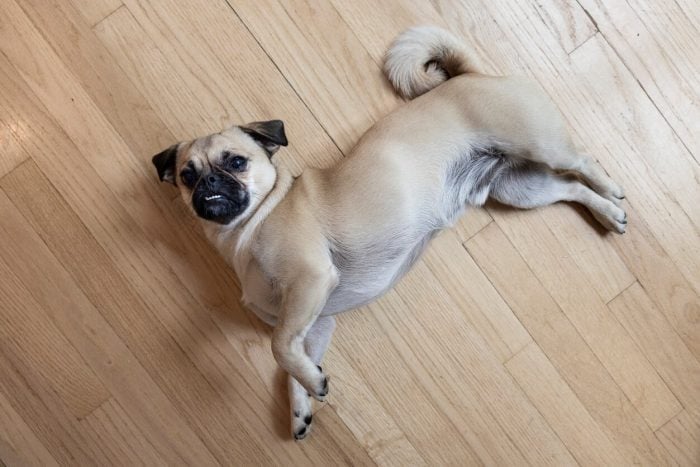
- Surface: Use a carpet, area rug, or yoga mat. Hardwood and tile make it harder for dogs to shift their weight and can make the movement feel unstable.
- Environment: Keep it quiet and calm so it’s easier for your dog to focus.
- Treats: Use soft training treats that your dog doesn’t get every day. Small treats are best for keeping your dog motivated without filling up their stomach.
- Reward rate: When learning something new, reward every successful attempt. If your dog misses three tries in a row, make the ask a little easier.
Teaching Roll Over in Six Steps
Kohanski and Chris Edge, force-free dog trainer and founder of K9Edge Dog Training, share these steps for teaching your dog to roll over:
- Ask for a “down”: Start with your dog in a relaxed down position. If they need a nudge, lure them down by holding a treat at their nose and slowly moving it toward the ground.
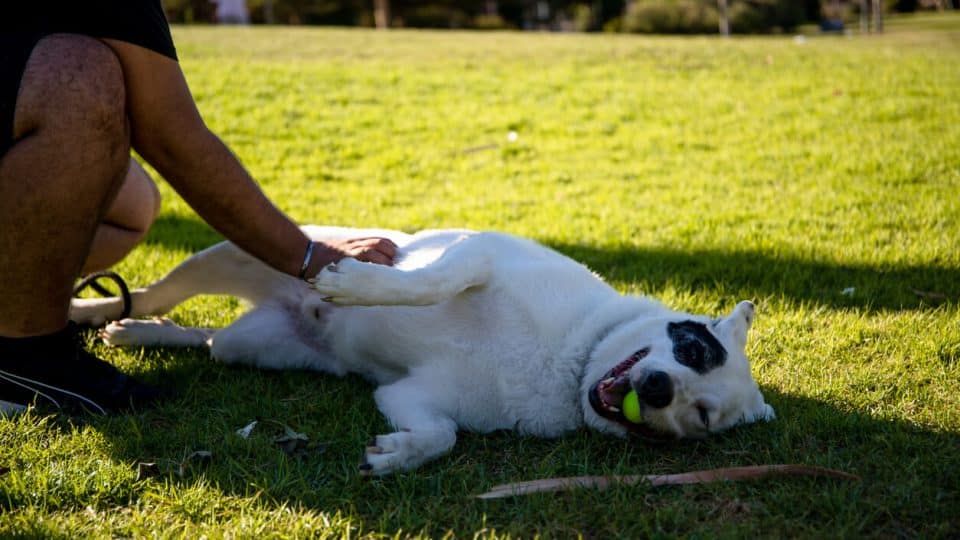
- Lure onto one side: Hold a treat at your dog’s nose and slowly move it toward their shoulder. As they follow, their weight will shift, and they’ll tip onto their side. Mark it (“yes!” or a click) and reward. Repeat until your dog does this easily.
- Lure onto their back: Once your dog is comfortable on their side, slowly move the treat up and over toward their other side. They’ll need to roll onto their back to follow it. Reward every attempt—even partial ones count!
- Complete the roll: Once your dog moves onto their back, guide the treat all the way to the other side so they complete the full roll. Place the treat close to the floor so they have to follow through to get it. Mark and reward the moment they finish.
- Add the verbal cue: Once your dog begins rolling over consistently, say “roll over” right before you begin the lure. Repeat until they start to connect the word to the movement.
- Fade the lure: Gradually reduce how much the treat guides the motion. Mimic the hand movement without a treat, rewarding from your other hand. When your dog is ready, you can fade the hand gesture and use just the verbal cue.
Use a clicker or marker for precision
A marker, either a clicker or a verbal cue, tells your dog the exact moment they did something right. Timing is everything in a trick like “roll over” where the behavior happens in stages.
The goal of a marker is to bridge the gap between the behavior and the reward so your dog doesn’t have to guessing what they’re being praised for. Use your marker consistently at each step and always follow with a treat to build precision.
Building fluency: Both sides, new surfaces, light distractions
Most dogs have a preferred direction for rolling. Kohanski recommends starting with whatever side feels most natural for your dog to make training more fun and successful. Once that direction is solid, you can introduce the other side using the same steps.
When your dog has the trick down at home, start practicing in new places. Edge suggests cycling through a few familiar cues first when moving to a new environment. This puts you and your dog into “training mode” and helps your dog recognize it’s time to roll over. Then run through the steps from the beginning.
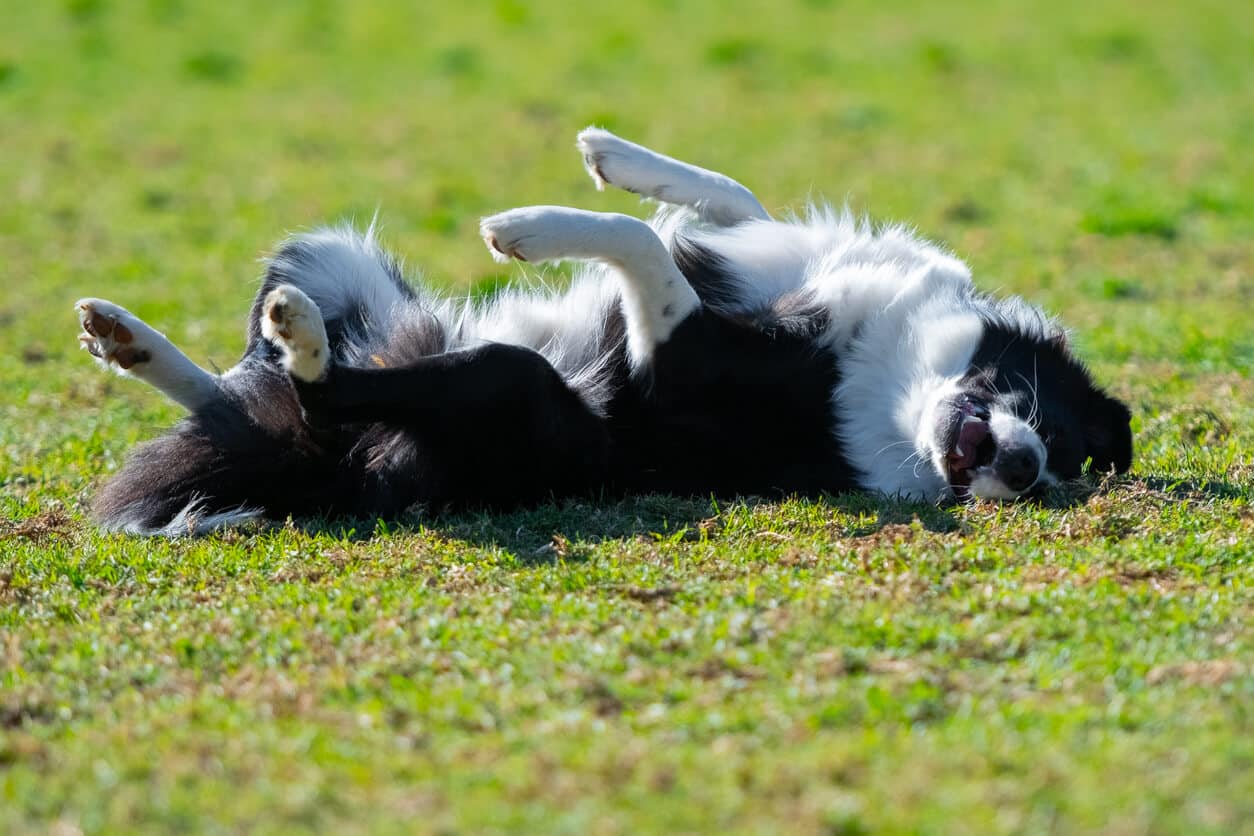
What’s a Realistic Training Schedule?
“Roll over” isn’t a one-session trick for most dogs.
Edge explains that smaller dogs and those with natural body confidence may pick it up within a couple of sessions. Larger dogs or those less comfortable with the movement may need several sessions over days or weeks. Some dogs may not get there at all, and that’s just fine!
The key is consistency over intensity. A few short sessions each day work better than one long session a week. For most dogs, a realistic training schedule looks like this:
- Session length: 5 minutes, a few times a day
- Early progress: Comfort in a “down” position, then rolling to the side
- Mid-stage progress: Consistently showing the belly
- Full behavior: Reliably rolling all the way over on cue in a familiar environment
- Generalization: Rolling over in new places and on different surfaces
Common Mistakes and Tips from a Professional
“Roll over” is one of the harder tricks to teach because it asks dogs to do something vulnerable and unnatural. If your dog has trouble with this trick, that’s very normal.
Here are the most common challenges and what you can do:
- Your dog sits up instead of rolling: The lure is probably moving too quickly or too far from their body. Slow down and keep the treat closer to their nose as you guide them.
- You’re moving too fast through steps: Only move to the next step when your dog consistently succeeds at the current one. If they miss the step, back up and try again.
- Treats aren’t exciting enough: Switch to something higher value, like small pieces of chicken, cheese, or your dog’s favorite treat.
- Slippery floor: Move to carpet or a yoga mat. Instability makes dogs reluctant to shift their weight.
- Inconsistent cues: Use the same hand motion and verbal cue every time. Changing things up mid-session confuses the learning process.
If your dog starts avoiding training or seems uncomfortable, stop the session. Edge recommends a simple “access check”: Hold out a treat and pay attention to any behavior from your dog. If they seem engaged and curious, keep going. If they ignore the treat, they may need a break.
Other Tricks to Learn
Once your dog learns to roll over, they may be ready for more fun tricks. Each new trick builds on the same foundation of small steps, clear markers, and rewards that help keep your dog motivated.
- Play dead: Starting from a “down,” lure your dog onto its side and pair it with a “Bang!” cue and a pointed finger gesture.
- Spin: Lure your dog in a full circle with a treat held at their nose. Once they’ve got it, add a verbal cue like “spin” or “twirl.”
- Shake: Hold a treat in your closed fist and wait for your dog to paw at your hand. When they do, mark it, open your hand, and offer a reward.
- Bow: Lure your dog’s nose toward the ground while keeping their back end up by sliding your hand under their belly to discourage them from lying all the way down.