- Not a substitute for professional veterinary help.
Dogs, like people, can get nervous—and when they do, it can be hard to know how to help. Anxiety is an automatic, deeply rooted reaction to real or perceived dangers. It’s not easy to just talk a pup out of being scared or nervous.
The best way to know how to calm an anxious dog is to understand the reason behind their behavior. Common dog fears include loud noises, strangers, new situations, and separation from their humans—but every pup is unique. Look for signs of stress, like pacing, barking, drooling, peeing indoors, tucking tails, flattening ears, whale eyeing, and shaking. Watch for self-soothing behaviors too, like licking and chewing.

The good news is that with proper support, anxious dogs can learn to feel safe, recover from scary events faster, and even gain confidence. To learn more, we sought the expertise of Alexandra Bassett, certified dog trainer (CPDT-KA) and founder of DogSavvy. In this guide, we’ll show you how to recognize fear in your dog, respond appropriately, and build long-term strategies to help your pup feel secure in various situations.
1. Identify and Remove Triggers if Possible
The first step to calming an anxious dog is understanding their triggers and then helping them avoid them if possible. “Prevention is key,” says Bassett. “The more a dog rehearses anxiety-driven behaviors, the more those behaviors become habits.” She recommends managing your environment as much as possible until you have a good plan in place to help your dog better respond to their triggers.
Common triggers that might make a dog nervous include:
- Unfamiliar visitors: house guests, the mail carrier, or delivery people at the door
- Other animals: dogs of unfamiliar sizes/breeds, livestock, wildlife
- Unfamiliar environments: new neighborhoods, parks, dog-friendly stores
- Car rides: motion sickness, unfamiliar smells, fear of being confined
Some triggers simply can’t be avoided, including:
- Loud noises: fireworks and storms
- Traffic: garbage trucks, bus brakes, car backfires, sirens
- Routine visits: vet visits, grooming appointments
- Fast-moving objects: skateboards, bicycles, joggers, fast cars
- Strangers with “unusual” appearances: large hats, hoodies, bulky bags, carrying umbrellas
In these situations, desensitization and counterconditioning are key. Gradual exposure to your dog’s triggers, starting at a place where they’re under threshold, can help them gain confidence. Counterconditioning (pairing a stressful experience with a positive one) also helps your dog to associate triggers with good outcomes.
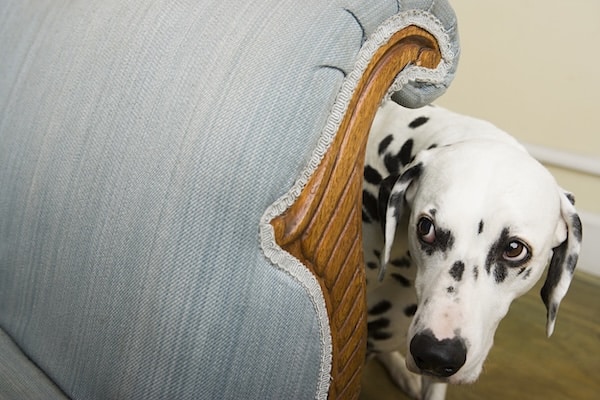
Image Source via iStock
2. Adjust Your Voice and Body Language
Dogs can read—and even mimic—human body language and emotions. If you’re excited about something, your dog is likely to reflect that excitement. The same goes for anxiety. When you respond to a situation with nervousness or fear, your dog can pick up on those cues.
To calm an anxious dog out in the world or on a walk, it’s all in how you present yourself. “Your body language, voice, and actions can make a world of difference in helping an anxious dog feel safe,” says Bassett. She recommends employing body language that soothes your pup (no matter how you may be feeling inside):
- Keep hand gestures slow and minimal—no sudden or exaggerated movements
- Use a calm, low, and soothing voice rather than loud or high-pitched tones
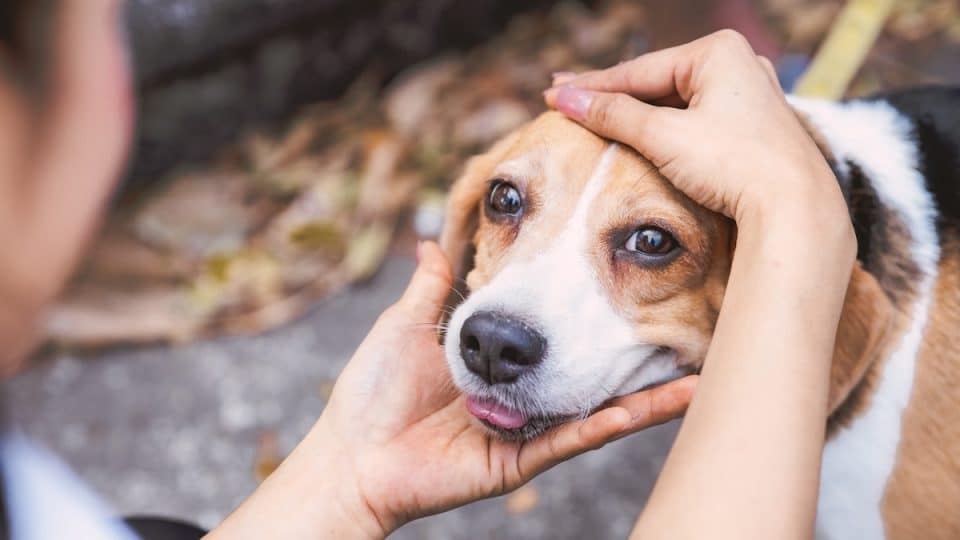
- Approach an anxious pup with your body turned sideways
- Practice non-confrontational body language—avoid looming, direct staring, or blocking escape routes
- Give space—avoid over-handling, or hugging, which can make a nervous dog feel trapped or uncomfortable
- Offer comfort if your dog seeks it out by climbing into your lap or hiding under your arm
3. Create a Safe Space
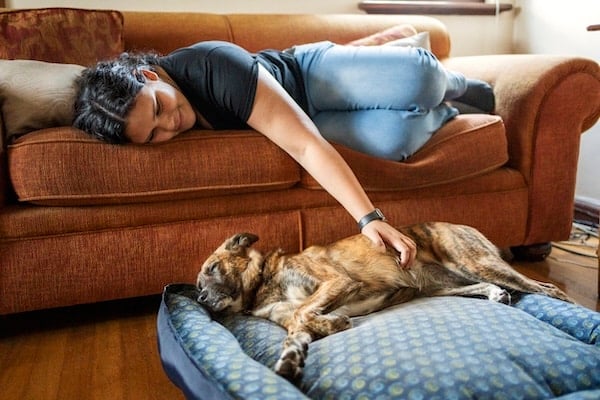
“A safe space at home gives a nervous dog a retreat where they can decompress without pressure,” says Bassett. “This area should be off-limits to visitors and children unless the dog initiates interaction.”
At home, your dog’s safe spot might be a cozy bed or crate in a quiet area of the home. It’s also possible, says Bassett, to create safety for your pup elsewhere. That might mean ensuring your pup has access to toys or bedding that smell like home. This is particularly helpful if your pup is spending time with a dog sitter or at a boarding facility.
What if you’re not home?
To calm an anxious dog in public, Bassett says that dog parents can create safety outside the home, too. It just requires being aware and agile. “Creating a safe space on the go requires being aware of your environment and what your dog can handle, having a backup plan like retreating when necessary or waiting out triggers, and making exposures short and sweet where a dog is able to cope and remain calm.”
4. Increase Enrichment & Exercise
Physical and mental enrichment activities are an important part of building a nervous dog’s confidence and reducing anxiety. Exercise lets a dog get out their nervous energy, while mental enrichment stimulates their brains and fosters positive associations with new places, animals, and experiences.
Exercise
Good exercise options for anxious dogs include calm strolls in quiet areas, chill games of fetch, swimming, or sniffy walks. Avoid busy or particularly noisy areas, which can be triggering to a nervous pup. The key, says Bassett, is to avoid overstimulation. “Exercise should relax the dog, not wind them up further,” she says.
Games and sports
In a 2022 study by Tufts University, researchers found that participation in dog sports was one of the best ways to reduce anxiety in pups. Dog sports like agility training, dock diving, and scent work can help build confidence and trust in your pup, while also slowly exposing them to scary things while doing something they love. “Be intentional about exposure,” says Bassett. “Control who your dog meets, what they experience, where and when it happens, and for how long—always below their threshold.”
If your dog is too scared to join a group, consider setting up an agility or nose work course in your backyard, or play other confidence-boosting games together.
Enrichment
Bassett recommends puzzle toys, scent games, dog-safe chews, and training games. Snuffle and lick mats also give scared dogs something to focus on and can help distract them from their fear or anxiety.
NickyLloyd via iStock
5. Incorporate Calming Aids
Calming aids can help anxious dogs cope in stressful moments. These tools aren’t a cure on their own, but they can support your dog while you work on addressing the underlying issue. Some helpful options include:
-
Calming wraps: Products like the Thundershirt apply gentle pressure, similar to swaddling, which many dogs find reassuring.
-
Soothing sounds: White noise, classical music, or specialized dog relaxation tracks can help mask triggering noises.
-
Pheremones: Diffusers (like Adaptil), collars, and sprays could be helpful items in your toolkit to help calm your anxious dog.
- Supplements: Calming treats with L-theanine and CBD products are other aids to try (always check with your vet first).
- Medicine: Working with a vet behaviorist can also determine whether or not your pup is a good candidate for anxiety meds.
How To Get Help
“If your dog’s anxiety is persistent, escalating, or affecting daily life, it’s time to bring in professional help,” says Bassett. “The earlier you address anxiety, the better the outcome. With consistency, patience, and the right strategies, even the most nervous dogs can gain confidence and learn to feel safe in a variety of situations.”
She recommends two dog professionals to help with anxiety: a trainer and a veterinarian. “A certified dog trainer or behavior consultant can create a desensitization and counterconditioning plan tailored to your dog’s triggers,” Bassett explains. “A veterinarian can rule out medical causes for anxiety and may recommend anti-anxiety medications to support training.”
Remember, fear and anxiety aren’t something to be corrected. They’re normal, instinctive responses, and your dog doesn’t want to be scared any more than you do. With patience, compassion, and the right strategies, you can learn how to calm an anxious dog and help your pup feel safe, supported, and confident in a variety of situations.