- This post contains affiliate links. Read more here.
- Not a substitute for professional veterinary help.
Dog car anxiety can have a lot of different culprits. For some pups, it’s the movement that makes them nauseous. Other dogs don’t like the sound and vibration of the engine. Still others have developed negative associations with the car—seeing it as the dreaded thing that takes them to the vet.
Whatever the reason, in most cases, a dog’s car anxiety can be overcome with patience and training. How long it takes, though, will depend on your individual dog, says Rachelle Trafton, CPDT-KA, a certified dog trainer on Rover, as many factors come into play, like your dog’s age, how nervous they are to start with, and the root cause behind their anxiety.

In this guide, we cover what dog car anxiety looks like, common causes, and how to work toward creating more positive car travel experiences for your pup.
Symptoms of Dog Car Anxiety
Car anxiety can manifest in a number of different ways, depending on how severe a dog’s fear is.
- Mild symptoms include typical signs of dog stress like yawning, lip licking, panting, or drooling.
- Dogs with moderate symptoms might also lick their paws, fidget, or vocalize with barks, whining, or whimpering.
- Dogs with severe car anxiety will often outright refuse to get into the car. Others might get in but clearly be looking for a way out. They might start trembling or shivering, vomit, urinate, or defecate in the vehicle.
Causes of Dog Car Anxiety
It’s a lot easier to help your dog with their car anxiety if you know exactly what about the car ride is triggering their fear. Here are the most common causes, plus some specific tips on how to help your pup feel better, in addition to the counterconditioning training steps below.
Motion sickness or nausea
Car anxiety is different from motion sickness. However, dog motion sickness can cause car anxiety. Motion sickness is usually the result of an ear imbalance. Puppies often experience carsickness because their ears, which help them regulate balance, aren’t fully developed yet.
If your dog drools unusually, vomits, or is especially lethargic in the car, that’s a good sign that nausea might be at work.
How to help: Your first stop is your vet, who can help you find a prescription or over-the-counter anti-nausea medication for your dog. If the motion sickness is particularly bad and regularly induces vomiting, limit food before car trips.
General fear
Anxiety can be general—if your dog is fearful about a lot of things, the car might just happen to be one of them. It’s a small, confining space, makes strange noises (or traffic does), and moves in ways that make them feel unstable. This distrust can be exacerbated if your dog is experiencing a fear period.
How to help: For anxious dogs who aren’t suffering from motion sickness, snack-filled puzzle toys are a great way to keep them distracted and foster positive associations with the car. If your dog tends to slide around when the car is in motion and it freaks them out, give them more solid footing with a dog bed or blanket, or a travel crate or car seat.
Previous trauma or negative associations
A dog may have trauma around riding in a car, or they may only have ever been in a car traveling to non-fun things like the vet. These experiences can lead a dog to associate the car with the “bad” destination and become anxious anticipating it.
How to help: Work on pairing the car with positive experiences. While the car is stationary in your driveway, hide treats inside and open the doors and let them sniff and explore on their own terms. Eventually, you can work your way up to sitting in the car with them, while they eat snacks or work on a puzzle toy.
Claustrophobia
Some dogs don’t like small spaces or restraint. If you’ve noticed your dog has trouble in similarly enclosed spaces, like an elevator or crate, claustrophobia might be at the root of their car anxiety.
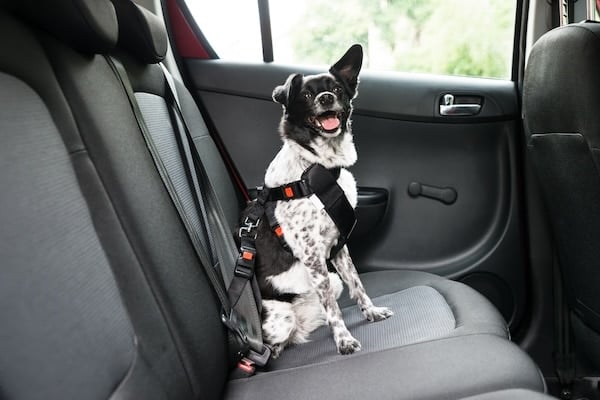
How to help: For some pups, the solution is to swap a car crate for an open carrier with a dog seat belt instead—but other dogs need more help.

CBCK-Christine via iStock
Counterconditioning for Dog Car Anxiety
No matter the reason for your dog’s car anxiety, you can help them begin to form a positive association to your vehicle before even starting the engine with counterconditioning. This process links positive things (like a treat reward) with a thing your dog perceives negatively (the car).
Here’s how you’ll break it down.
Training in 7 steps
- Leash your dog and walk towards the car, rewarding your dog with a small, high-value treat for approaching. Repeat until your dog is happy to approach the car.
- Approach the car, open the door, and reward. Walk away. Repeat several times. When your dog is able to stand comfortably next to the car with the door open, you can move on to the next step.
- Encourage your dog to investigate the car on their own. Place a high-value treat inside and speak happily to them while they search. Start with the treats near the door and, as your dog becomes bolder, encourage them to put more of their body inside to find the reward.
- Encourage your dog to enter the car and close the door for one second, then open the door and reward your dog, allowing them to exit if they wish. Repeat until you can close the door for 30 seconds to one minute without your dog becoming concerned.
- Encourage your dog to enter the car, then close the door and get in the front seat, rewarding your dog for calm behavior once you’re fully seated. When they’re able to stay calm, try starting the car, rewarding your pup, then turning off the car and allowing your dog to exit.
- Drive very brief distances (e.g., a block) before stopping the car, rewarding your dog, and allowing them to exit. Gradually increase the distances if your dog is relaxed.
- Take your dog for frequent short rides to fun destinations, like a dog park, a coffee shop with dog treats, or their favorite spot for a decompression walk.
AndreyPopov via iStock
Pre-Car Travel Tips
Before you head out on a drive with your dog, there are a few things you can do to prep ahead and make the experience more comfortable for everyone.
Increase your dog’s exercise
Exercising your dog ahead of a car ride can be helpful in taking the edge off of anxiety, both by making them tired so they’re ready to nap in the car and by stimulating endorphins (the feel-good hormones).
Use long-lasting treats and distractions
Long-lasting chews, lick mats, and treat puzzles are popular solutions for anxious dogs who need distracting toys. Freezing the toy before your journey will make it last longer. There are even treats with calming ingredients that you can incorporate into a puzzle toy or feed separately.
Try calming gear
Physically calming items can be helpful for some anxious dogs during car rides as well. The pressure created by a ThunderShirt may help decrease your dog’s anxiety, as can calming pheromones. Or try a heartbeat toy—an especially popular pick for puppies and young dogs.
Create a comfortable environment
Many dogs are more comfortable facing the front of the car instead of looking out the side or back windows. Try adjusting your pup’s position, moving them from the cargo area to the back seat, toward the middle where they can see forward. (Experts don’t recommend seating your dog in the front, as it’s the least safe place for your dog in the car.)
Upgrading your dog’s travel arrangements with a bed-style car carrier or cozier spot with better footing may also work to help your dog feel more secure in the car. And don’t forget to keep the temperature comfortable and cool (or warm on colder days).
Some pet parents also report that soft music is helpful for soothing their pups. Try these mini Bluetooth speakers pre-loaded with music just for your dog.
Explore anxiety medication
Even if your dog doesn’t experience motion sickness, medical intervention can help in severe cases. Your vet might recommend anti-anxiety medications that you can offer before car trips to make them more manageable.
How a Trainer Can Help
If you’re getting stuck, working with an experienced local dog trainer is a great resource. In the first session, your trainer will likely dig deep to get more information, so they can better set you up with a training plan to be successful, as Trafton notes, referencing her own protocols.
“Initially I will ask what their pup’s background is like, if they have any medical issues or traumatic incidents in the past,” she says. That can be a jumping off point to investigate medical intervention with a veterinarian. “Additionally, I will try to find what the trigger of the car is—is it the sound, the movement, car sickness, the size, so on.”
As sessions progress, a trainer is particularly helpful when you’re working on counterconditioning—offering treats and engagement at levels of exposure that don’t cause your dog to go over their threshold.
Remember, though, behavior change takes time. The most important thing is to be patient. Don’t be discouraged if things don’t progress as quickly as you might assume—that’s why having a trainer support you every step of the way is key!