- Not a substitute for professional veterinary help.
As pet parents, one of the most impactful things we can do to improve our relationship with our pups is taking the time to learn about why our dogs think and behave in the ways that they do.
Dog psychology is the study of how dogs perceive and interact with the world. It explores their natural instincts, behaviors, and reactions to the things around them. It helps us get a better sense of the inner workings of our dogs’ minds and how they’ve adapted to navigate life with us.

“Understanding that dogs are emotional learners helps pet parents recognize the importance of patience, consistency, and positive reinforcement. It also makes it easier to identify trainers who address the underlying cause of a behavior rather than simply trying to stop the behavior itself,” says Maxine Bauer, CPDT-KA, founder of The BauWau Haus and trainer on Rover. “This approach leads to more lasting results while strengthening the trust and bond between dogs and their families.”
This piece lays out the basics of dog psychology—we’ll explore how dogs live and connect with us and what factors drive canine behaviors.
How Dogs Live & Connect With Us
Dogs are social animals, and researchers continue to make discoveries in dog psychology about how they interact and organize themselves. Many of these findings challenge long-held beliefs about dominance and hierarchy. Understanding how dogs interact with one another sheds light on their relationships with us.
The alpha myth
The “alpha dog” theory is an outdated idea in dog training that suggests dogs operate within a strict dominance hierarchy. This concept claims that pet parents must assert themselves as the “top dog” to maintain control and gain respect, often through methods like intimidation, physical punishment, or using aversive tools.
However, this idea was based on a flawed study on captive wolves that has since been debunked. Current research has revealed that dogs behave more like cooperative members of a community than rivals on a social ladder. In other words, your dog isn’t trying to overthrow you as “the leader of the pack” if they ignore your cues. You likely just haven’t made your request reinforcing enough.
What’s more, studies indicate that dominance-based training methods are not only ineffective but also harmful. Forcing your dog into submission can lead to a shut-down animal and a damaged relationship. A kinder and more effective approach involves using positive reinforcement learning and clear communication.
Attachment theory
Attachment theory was originally developed to explain the bonds between infants and their caregivers, but we can also apply it to our relationships with dogs. Just like human babies, dogs exhibit attachment behaviors, such as following their guardians, vocalizing, and lying near their pet parents. They do this as a way to seek refuge and diffuse stress.
Knowing this makes it easier to respond compassionately to our dogs’ needs. Rather than seeing issues like separation anxiety as frustrating, we can respond with patience and support.
Lois_McCleary via iStock
How Dogs Communicate
Unlike humans, dogs rely heavily on non-verbal cues to communicate. When you tune into these signals, you can identify signs of discomfort or fear early on and jump in when necessary. Clear communication, in turn, strengthens your bond with your dog.
Body language
Dogs communicate primarily through body language. They use ear positions, tail movements, and posture to express themselves, as well as more subtle cues, like lip licking and blinking. Learning to read these signals helps us advocate for our dogs, which is one of our top jobs as guardians.
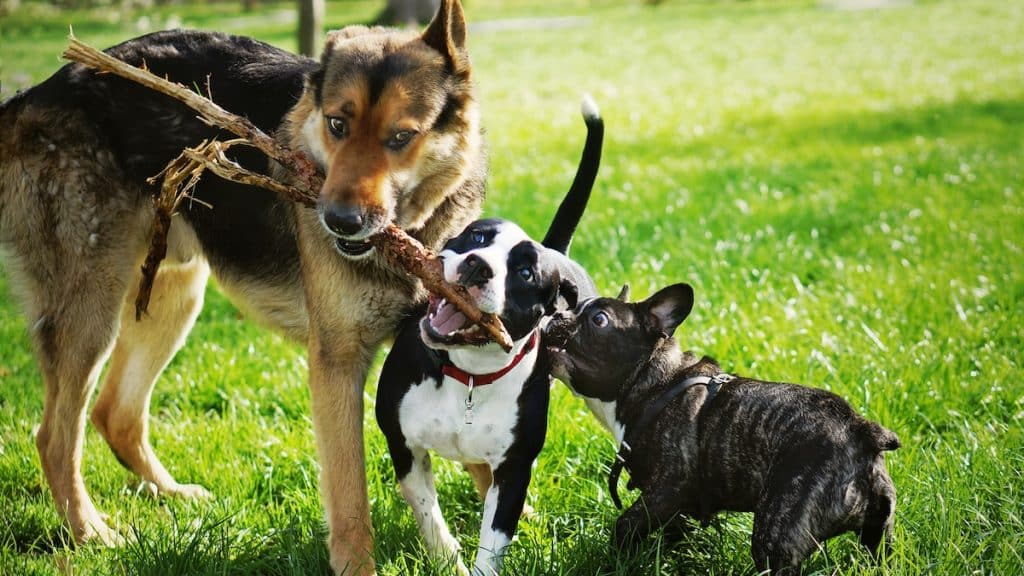
For instance, if your dog’s body language indicates fear during an encounter with another dog, you can step in and remove them from the situation. It can also help you prevent playful interactions with other dogs from turning into fights.
Sound
Dogs also use vocalizations like barking, growling, and whining to convey feelings or intentions. Each sound can have different meanings. A bark, for example, can signify a friendly greeting, a warning, or even an expression of fear. For clues about a sound’s meaning, consider the pitch, volume, and (importantly) context in which it occurs.
Scent
Dogs have remarkable noses, and they learn a lot about the world through their sense of smell. When dogs meet, they often sniff each other’s butts to gather information from pheromones that reveal the other dog’s health, mood, and age.
They may also mark their territory or choose specific poop locations to leave behind pheromone-filled messages for other dogs. That’s why it’s always nice to let your pup sniff new friends and avoid rushing them when they take forever to find the perfect spot to poop.
Touch
Dogs also communicate through touch. Gentle nudges or pawing usually mean they want attention or playtime. Pet parents can build trust by respecting when their dogs communicate that they don’t want to be touched and by learning how they prefer to be petted when they do.
Marina Vedernikova via iStock
How Dogs Think & Behave
Like us, dogs have feelings and the capacity to think. But they’re not mini humans—their emotions and thought processes differ from ours. Getting a feel for these main differences is one of the key ways to understanding our furry friends.
Instincts
Throughout history and before they were domesticated, dogs primarily survived as scavengers. Because of this, they’re still hardwired as opportunistic animals, meaning they’re biologically engineered to take advantage of situations that earn them a reward. They don’t think in human terms of “right” or “wrong,” but rather “what works” and “what doesn’t.”
For instance, a dog who sees a piece of chicken on the countertop isn’t thinking about whether or not you’ll be upset if they eat it. They’re just looking at an easy opportunity to hop up and access food.
Motivation
Once dogs are rewarded for something, they’re more likely to do what they can to make it happen. As such, something that strengthens or increases a dog’s behavior is called a reinforcer.
Primary reinforcers are rewards that meet a dog’s immediate needs for survival and include:
- Food
- Water
- Shelter
- Relief from or avoidance of pain and discomfort
A dog’s genetics and learning history can affect their primary reinforcers as well. For instance, a dog who was bred to herd or hunt may find chasing certain toys like a flirt pole to be a primary reinforcer.
Secondary reinforcers, on the other hand, are things that hold value by being associated with primary reinforcers, such as:
- A clicker (to mark that a reward is coming)
- Praise
- Certain objects (like a leash that is associated with fun walks)
Thoughts and emotions
Dogs don’t possess abstract thought or human motives (like spite or guilt) that drive their behavior. Instead, they respond to what’s happening in the moment, based on what they see, smell, hear, and sense.
For instance, if your dog hides, lowers their head, or tucks their tail after you scold them for chewing up your furniture, they’re not acting remorseful or guilty. Rather, they’re offering appeasement behavior in response to your tense body language and angry tone.
And while dogs don’t possess the same narrative memory that we do, past experiences do elicit certain emotional responses because of the positive or negative association they hold.
Anna Okhotska via iStock
How Dogs Learn
Since dogs learn primarily through association, it means they’re always making connections—whether positive or negative—to situations or stimuli.
For example, a dog might excitedly jump at the sight of their leash because, through repetition, they’ve come to associate it with fun times. The sound of jingling keys, on the other hand, might make your dog anxious if they’ve learned to associate it with your departure.
Social learning
Dogs also learn by watching and imitating others—both other dogs and humans. For instance, a puppy may learn to climb stairs by observing an older dog do it first. This type of learning is valuable in group training settings or puppy classes where less experienced dogs can observe star pupils and mimic their behavior.
Cognitive learning
Another training method rooted in dog psychology is cognitive learning. This type of training focuses more on problem-solving and allowing your dog to make choices based on what they’ve learned, usually through games, puzzles, and varied situations.
The “Look at That” game is an example of this method, which involves teaching your dog to consciously make the choice to look back at you when they see a trigger (rather than barking or lunging).
Classical conditioning
Classical conditioning is all about learning by association. It was first demonstrated by Pavlov’s famous experiments, where dogs learned to associate the sound of a bell with food. Over time, the sound of the bell alone caused the dogs to salivate, with no dog food in sight. This type of learning is involuntary; through repetition, dogs automatically make associations.
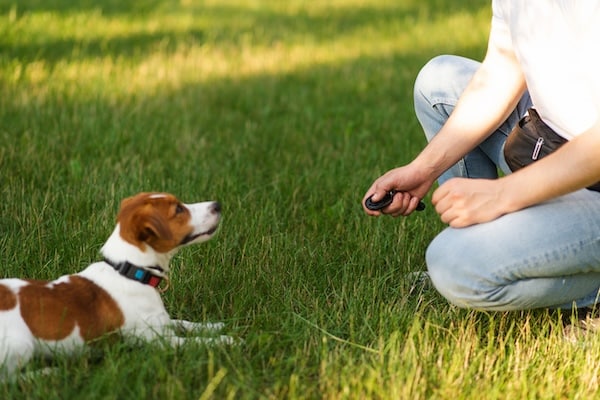
You can apply this type of learning with clicker training, which pairs the sound of a clicker with a treat. Dogs quickly learn that a click means treats are coming, which reinforces the behavior that led to it.
Operant conditioning
Operant conditioning, on the other hand, is a type of learning that modifies behaviors through consequences. “If a behavior earns them something positive or removes something unpleasant, they’re likely to repeat it,” says Hampton.
For example, a reactive dog could learn that engaging with you instead of barking results in moving away from the other dog. Conversely, when a behavior leads to an unpleasant outcome, like being ignored when jumping, dogs are less likely to repeat it.
Finding a Trainer Who Understands Dog Psychology
“Advances in behavioral science have shown that dogs learn best when desired behaviors are positively reinforced, and their emotional well-being is considered,” says Bauer. “Trainers today are better equipped to use reward-based methods that encourage learning while minimizing stress and fear.”
She adds that as such, it’s important to find a trainer who stays current on dog psychology. “New research continues to improve our understanding of canine behavior and learning,” she notes. “An ongoing commitment to learning ultimately leads to better outcomes for dogs and their families.
Working with a trainer who understands and implements dog psychology in their training plan means you’ll have someone in your corner who:
- Solves root behavior problems (fear/anxiety) instead of just suppressing the symptom (reacting/barking)
- Sets up low-stress sessions by reading and understanding canine body language
- Safely manages the training environment
- Helps you understand the why behind your dog’s behavior so you can build a deeper trust and mutual bond
Rover offers a database of certified professionals who use science-backed training methods. That way, you can easily find a dog trainer near you who will use humane techniques that build skills, confidence, and your relationship over time!