- Not a substitute for professional veterinary help.
Does your cat run and hide at loud noises—or any unusual sound? Do they protest the slightest change in routine, like you unexpectedly coming home an hour late? If so, you’re not alone. Plenty of cats are anxious in some way.

One 2025 study on cat socialization asked cat parents about cat behavior concerns. Among the 2,238 included cats, over 16% often or always showed signs of fears and phobias, while over 14% always or often showed signs of separation anxiety.
Your cat’s anxiety might make finding a pet sitter tough—for both you and your cat. But that doesn’t mean you have to cancel your vacation. Finding a sitter who has experience caring for anxious cats can go a long way toward putting your mind at ease and helping your cat feel more comfortable while you’re away.
Read on for guidance on choosing the right sitter from a cat behavior specialist, plus tips to help prepare your cat for your time away.
How To Find the Right Sitter for Your Anxious Cat
In-home sitting is usually best for anxious cats because territory and familiar scents are an important part of your cat’s life, explains Heather Alvey, Certified Feline Behavior Consultant, owner of Felidae Behavior, and former cat sitter with nearly 20 years of experience.
Boarding centers have tight quarters, lots of unfamiliar sights and smells, and exposure to all-new people, so they generally don’t make the best option for cats—especially anxious cats.
When it comes to finding a sitter, you have a few different ways to search, including sites like Rover and Meowtel. These sites list local cat sitters who offer both drop-in visits and overnight sitting. You can sort sitters by their rates, location, reviews, and experience.
As you search for someone who can help your pet feel comfortable and safe while you’re away, keep the following criteria in mind.
Overnight stay vs. drop-in visit
In-house sitters can either stop by during the day or stay overnight in your house. The best option for your cat will generally depend on their preferences.
“If the cat is extremely fearful of new people, having someone stay the night might be too stressful,” Alvey says. In those cases, a short visit might be easier for your cat to handle. On Rover, drop-in visits start at 30 minutes. Rover’s partner Meowtel offers drop-in visits as short as 20 minutes each.
If your cat has an anxious temperament but doesn’t mind new people, an overnight sitter might be a better choice. Your cat will have company and the comfort of their regular routine, and you’ll know your house and cat are both safe while you’re away.
Location and routine
“Ask your cat sitter to try to keep to a regular feeding and visit schedule,” Alvey recommends. Even if it’s not quite the same routine you keep every day, knowing what to expect and when can give a fearful cat some comfort.
Search for a sitter who can comfortably commute to your house in time to follow your cat’s regular schedule.
Tip: You can sort sitters by location on Rover to make this easier!
Sitter qualifications and reviews
Choose a sitter who comes recommended by people you trust or has positive reviews from other cat parents. Pay close attention for reviews that mention success with skittish or anxious cats—these might be sitters worth trying.
Certifications like pet first aid and Fear Free are a fantastic bonus for pet sitters, but these aren’t strictly necessary for a sitter to do a good job. If you have an anxious cat, experience with cats of similar temperaments may be a better qualification.
Successful meet-and-greet
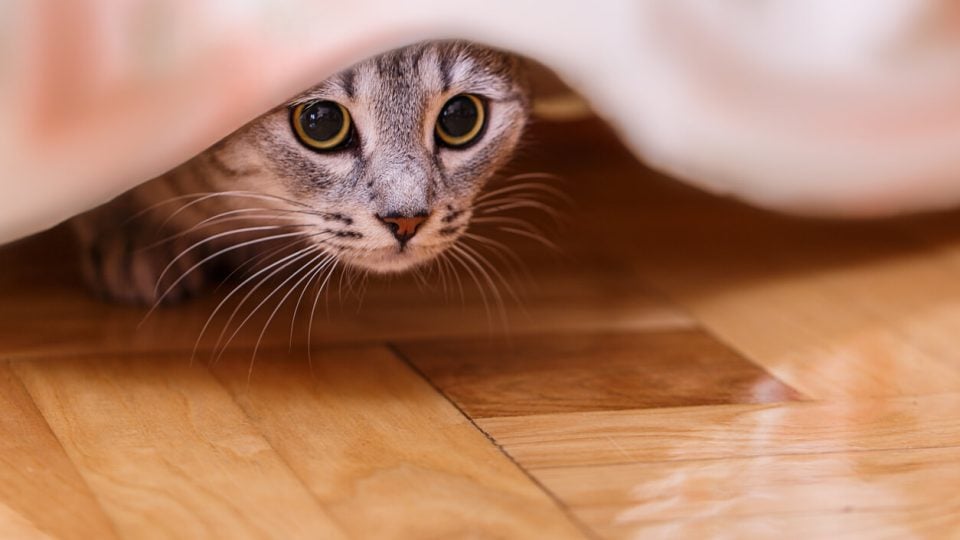
While meet and greets are always essential with a new sitter, these first meetings are more to help you gauge the vibe than your cat. It’s very natural for cats to hide when someone visits for the first time, even cats who aren’t particularly anxious.
Use this time to ask your sitter questions about their approach to anxious cats. If their responses line up with what you’re looking for and you get a good feeling overall, your cat may warm up to them in time.
“The sitter should be interested in the feeding routine, where all the cat supplies are located, and what the cat’s favorite toys or activities are,” Alvey says. They should also ask about your emergency plan and vet contact info.
Insurance and bonding
If you’re choosing a sitter you don’t already know, Alvey recommends checking for insurance and bonding, which are signs of serious professionals.
Sites like Rover and Meowtel have guarantees that can help you recover expenses like emergency vet visits or property damage, which may help both you and your cat sitter feel more comfortable.
Tips for Preparing Your Anxious Cat
These tips can help you prepare your cat to spend time with a sitter.
Trial drop-in visit
“You should always do a meet and greet with a new sitter,” Alvey recommends.
This initial meeting usually lasts about 15 to 60 minutes. This gives you a chance to learn a little more about the sitter and their approach. It also gives your cat an introduction to their voice and smell before you leave for your trip.
“If the cat wants to run and hide, that doesn’t mean the sitter isn’t good with cats,” Alvey explains.
Instead, hiding can help your cat feel more in control of the situation and demonstrate their boundaries to the new sitter.
“Once the cat sees that it is safe, they are much more likely to come out and eventually make friends,” Alvey says.
Keep out toys and treats
“Make sure your cat has plenty of solo activities to keep them occupied,” Alvey says.
Toys that make great choices for this include treat puzzles, ball towers, catnip kickers, and electronic toys like automatic lasers. Just make sure not to leave out any potential choking hazards, like fraying ropes or small objects that could detach.
It’s also a good idea to leave behind a few of your kitty’s favorite treats for the sitter. This can go a long way toward helping your cat build trust with a new person!
Use pheromones and familiar scents
Pheromone diffusers and sprays give off calming scents that can help relax a stressed cat. Try spraying down the spaces where your sitter will primarily visit or leaving behind a diffuser for the sitter to plug in when they arrive.
Alvey also suggests leaving out plenty of items with your cat’s smell on them, like favorite blankets or bedding. Being surrounded by their own scent can be homey and comforting, even when the daily routine is different.
Set up a webcam
Before you go, it can be helpful to set up a webcam to keep an eye on your cats. Some options even allow you to give them treats remotely! Just hold off on using the microphone feature if your cat is scared of loud or unfamiliar noises.
Checklist for Your Sitter
When you think you’ve found just the right person, make a checklist for your sitter with important information about your cat. For example, include details on:
- Your cat’s preferred hiding places and sleeping spots
- Your cat’s daily meal schedule and how often they can have treats
- Any anxious behaviors or triggers
- Your cat’s playtime preferences and favorite toys
- Which parts of your house are off limits for your cat
- Which parts of your house you’d like the sitter to stay out of, if any
- Expected morning and nighttime routines for overnight sitters
- Where to find soothing items like pheromone sprays or favorite toys
Requesting Check-Ins from Your Sitter
When you first meet your sitter and decide to book their services, it’s a good idea to establish what you want in the way of updates while you’re away. Let your sitter know:
- How you’d like to get updates
- Any behaviors you want them to pay attention for, like excessive hiding or refusing food
- How often you’d like updates—such as after every drop-in visit or once a day
Rover sitters send you photos, videos, and messages straight through the app, and Meowtel sitters can do the same on Meowtel’s app.