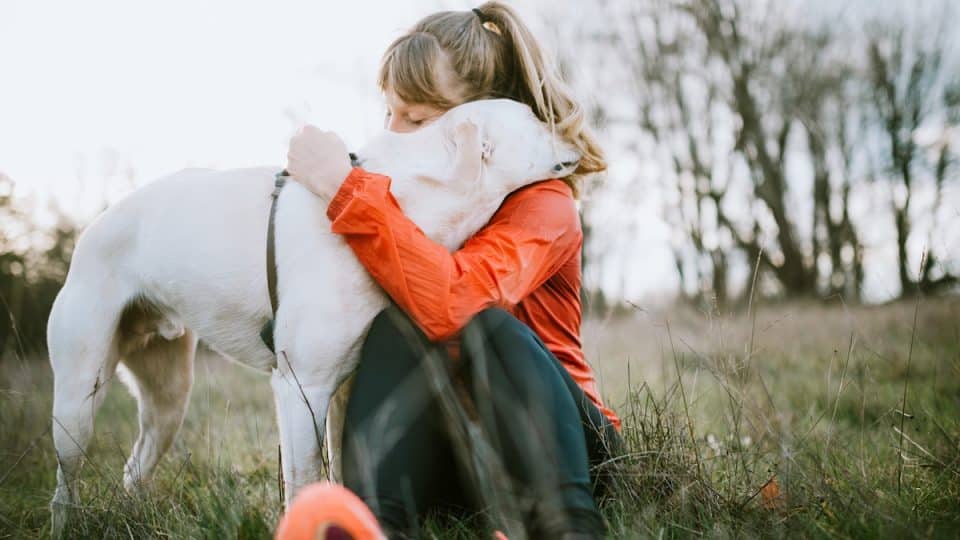
- Not a substitute for professional veterinary help.
Your dog’s loving eyes and constant companionship might improve your mood any day, but experts believe dogs can also sense depression and anxiety in people.
For years, people experiencing mental and emotional health concerns have turned to dogs as a source of comfort and support. In fact, the first recognition of canines as “therapy” companions dates back to the late 1800s, when Florence Nightingale, considered the founder of modern nursing, discovered that small pets helped reduce anxiety in people living in psychiatric institutions. These days, dogs are trained for animal-assisted therapy to help with feelings of loneliness, sadness, anger, and insecurity.

But your dog doesn’t have to be specially trained to sense depression and anxiety and help you feel better. According to our experts, dogs detect changes in human emotion using their sense of sight, smell, and hearing. Here’s how.
How Dogs Sense Emotions
Having evolved alongside humans over thousands of years, dogs are deeply attuned to human emotion. They’ve learned to interpret body language and vocal tones, and even synchronize their behavior to mirror their caretaker’s mood.
Here are some ways that dogs sense stress, depression, and anxiety through sight, smell, and hearing.
Sight
Dr. Ben Schroeder, veterinarian and owner of Cedar County Veterinary Services, says your dog observes everything from your posture and facial expressions to the way you move. Since your dogs are creatures of habit, they’re quick to notice you behave differently than normal.
In fact, research shows dogs may have a special brain region dedicated to processing human faces. This helps dogs:
- recognize when your face changes to express positive or negative emotions
- notice when your behavior changes from normal body language changes
- interpret emotions based on these changes
Smell
A dog’s sense of smell is up to 10,000 times stronger than a human’s, enabling them to detect physiological changes imperceptible to humans.
Dr. Schroeder says that when we’re stressed or anxious, our bodies release hormones like cortisol and adrenaline, which our dogs can smell. In one experiment, dogs detected chemical changes in human breath and sweat with over 90% accuracy. In other words, yes, dogs can smell stress.
Just like diabetes alert dogs can scent low blood sugar events, psychiatric service dogs (PSDs) can detect the chemical changes preceding a panic attack. They can also alert their handlers to rising stress levels associated with episodes of post-traumatic stress disorder (PTSD).
Hearing
In addition to physical and physiological changes, your dog might pick up on audible signs that you’re stressed, anxious, or depressed.
Dogs can detect sounds up to four times further away than humans, and they’re able to hear higher frequencies. They’re also very sensitive to changes in tone. As Dr. Schroeder points out, “You can say the exact same words in a calm voice versus a tense voice, and your dog will react differently.”
While your dog might notice changes in your breathing and accompanying sounds (like shallow breathing and crying), whether dogs can actually hear changes in heart rate is unclear. More likely, says Dr. Schroeder, your dog is combining what they see, smell, and hear to get the full picture of how you’re feeling.
PavelRodimov via iStock
Ways Dogs Help With Anxiety & Depression
Whether or not your dog can sense depression and anxiety, their presence alone can provide therapeutic benefits. Here are some of the different ways a dog can positively affect your mental health.
-
Dogs provide social opportunities
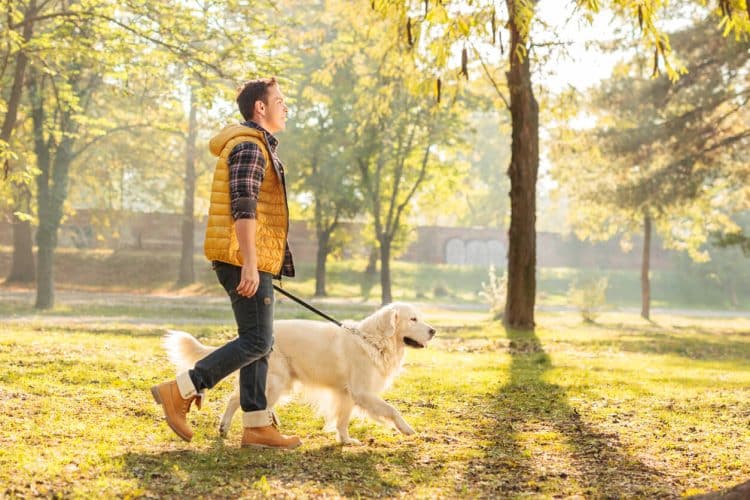
Symptoms of depression and anxiety can create a vicious cycle of social isolation and loneliness. Having a dog provides companionship, but it also gives you a reason to leave the house. With walks around the block, trips to the dog park, or weekly obedience classes, your dog helps create opportunities for you to interact with others.
Dogs offer physical touch
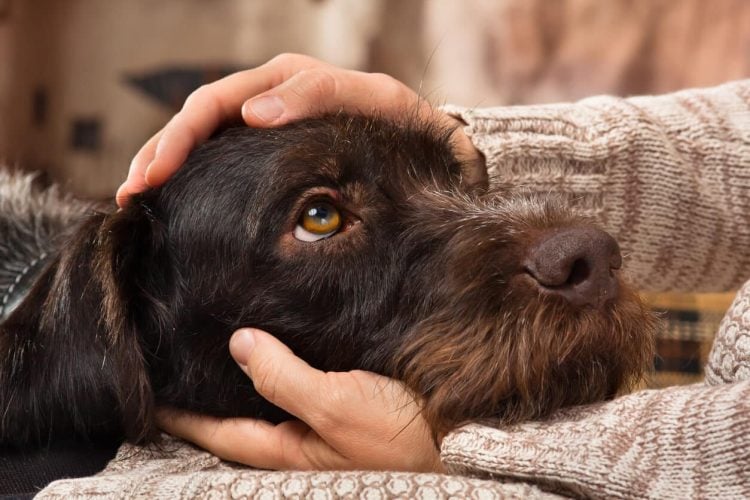
Research shows that physical touch can significantly reduce symptoms of anxiety and depression. Whether you’re grooming your dog, cuddling with them on the couch, or scratching them behind their ears, your dog provides plenty of opportunities for physical touch.
In a study involving university students, petting a dog for 10 minutes resulted in a measurable reduction in cortisol levels. Some dogs can even provide deep pressure therapy (DPT). With this calming technique, dogs learn to lean or lie across someone to provide gentle but consistent pressure—like a live weighted blanket—to help alleviate anxiety, panic attacks, PTSD, or other forms of distress.
Dogs offer security and stability
Having a dog means you’re never alone. More importantly, your dog loves you unconditionally and never passes judgment. A dog can be a calming presence, even if all you need is someone to sit quietly by your side.
When the world becomes overwhelming, focusing on your dog can help. Psychiatric service dogs can even be trained to perform grounding tasks. With a gentle nudge of their nose or a lick to your hand, a pup can help you feel safe and present in the moment.
Dogs give us responsibility
When your mental health is suffering, it can be difficult to take care of yourself. During these times, meeting your dog’s daily needs can give you a sense of purpose and a feeling of fulfillment. Some experts even suggest that having a strong bond with a pet can reduce suicidal ideation by giving people a sense of having something to live for.
Research has especially focused on the role pets can play in improving the mental health of young people. A 2025 study found that pets in young childhood could be a protective factor against an unhealthy internalizing of problems, while a 2022 study found a strong bond with pets could reduce the risk of mental health disorders in adolescence.
Dogs help establish healthy routines
Research shows a consistent routine can help reduce levels of depression and anxiety, and dogs are fantastic for helping us stick to a regular schedule.
Dogs always know when it’s time for dinner. Plus, their exercise needs can help us get up and moving daily. Sometimes, going through the motions of caring for a dog can be enough to interrupt unhealthy cycles and give us the boost we need to get through the day.
Ljupco via iStock
Dogs Breeds That Help With Anxiety & Stress
Any dog has the potential to provide support for someone struggling with their mental health. However, some are better suited to specialized training as service dogs or therapy dogs.
Some of the most popular service dog and therapy dog breeds include:
- Golden Retrievers
- Labrador Retrievers
- German Shepherd Dogs
- Boxers
- Standard Poodles
- Border Collies
- Cocker Spaniels
- Bernese Mountain Dogs
- Great Danes
- American Staffordshire Terriers
While these are popular breeds for service and therapy dogs, what it really comes down to is the individual dog’s personality. “People often assume it’s all about breed,” says Dr. Schroeder, “but it’s really about temperament.” A great service dog or therapy dog has a calm demeanor and a friendly, loving disposition.
If you think a service dog or therapy dog might be a good fit for your needs, talk to your doctor. You can also find more information about service dogs on the Americans with Disabilities Act (ADA) website.