- Not a substitute for professional veterinary help.
Cats are creatures of habit and love their routines. When you have to head out of town, most kitties prefer the comforts of home base. But sometimes, the demands of your schedule and situation might make it necessary board your cat outside of their regular environment.
Luckily, you have options. Boarding your cat with an in-home boarding sitter or at a facility with rotating staff are common solutions. To know what’s best for your situation — whether it’s your cat’s personality or special needs requirements driving the deciding factor — we’ll walk through tips on choosing the right option for your cat and make sure they’re prepped for their big stay. Here’s what to know.

What to Look for When Boarding Your Cat
Always visit the boarding place before booking a stay for your cat. Verify a facility’s credentials and confirm a sitter’s experience via reviews and references. During your tour or Meet and Greet, come prepared with a list of questions to ask your potential cat sitter. Their answers can help you decide if it’s a good fit for your cat.
And whether you’re boarding your cat at a facility or with a pet sitter, there are a few things you’ll want to confirm, such as:
- Calm and quiet environments that offer separate spaces for cats and dogs (or a cat-only facility, also known as a cattery)
- Experienced sitters or staff who have a good understanding of feline body language and cat behavior
- Clean and fully sanitized spaces
- Enough space to allow your cat plenty of room for zoomies or moving
- Safety and emergency protocols for communication in place
- Regular monitoring to ensure your cat is healthy and safe
When it comes to red flags, Ali Smith, a behavior consultant at Maven, recommends avoiding places that keep cats and dogs closely together. For example, your cat shouldn’t be able to hear dogs barking from their space. They also shouldn’t expect cats to be social. “A good cattery should respect that some (i.e., most) cats simply want to be left alone,” says Smith.
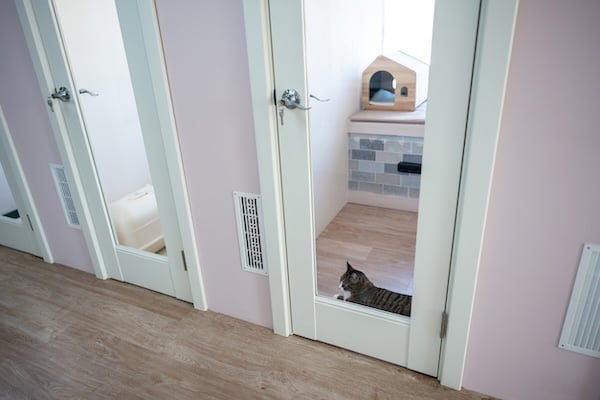
Clinical feline behaviorist Kristiina Wilson also advises avoiding places that keep cats confined to small spaces. “Cats should never spend their vacation confined to a small cage,” she notes. “Look for options that provide a private room or condo with enough space to move around, climb, hide, and use the litter box away from food and bedding.”
Choose the Right Place: Facilities or In-Home Cat Boarding
Very easy-going kitties could likely stay at a friend or family’s place but if your cat has peculiar hours that keep folks up at night, medical administration that require a skilled hand, or other unique requirements, overnight care in a sitter’s home or cat boarding facility are your options.
In-home boarding
The ideal cat for in-home boarding: Cats who thrive off more individualized attention and care. Kittens, seniors, or cats with anxiety—or simply cats who would do better sticking to their usual feeding and socializing routine.
When you board your cat with a pet sitter, they’ll get to stay in an environment similar to your home, typically with more space to roam. Cats may receive more attention and personalized care, especially if the sitter only takes one cat at a time. Sitters who take only one cat at a time may be better equipped to stick to your cat’s usual routine.
Find in-home cat boarding on RoverPros:
- Personalized one-on-one play and care.
- Ability to stick to typical feeding routines and daily schedule.
- Familiar home-like environment.
- Often a quieter and less stressful environment than traditional facilities.
Cons:
- Need to do a specific search for sitters trained to care for cats with specific health needs
- Specialized, individual care may cost more, depending on the sitter
- Sitters may leave cats alone to work, care for other pets, or run errands unless 24/7 care is agreed on prior to booking.
Traditional boarding facilities
At traditional boarding facilities, cats are usually kept in individual enclosures, which include essentials like a bed, food, water, and a litter box. These facilities operate on a fixed schedule where staff members rotate in shifts for cleaning, feeding, and check-ins. Play and exercise are typically scheduled and happen in designated areas.
Under the traditional boarding umbrella, you’ll also find vet boarding (where cats who need to be monitored for their health stay at a veterinary clinic or office) and pet hotels or luxury boarding (advertised private suites and amenities).
The ideal cat for traditional boarding: Highly adaptable, healthy cats or in situations where home access isn’t possible.
Pros of boarding your cat at a traditional facility include:
- Trained staff members who will monitor eating habits, litter box behavior, and some medical needs.
- High security features, like double-doored entryways and locked enclosures to reduce the risk of escape.
- Strict health rules, such as required vaccinations.
- Standardized pricing, sometimes more affordable than in-home boarding or house sitting.
- Wider availability, with a full staff and designated cat quarters.
Cons of traditional boarding facilities include:
- Less individualized attention.
- Higher chance for environmental stress with the sounds and smells of other animals in the facility.
- More disruptive to your cat’s typical daily routine.
- Limited room to move around during the day in traditional kennels.
Dima Berlin via iStock
Preparing Your Cat for Boarding
1. Make sure your cat is healthy
Before boarding your cat, a quick trip to the vet can confirm they’re ready for their stay. Here’s what to cross off your list before your next trip out of town.
- Schedule a vet checkup to ensure your cat is in good health, especially if they have a medical condition, like arthritis or allergies, or require special care, like daily medications.
- Make sure your cat has all their required vaccinations before boarding them, whether it’s in-home or at a facility. You’ll want to have a copy of these printed or emailed to you to give to your cat care provider.
- Ensure your cat is up to date with their flea and tick medications, especially if they’re going to be around other animals.
2. Pack the right items
Regardless of where you board your cat, adjusting to a new environment can be a bit stressful. You can help mitigate this stress and make things easier on your cat by strategically packing their overnight bag.
“Make sure you pack items that smell like home, their own toys, and their own scratching pads or boards,” recommends Wilson. And there’s probably no need to go on a shopping spree beforehand. “I wouldn’t buy lots of brand-new things for boarding,” adds Smith. “Familiarity is a cat’s comfort zone.”
Items to pack for your cat include:
- Their favorite toys (self-play toys like balls, stuffed mice, or kickers) and treats.
- Daily food (often individually packed and portioned in baggies for each meal), plus a few days extra just in case.
- A copy of their vaccination records.
- A blanket or t-shirt that smells like you.
- Required medication (if necessary) with instructions.
3. Provide written instructions
Since cats are often very attached to their daily schedules and have strong preferences, providing detailed care instructions will help staff and sitters better understand how to support your kitty and ease them into their stay. “Share their routines, likes and dislikes, how they like to be touched and any no-go spots, and what they like to play with,” says Wilson.
Along with what’s typical for your cat, you’ll also want to include signs that your cat is stressed. “Some cats hide, some stop eating, others become really vocal,” says Smith. “They’re great benchmarks for the staff to know.”
Smith advises being as detailed as possible, too. “Explain how much they eat, whether they’re fussy, where they prefer their food, any medications and how you give those medications, favorite hiding places, normal litter box habits and what’s typical for your cat,” she says. That way, staff or sitters have more insight and can better spot signs of distress or concern.
4. Get your cat used to a carrier
Whether you choose in-home boarding or a more traditional kennel/cat hotel option, you’ll need to safely get your cat there in a carrier. Some cats are fine with this, while others may require extra prep.
You can help your cat get acquainted with their carrier by leaving it out a few days, or better yet, weeks, before their stay. Keep the opening unzipped to let them investigate on their own terms. Putting treats or their favorite toy inside is also a great way to build a positive association with it.
5. Consider a trial run
A great way to ease your cat into staying in a new environment is to schedule a trial run, or two, before your big trip. Talk with the boarding facility or sitter to see if you can drop your cat off for the afternoon. Or schedule an overnight to see how things go before leaving your cat for more days at a time.
These trial runs give you insight into how your cat handles being in a new place and how the caretakers are able to respond to their specific needs.
Finding a cat sitter on Rover can also help make the transition easier on everyone. Many sitters offer both in-home boarding and drop-in visits. That way, your cat can gradually get used to the sitter in their own home environment before staying with them.
Cat Boarding FAQs
How long does it take a cat to adjust to a new environment?
How long it takes a cat to adjust to their new surroundings depends on the individual cat. While some may decompress within 24 hours of being at a new boarding place, others may have difficulty adjusting during their stay.
“Some highly social, confident cats may begin exploring within a day or two, while more sensitive cats may never fully relax during a short boarding stay,” says Wilson. This is why it’s important to evaluate whether boarding is a good option for your cat. If not, consider booking a sitter to stay at your house or drop in throughout the day instead.
Is cat sitting better for my cat than boarding?
It depends on your cat’s personality. “I think the better question is which environment is likely to be less stressful for ‘that’ individual cat,” says Smith. Both of our experts agree that boarding your cat at a facility or in someone else’s home works best for more social, confident cats.
However it’s still good idea to do a trial boarding run (1-2 days) at a facility or with a sitter on Rover. A strong relationship with a cat boarding sitter or facility could save some stress when last minute cat boarding is needed.
Find last minute cat boarding