- This post contains affiliate links. Read more here.
- Not a substitute for professional veterinary help.
Have you been told to offer a dog or a cat with stomach troubles canned pumpkin? There’s good reason for it: pumpkin is chock-full of vitamins and prebiotics, as well as soluble fiber, which can help support the digestive systems of dogs and cats. For pets struggling with gastrointestinal issues like diarrhea and constipation, plain pumpkin can be a gentle way to soothe an upset stomach.
That said, canned pumpkin can’t solve every stomach-related issue, and sometimes a trip to the vet is in order, especially if your pet is vomiting.

To learn more, we reached out to Dr. Jen Keppers, DVM, a veterinarian at 4 Paws Pet Hospital in Albuquerque, New Mexico, a Thrive Pet Healthcare partner. Here’s what to know about feeding pets canned pumpkin.
Canned Pumpkin for Pet Diarrhea & Constipation
Canned pumpkin can be helpful for dogs and cats dealing with constipation and diarrhea, thanks to the high amount of fiber it contains. For cats, this extra fiber may help reduce hairballs, too.
In general, Dr. Keppers recommends feeding a pet one tablespoon of pumpkin per ten pounds of weight per day. This can be added into a single meal or portioned out across several meals. However, it’s always best to consult with your vet for an exact recommendation, as the amount of pumpkin may vary depending on the type of pet and the particular digestive issue being treated.
Canned pumpkin for diarrhea
“Pumpkin contains soluble fiber that ‘bulks up’ with the absorption of water,” explains Dr. Keppers. For pets with diarrhea, the absorption of extra water helps make stools more solid.
Keep in mind that if the diarrhea worsens or is accompanied by any other symptoms, you should schedule an appointment with your veterinarian right away.
Canned pumpkin for constipation
The fiber in canned pumpkin can also help make a pet’s stool softer and easier to pass. This means that feeding a dog or cat a small amount of pumpkin (one tablespoon per 10 pounds of weight), along with plenty of water, may help relieve them of minor constipation and straining.
However, Dr. Keppers notes that it’s not a good idea to feed pumpkin to a pet that is obstipated (constipated to the point of being physically unable to pass stool) or obstructed (after foreign body ingestion, for example). In fact, pumpkin could make those conditions worse, so it’s important to see a vet right away if you suspect either of those situations.
Likewise, pet parents should avoid overfeeding their pets pumpkin, as too much fiber may actually make a pet even more constipated. So be sure to start with a small amount and and pay close attention to your pet’s stool and its consistency to ensure the added fiber is having the intended effect.
carlosrojas20 via iStock
Canned pumpkin for hairballs
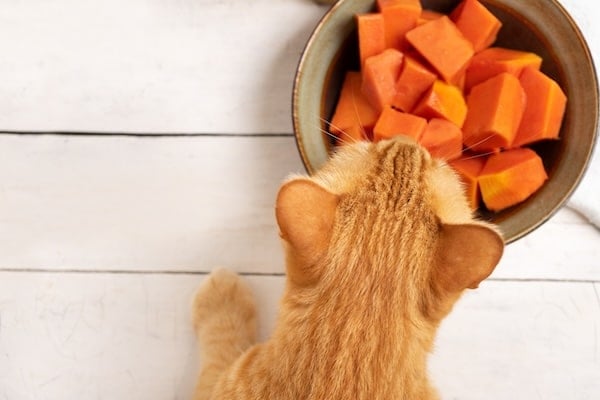
Mixing a small amount of pumpkin into a cat’s regular food can also aid digestion and help prevent hairball buildup.
“If tolerated, increase the amount of pumpkin in small increments until the recommended amount is reached. Reduce the amount added or discontinue if the pet refuses their food,” Dr. Keppers recommends.
When not to feed canned pumpkin
With all of these conditions, feeding your pet pumpkin isn’t a substitute for a vet visit. Many serious health issues may start with diarrhea or constipation as the initial symptom. That’s why it’s essential to rule out other health issues if your pet’s digestive issues are chronic or are worsening over time. Pumpkin is also not recommended at all for pets that are vomiting.
“Vomiting pets should be seen by their veterinarian to assess the cause and treat accordingly,” says Dr. Keppers.
Preventive Pumpkin for Chronic Health Problems
Some cats and dogs benefit from regularly consuming pumpkin as a preventive supplement. But make sure to talk to your vet first before making any changes to your pet’s diet.
Pumpkin for anal gland issues
For dogs that are prone to anal gland issues, including smaller breeds and ones with chronic diarrhea or soft stools, adding pumpkin into their diets can be beneficial. The fiber in pumpkin can firm up their stool enough to create pressure on the anal glands, which helps the glands to naturally empty.
Note that pumpkin can be a helpful preventive—but it won’t heal anal glands that are infected or impacted already. For that, a vet visit is in order!
Pumpkin for IBD and stress colitis (recurrent diarrhea)
Have a pet with inflammatory bowel disease (IBD) or stress colitis? These conditions that cause diarrhea may be improved with a small amount of pumpkin added to a pet’s diet. Adding a small amount (one tablespoon per 10 pounds of weight) of plain canned pumpkin to meals can help soothe inflammation and promote more solid stools.
Pumpkin for weight loss
If your vet recommends that your pet loses weight, you may want to ask about incorporating canned pumpkin into their diet. One major benefit? The fiber in pumpkin can help keep your pet feeling full for longer periods of time, even if their food portions are smaller.
Pumpkin for hydration
Since canned pumpkin is nearly 90% water, adding it to your dog or cat’s dry food can provide a hydration boost.
Sviatlana Barchan via iStock
How To Serve Canned Pumpkin to Your Pets
Some cats and dogs love the taste of pumpkin and will happily eat it off the spoon, but most will prefer it mixed into their meals or made into an interesting treat. But before you get out the can opener, remember that too much fiber can cause more harm than help. Be sure to check with your vet before you start supplementing your pet’s diet, and remember to start small.
Plain canned pumpkin
When purchasing canned pumpkin for your cat or dog, stick to plain pumpkin. Canned pumpkin pie filling can easily be mistaken for canned pumpkin, but it contains high amounts of sugar, spices, salt, and other additives or preservatives which are not recommended for pets.
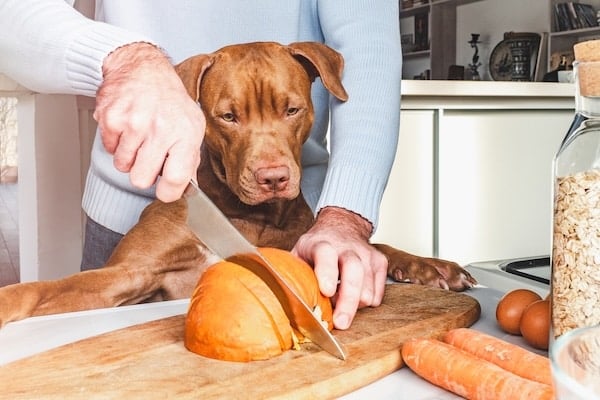
Prefer to make the pumpkin yourself? Whole, organic pumpkins can be prepared for cats and dogs with a bit of cooking. Make sure to remove the skin, stem, and pulp beforehand, and set any seeds aside to roast for yourself.
Frozen
If you have extra or leftover canned pumpkin, you can save it by freezing. Consider using an ice cube tray to freeze the pumpkin into small portions for your pet, or place tablespoon-size, single serving portions on a baking sheet lined with parchment paper and then transfer the pumpkin pieces to a freezer-safe container or bag once frozen.
Dogs especially are likely to enjoy hunting for frozen pumpkin hidden inside a KONG, and cats might enjoy pumpkin frozen on a lick mat.
Mixed with wet food
Because pumpkin blends easily with wet food, adding a tablespoon to your pet’s food is a great way to boost their hydration and fiber intake. Cats, in particular, are likely to prefer pumpkin mixed directly into fragrant wet food.
You can also find wet cat food already mixed with pumpkin, like the Pumpkin Jack Splash from Weruva. The same brand makes pre-mixed wet food with pumpkin for dogs, too, like their “Lamburgini” recipe.
Baked into treats
Pumpkin-flavored treats can be found at your favorite pet retail or grocery store, making it a convenient way to add pumpkin into your pet’s diet.
You can also incorporate pumpkin into your own homemade pumpkin dog treats. For cats, try pumpkin push-up cat treats.
Safety Tips for Feeding Pumpkin
With your vet’s approval, pumpkin can be a healthy addition to your pet’s diet.
That said, there are a few things to keep in mind:
- Add pumpkin gradually and in small amounts, up to 1 tbsp per 10 lbs of body weight
- Monitor the results carefully, since too much fiber can make conditions like diarrhea and constipation worse
- Avoid feeding pumpkin at all if your pet is vomiting, obstipated, or has an obstruction
- Make sure to feed only plain pumpkin with no additives
- Plan for extra potty breaks!
Lastly, consult your vet early and often, especially if you’re feeding your pet pumpkin for stomach troubles that aren’t resolving.