- Not a substitute for professional veterinary help.
Salt is an essential mineral for cats, just as it is for people—but cats only need a little. The amount of salt in commercial cat foods is carefully balanced, so you don’t need to add any extra salt to your cat’s diet.

Cats shouldn’t eat much extra salt, beyond what’s in their food, but just a little now and then likely won’t do any harm.
“Licking some salt or having food with a few sprinkles of salt probably won’t cause a problem,” says Dr. Maggie Placer, animal behaviorist and Veterinary Advisor at Pet Honesty.
Larger doses of salt, however, can be toxic to cats—sudden exposure to a lot of salt, like the amount in pickles or potato chips, can be very serious, Dr. Placer adds.
Here’s what to know about salt toxicity, including signs, what to do if your cat eats too much salt, and salty foods to keep out of reach.
Signs of Salt Toxicity or Sodium Poisoning
Salt toxicity (hypernatremia), also called sodium poisoning, can be very serious and even deadly for cats.
Signs of salt toxicity usually include:
- Vomiting
- Diarrhea
- Twitching
- Lethargy
- Disorientation
- Muscle tremors
- Decreased appetite
- Excessive thirst or urination
- Lack of coordination or wobbly walking
Increased thirst is usually an early warning sign, Dr. Placer says. Cats may then go on to develop other symptoms, which can start anywhere from a few minutes to a few hours after consuming salt, she adds.
Pet Poison Helpline classifies salt as a “moderate to severe” toxin for cats. Consistently eating too much salt can lead to health issues, but so can accidentally eating a large quantity of salt at one time.
What to do about sodium poisoning
If you notice any of the above signs in your cat or believe they may have eaten a food high in salt, contact your vet right away.
When it comes to salt toxicity, quick treatment is very important. Minor symptoms can progress to seizures, coma, and death without treatment.
Treatment for salt toxicity ranges from IV fluids and electrolyte monitoring for minor cases to treatment for brain swelling in more serious cases. Your vet will decide on the right treatment based on your cat’s symptoms and how much salt they ate.
How Much Salt Is Harmful?
While cats and kittens do need salt in their diet, they only need a very small amount each day.
“The normal amount of salt required for healthy adult cats and for growing cats and kittens is 0.5 grams (⅛ teaspoon) of sodium per every 1,000 calories they eat,” Dr. Placer says.
All nutritionally balanced cat foods that meet AAFCO standards will provide the right amount of salt for your cat, so you don’t need to add any salt to your cat’s diet.
More than 41 milligrams of salt a day is considered poisonous for cats.
The typical daily salt intake for humans is 5 grams, or 5000 milligrams. That’s roughly a teaspoon of salt. 41 milligrams of salt, in comparison, is a tiny amount—around 700 grains of salt.
Checking how much salt is in everyday foods your cat might eat can be tricky, since most nutrition labels list the amount of sodium a food contains, not the amount of salt. To convert sodium to salt, you need to multiply it by 2.24.
The table below shows some salty foods and their sodium and salt content:
| Food | Sodium | Salt |
| Tuna chunks in water (5 oz. can) | 320 mg | 813 mg |
| Classic potato chips (1.5 oz. bag) | 250 mg | 635 mg |
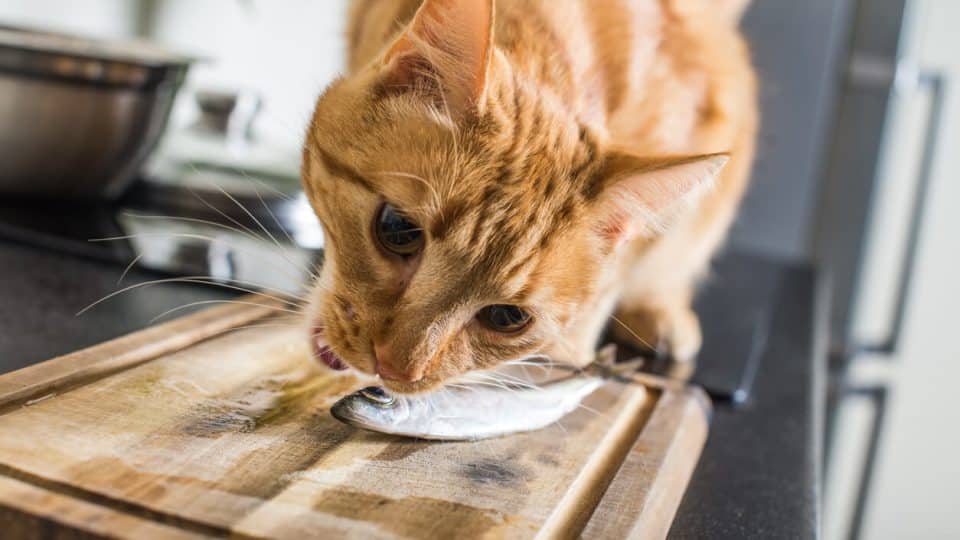
| Anchovies in olive oil (2 oz. can) | 860 mg | 2.2 grams |
Just a tiny portion of any of these foods contains too much salt for a cat.
Small kittens can develop symptoms of salt toxicity after eating even less salt than an adult cat, according to Dr. Daniel Dixon, veterinarian and founder of North Keller Animal Hospital.
Salty Things To Keep Away from Cats
Cats have a curious streak, which can mean they might experiment with eating unusual foods or explore things and places they shouldn’t.
Some cats can also become very interested in certain foods or particular items—and if these foods or objects contain high levels of salt, your cat could get sick.
It’s important to keep these salty things where your cat can’t reach them:
- Seawater
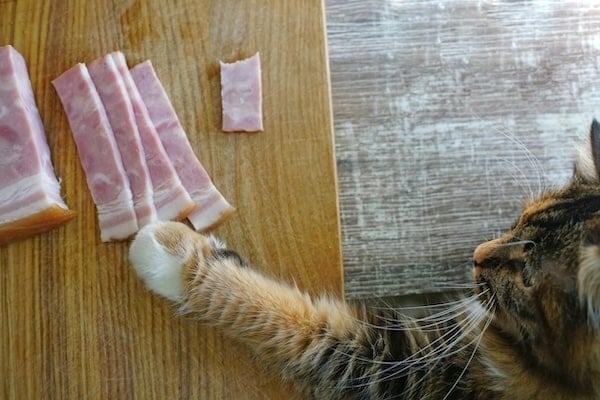
- Beef jerky
- Salt lamps
- Potato chips
- Homemade play dough
- Foods packed in salty fluids
- Rock salt (often used as a de-icer on sidewalks or driveways
- Water from saltwater aquariums or pools
Of course, the most common salty things your cat will likely encounter are human foods—but most everyday foods don’t have enough salt in them to harm your cat if they take a tiny bite, or they’re too salty for your cat to want to eat them, Dr. Dixon says.
Salt toxicity often happens as a consequence of cats not having access to water, Dr. Dixon adds. Making sure your cat has always has access to fresh, clean water can help keep them safe and healthy.
If you think your cat may have eaten too much salt, it’s always best to contact your vet for advice.
Cats with health issues like renal disease, diabetes, and liver disease can be more prone to salt toxicity, so it’s especially important to keep salty things out of reach and check in with your vet right away if you think they had any extra salt.