Winter weather may drive pet parents to hibernate indoors, but dogs still need plenty of physical exercise and mental stimulation to stay happy and healthy—even when the temperature outside drops.
Although colder weather may put a pause on swimming and beach trips, there are plenty of winter dog activities to enjoy with your pet. And as long as temperatures are safe and your pet isn’t showing signs of being cold, outdoor activities offer a great opportunity for your dog to let loose and burn off some energy.

To help dog parents stay active during the winter season, we consulted with CPDT-certified trainer Paige Gordon of SpiritDog Training, who shared her tips for wintertime enrichment.
Skiing or Skijoring
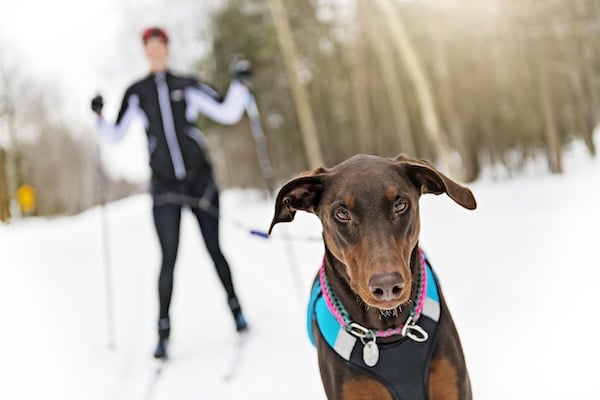
If you and your dog enjoy being active, winter is the perfect time to try a sport like cross-country skiing or skijoring. With cross-country skiing, your dog runs next to you as you push off from your poles—but in popular Scandinavian sport skijoring, your dog pulls you as you glide behind on skis. Both are great activities to help large, athletic dogs who love to run burn pent-up energy.
“If your dog loves the cold and being active with you, I would recommend looking into these sports,” says Gordon.
Both skiing together and skijoring take some practice. Skijoring requires a special weight-pulling harness for your dog that they’ll need to get used to—and both require your dog to be comfortable around your skis.
To give it a go, test the setup indoors, then graduate to short distances on flat terrain. Once your dog is comfortable, you can gradually increase the distance and difficulty.
-

LSOphoto via iStock
Sledding and Kicksledding
Larger dogs may also enjoy sledding or kicksledding. With a kicksled, you help propel the sled with your foot as you “kick” backward from a standing position, while your dog pulls from the front. This makes it less strenuous than regular sledding, which requires your dog to pull you as you ride behind on a sled in a sitting position.
With both activities, you’ll want to teach your dog some voice cues ahead of time. Some common sledding cues include “gee” (turn right), “haw” (turn left), “mush” (start), “whoa” (stop), and “easy” (slow down). You’ll also want to practice with your pet on a trail or flat area with compacted snow before tackling more difficult terrain.
Snowshoeing
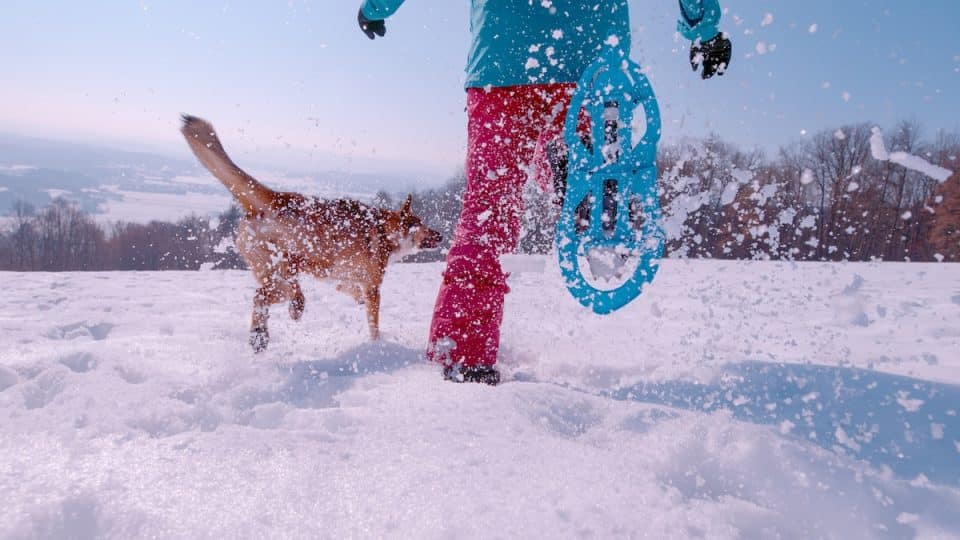
Snowshoeing is essentially hiking but in deeper snow or on uncleared paths. Although snowshoes help prevent a person’s feet from sinking, for dogs, the activity is extra-challenging, since they have to lift their paws higher than normal to walk through the snow. The added effort it makes it a full-body workout that engages a dog’s muscles and burns more energy than regular hiking.
To snowshoe with your dog, start by making sure your pet is comfortable walking in deep snow. (Some dogs may need or prefer snow boots). As with skiing and skijoring, you’ll want to start with a short distance to help your dog acclimate to the activity before taking on longer treks in the snow.
Hiking
If there’s not enough snow on the ground to snowshoe or you have a dog who isn’t suited for deep snow, a wintertime hike on a cleared trail is a great way to get outdoors with your pet. Hiking offers a cardio workout for both you and your dog, as well as an opportunity for them to enjoy a wide range of scents along the trail.
Look up the nearest dog-friendly hiking trail, grab your leash and some water, and get ready for a winter adventure together. Keep in mind that you may not be able to hike as far as you could during the warmer months, but you can keep a shorter hike engaging by letting your dog enjoy plenty of sniffing breaks.
Running and Canicross
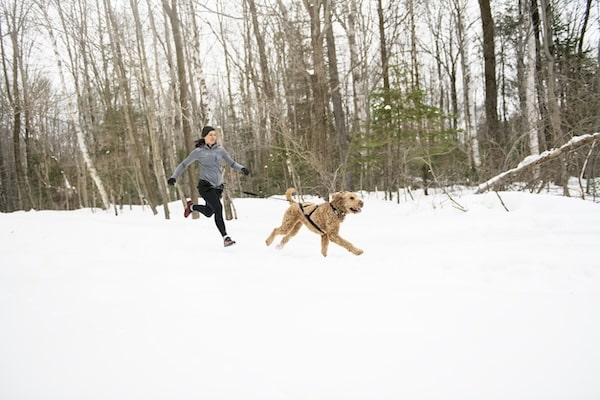
Running and canicross are excellent workouts to do with your dog year-round, but the wintertime brings the added benefit of cooler weather that can help prevent dogs from overheating. Anywhere you normally run, like around your neighborhood, park, or a cleared trail, can be turned into a running course for you and your dog.
Canicross is a cross-country running sport in which your dog’s momentum helps propel you via a special harness and bungee—so it’s a good idea to practice running safely for short distances before tackling a longer trail or a faster run. And if your dog is new to running, make sure to take plenty of breaks and let them set the pace.
-
LSOphoto via iStock
Scavenger Hunts in the Snow
Playing or digging in the snow may be enough to keep your dog entertained, but for more of a mental challenge, consider putting together an outdoor scavenger hunt in a safe and enclosed location, such as a yard or a patio. Using small toys or treats, scatter items in plain sight, or make it more difficult by hiding objects in the snow. You can even build a maze!
“By moving your sniffing games outside, you’re giving your dog a harder version of scent games,” said Gordon, adding, “You can even encourage your pup to find their favorite toy that has been thrown into the yard.” (Just make sure to remember where you hid it in case your pup needs help locating it.)
Indoor Dog Sports
For dogs who don’t like cold weather, visiting an indoor dog gym is another option to stay active while waiting out the winter months. Between agility, nosework, and barnhunt programs, dogs can get a mentally and physically demanding workout at an indoor gym while also having fun.
You don’t need any experience to check out a class at a dog gym. Many gyms offer group classes or private sessions that cater to beginners.
Indoor Activities
You can also set up a home gym or play movement games with your dog indoors, especially if visiting a dog gym isn’t a possibility.
“If your dog prefers to stay indoors during this time of year, try playing some movement games to ensure they are still having their physical needs met,” said Gordon. “Treat-chasing games with hurdles like your legs or hide-and-seek are great activities to consider.”
With a little planning and effort, you and your pet can stay fit and healthy in spite of the challenges winter throws your way.