Do you come home from work to find your dog on the other side of the door doing a nice big stretch, tail wagging? If so, then you’ve seen a dog’s famous greeting stretch. But is it actually a hello, or is your dog just shaking off stiffness from a long nap?
According to certified animal trainer and pet lifestyle expert Nicole Ellis, your dog is saying they’re happy you’re home. “When your dog stretches right as you arrive, it’s usually a greeting behavior rather than just a physical stretch,” says Ellis. “Think of it as their version of a ‘hello!’ or a warm welcome.”

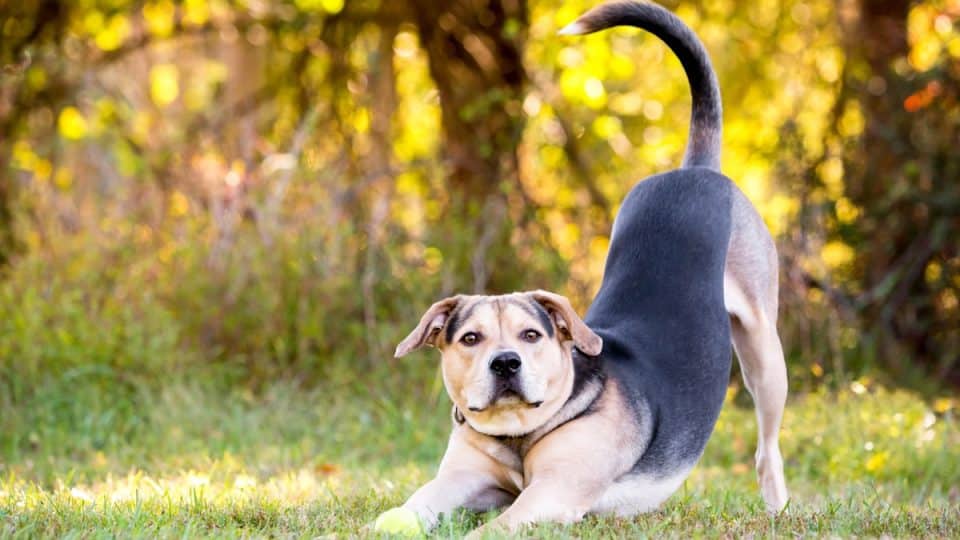
While most dogs stretch in greeting with their chest low to the ground, with their front legs extended forward and their rear up (it’s called “downward dog” in yoga for a reason), dogs can do different stretches. “Some dogs may go completely flat and stretch out their hind legs as well, or stretch them out one at a time behind them [while] standing,” says Ellis.
With Ellis’s help, we’ll explore the different ways dogs stretch and how that translates to a greeting when they see you.
An “I Love You” Stretch
Ellis describes a greeting bow or an “I love you” stretch as a relaxed, friendly gesture that shows a dog is happy to see you. You’re likely to encounter this stretch after spending time apart from your dog, like after being out of the house for a while, working from another room, or waking up in the morning.
This stretch is usually slow, with the front legs actively stretching out. It’s long, luxurious, and deliberate—and directed at you. Other behavior and body language that may accompany this type of stretch include:
- Making direct eye contact
- Soft eyes and mouth
- Relaxed facial expression
- Slow wagging tail
- Happy grunts, whines, or squeaks
- Gentle yawning
- Nuzzling or holding something in their mouth
Ellis says that an “I love you” is your dog indicating that they are comfortable with you, relaxed, and want to connect with you. Unlike jumping and barking, a stretch can be a low-key greeting that’s a soft opener for interaction. In human terms, think of it like a smile or a wave.
When your dog greets you this way, be sure to respond. Give them a few gentle pats, talk to them in a low, soothing voice, let them rub against you, or even just sit nearby for a minute or two. The most important thing is to acknowledge their greeting, letting them know you see them and appreciate them, too!
A Play Bow Stretch
Though a play bow can look similar to a greeting stretch, the aim is quite different. This pose is an invitation to interact. In other words, your dog is saying, “Come play with me!” Unlike the “I love you” stretch, a play bow is faster and much more energetic and bouncy. It’s often accompanied by other behavior and body language, such as:
- A quick, wagging tail or a helicopter tail
- Short, sharp barks or a playful growl
- Relaxed open mouth, bright eyes, and perky ears
- Loose wiggly body
- Pawing, nudging, or running back and forth
If you have the time, engage your dog in play when they greet you with a play bow. Interact in social play, patting the ground next to them and mirroring their joyful movements. Or grab their favorite toy for a game of tug or fetch.
Even if you’re not able to fully engage in physical play, at least respond enthusiastically with a greeting like “hey buddy!” to keep the social loop going.
Natalia Navodnaia via iStock
A Regular Old Stretch
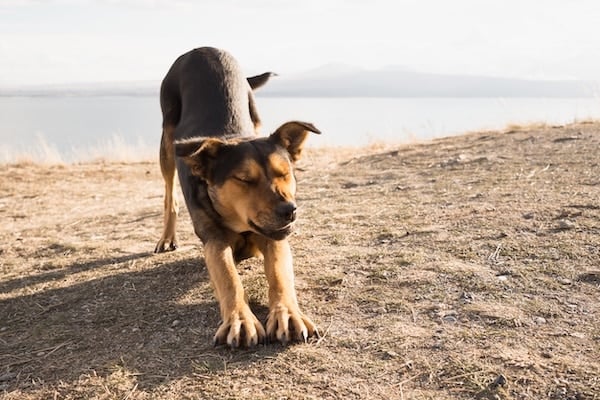
Sometimes a dog stretch is, well, just a stretch. Just like humans need to ease their bodies back into the world after lying or sitting for a long time, a dog needs to limber up, too. You can tell a dog is just stretching when they:
- Slowly stretch their legs one after another
- Stiffly move their body
- Follow the stretch with a shake
- Don’t make direct eye contact
Even if your dog is performing a regular stretch, that doesn’t mean their enthusiasm for you is any less. Stretching helps transition a dog from stillness to interaction, helping them loosen up before engaging. It serves as a subtle social bridge, transitioning them from a state of solitude to one where they’re connecting with you.
So, regardless of how your dog is stretching, you can bet that they’re glad you showed up and they’re happy to be with you!