- This post contains affiliate links. Read more here.
- Not a substitute for professional veterinary help.
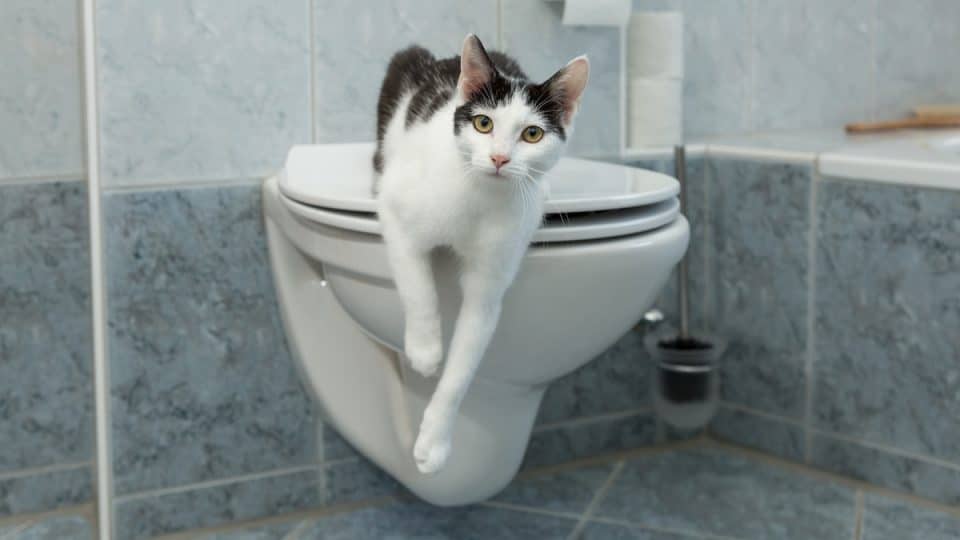
Cats bring a lot of good things into our lives. Unfortunately, the litter box is not one of them. Stinky, inconvenient, and not exactly glamorous, they’re the one big downside to having a cat. Don’t get us wrong—our cats are worth it. But seeing how smart they are makes one wonder if they could—and should—be toilet trained?
The short answer is: maybe. The longer answer? It’s probably an idea better left as theory.

To learn more, we consulted a panel of cat experts, behaviorists, and veterinarians who all weighed in on the topic.
Does Training a Cat To Use the Toilet Actually Work?
“While it is possible to train a cat, not every cat will want to learn,” explains Dr. Joanna Woodnutt, a veterinarian at La Petite Labs.
And even if you’re initially successful, the results might not last. “Research and personal accounts indicate a low success rate overall,” explains Irina Smyrnova, a veterinary-trained cat breeder and general manager at MeowOff. She estimates that only 10-20% of cats will continue to use the toilet long-term.
Cats best suited
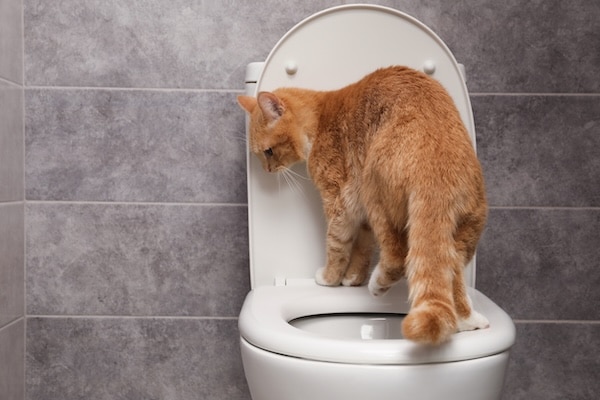
Toilet training may work best for cats who are intelligent, adaptable, trainable, and athletic. If neurological issues or a goofy personality make your cat a bit klutzy, safely perching on a toilet seat may be a challenge. Cats with arthritis or other mobility issues will also struggle with the necessary mechanics.
Training and timeline
For the pet parents who have successfully trained their cats to use the toilet, they say it requires patience and consistency. “The teaching time heavily depends on the cat’s adaptability, but normally it takes about a few weeks to a few months at least,” says Smyrnova.
While there are several methods to toilet train a cat, Smyrnova says the approach typically consists of:
- Moving the litter box closer to the toilet
- Introducing training seats
- Letting the cat get used to having no litter box, so they get comfortable with going in the toilet itself
Cat toilet training kits
Some guardians use a cat toilet training kit, such as the CitiKitty or LitterKwitter, to aid in this transition. These kits include a supportive base that fits into the toilet bowl under the seat. The base is adjustable, allowing you to easily increase the toilet opening size during training.
While the founder of LitterKwitter claims the kit has an 80% success rate, whether a toilet training kit works for you is an independent study of one. One sure thing, though, is that these kits offer a simpler, cleaner approach than using an aluminum pan or other household item to adjust the toilet opening size for your cat.
Pros of Cat Toilet Training
For many cat guardians, the idea of never scooping litter again seems like a dream come true. Here are some reasons why proponents tout this method.
Saves space
Where to put the litter box is an age-old question for cat parents, especially those living in small spaces. Toilet training eliminates the need for a dedicated potty space, allowing them to share your bathroom.
Fewer messes and odors
Toilet training your cat means no more stinky poops waiting to be scooped. You also won’t have litter dust tracked throughout the house or a pungent urine smell lingering in the air. Those messes and odors simply get flushed away.
Fun training opportunity
When it comes to cat enrichment, toilet training is a big one. The weeks- or even months-long training process and the mental stimulation it provides can be a lot of fun for cats and owners who are up to the task.
More eco-friendly
Some cat owners feel that toilet training is more eco-friendly than traditional litter, since litter doesn’t end up bagged and sent to the landfill. However, this benefit depends heavily on local regulations and wastewater systems.
Less hassle
Litter boxes can be inconvenient. Toilet training means no more scooping, no more deep-cleaning a litter box, and no more lugging heavy bags of used litter out to the trash.
Olga Yastremska via iStock
Cons of Cat Toilet Training
On the other hand, many pet experts warn that the benefits of cat toilet training don’t outweigh the consequences. Here’s a look at the cons so you can decide for yourself.
Goes against natural instincts
“Burying waste is a biological imperative for cats,” says Julia Specht, a cat behavior consultant and founder of Park Slope Paws. “They’ve evolved to do it, and it’s an important part of eliminating for them.” When cats are unable to bury waste, it can be confusing and stressful, leading to behavioral issues.
Increased risk of injury
Arthritis is a common issue in cats. Specht notes that signs of arthritis appear in 60% of cats by age 6. “When a cat develops arthritis, it becomes far more challenging and precarious for them to balance,” she says. That increases the risk of injury from jumping or falling into the toilet. While mobility and balance are big concerns for senior cats, falling is also a risk for kittens.
Hard to travel with or board a toilet-trained cat
Toilet training may work great at home, but it can complicate care when you’re away. Finding a pet sitter who understands your cat’s unique bathroom habits can be a challenge. Boarding facilities may also not be equipped to accommodate toilet-trained cats.
Difficult to transition back to a litter box
Once your cat gets used to a toilet, their relationship with the litter box can change. “Cats who have been using the toilet instead of a box for long enough may have trouble transitioning back, which can cause litter box aversion,” says Specht. “Instead of cleaning up litter, you’ll be cleaning up pee, which is much more difficult (and disgusting).”
Possible unsanitary conditions
“In some areas, it’s illegal to dispose of pet waste down the toilet,” says Dr. Woodnutt. “Sewerage systems are not designed to deal with pet waste.”
One major concern is Toxoplasma Gondii, a parasite commonly found in cat feces that can be dangerous for immunocompromised and pregnant humans. If it gets into water systems, it can also harm wildlife, leading many cities to ban flushing cat waste and flushable cat litter.
Difficult to track health changes
“Scooping the litter box is a very important way to monitor your cat’s health,” says Linda Hall, a cat behavior and training expert at The Cat Behaviorist. “Is their feces too dry or too runny? Have they been eliminating more or less than usual?” Noticing changes in the color, texture, frequency, and smell of your cat’s poop or urine can help catch issues early.
Should You Toilet Train Your Cat?
While ultimately the decision is yours to make, our experts say they generally don’t recommend toilet training since it goes against a cat’s natural instincts.
“For me, it’s too far beyond their natural state of burying it in a quiet place, and pushing them away from what evolution designed can have negative consequences for their health and wellbeing,” says Dr. Woodnutt.
Specht agrees, saying that while a no-litter lifestyle sounds appealing, she recommends pet parents use traditional litter boxes. “Litter boxes may be inconvenient, but they’re species-appropriate, and they’ll make your cat happy,” she says. “Personally, I’d rather sweep up some litter or wash out a litter box than have a stressed cat who’s peeing everywhere!”
Alternatives to Cat Toilet Training
If you’re unhappy with your current litter box setup, there are many alternatives to traditional plastic boxes and dusty kitty litter—all without introducing your cat to the toilet.
While these options don’t eliminate the litter box entirely, they can make it far more manageable. Best of all, they’re vet-approved options to keep your kitty comfortable, safe, and happy while they do their business.
Upgrade your litter box
Not all litter boxes are created equal, and there are many options to choose from. If scooping gives you the ick, a self-cleaning litter box can handle the mess for you, and modern or stainless steel designs reduce odor absorption and improve aesthetics.
Find a better cat litter
Many litter box complaints stem from the litter itself. Traditional clay litter often tracks easily and creates dust that coats your cat’s fur, your floors, and—somehow—every other surface, too. Fortunately, there are many types of cat litters, including low-tracking, low-dust clay litters and eco-friendly vegetable, wheat, and paper-based options.
Hide your litter box in furniture
When space and aesthetics are a concern, litter box furniture can make a big difference. Specially-made cabinets, side tables, and even planters can discreetly hide a litter box. Some pet parents also alter existing furniture so it fits their current decor. Just make sure to provide an internal space large enough for your cat to enter, turn, and squat comfortably.
Set up a catio with a litter box
For pet parents who can modify their space, a catio offers the perfect out-of-the-house spot for a litter box. With a catio, your kitty get safe outdoor access and fresh air—and you get the mess of a litter box out of your house.